
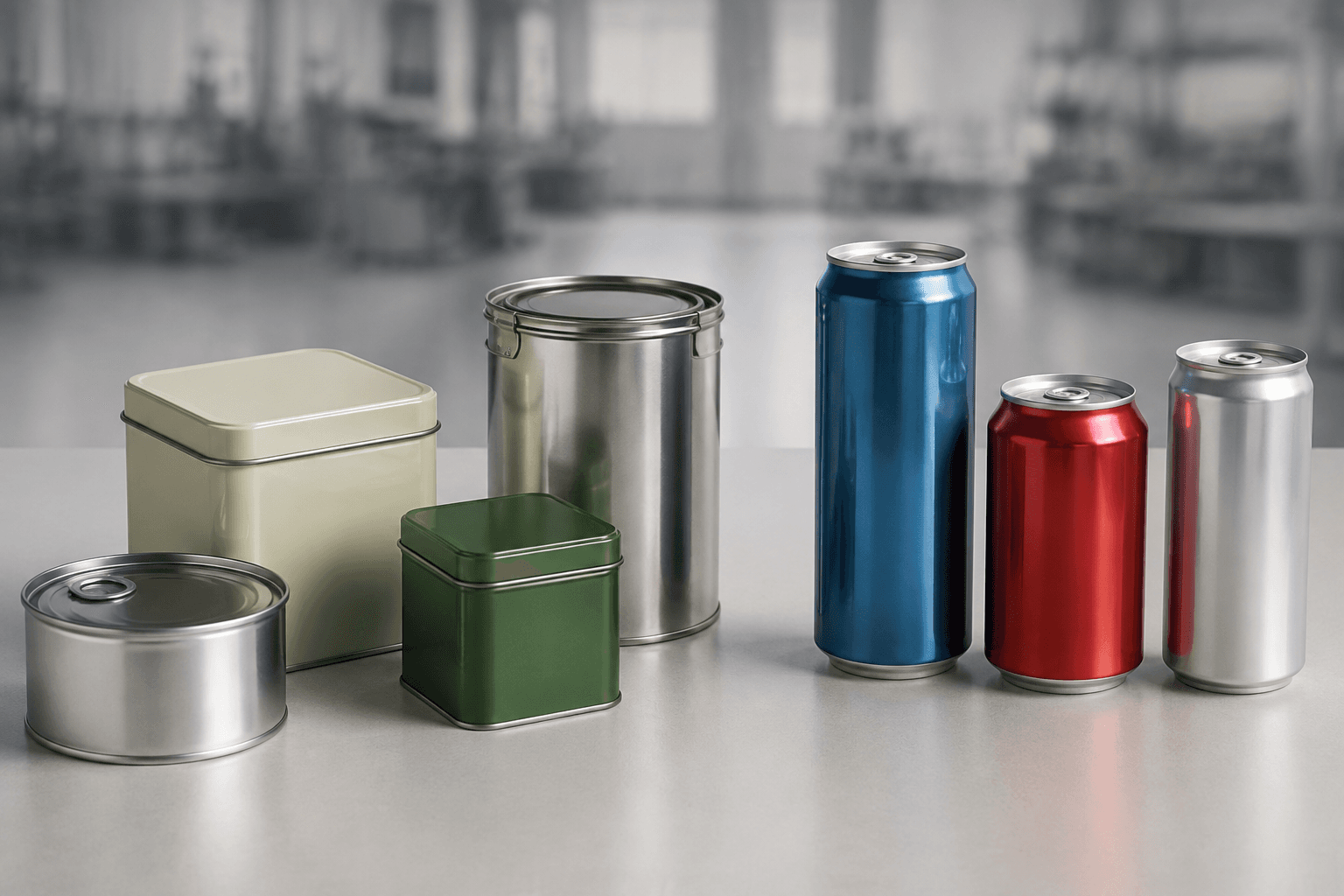
Differences Between Tinplate Cans and Aluminum Cans
Tinplate cans and aluminum cans are both widely used in food, beverage and industrial packaging. Although they may look similar from the outside, the two materials have different properties, production methods and application strengths.
For packaging buyers, the right choice depends on the product contents, can design, filling process, required shelf appearance, production equipment and overall supply requirements. Tinplate is not automatically better than aluminum, and aluminum is not suitable for every package.
What Is a Tinplate Can?
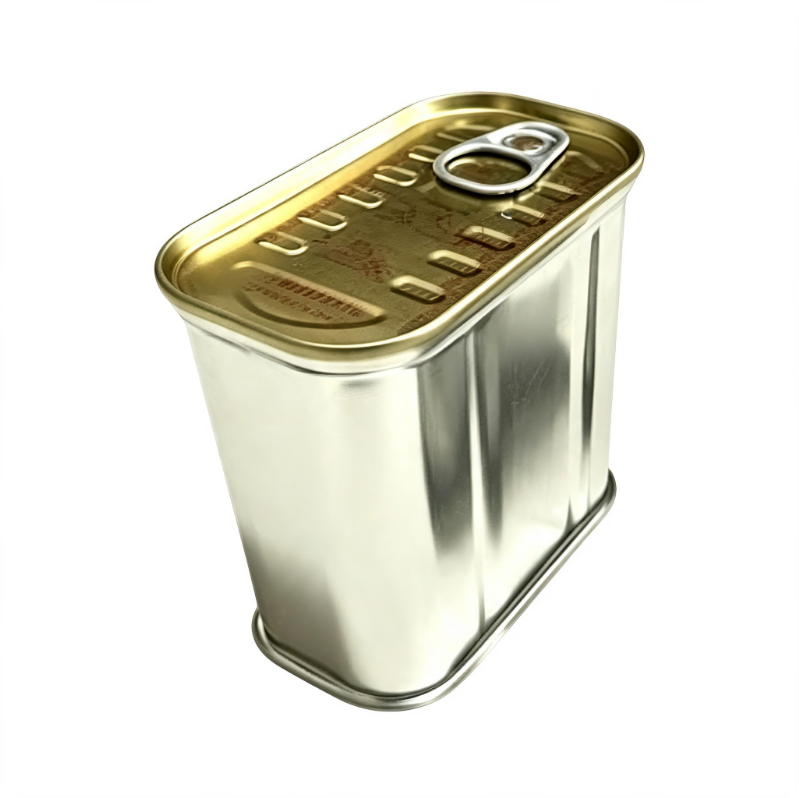
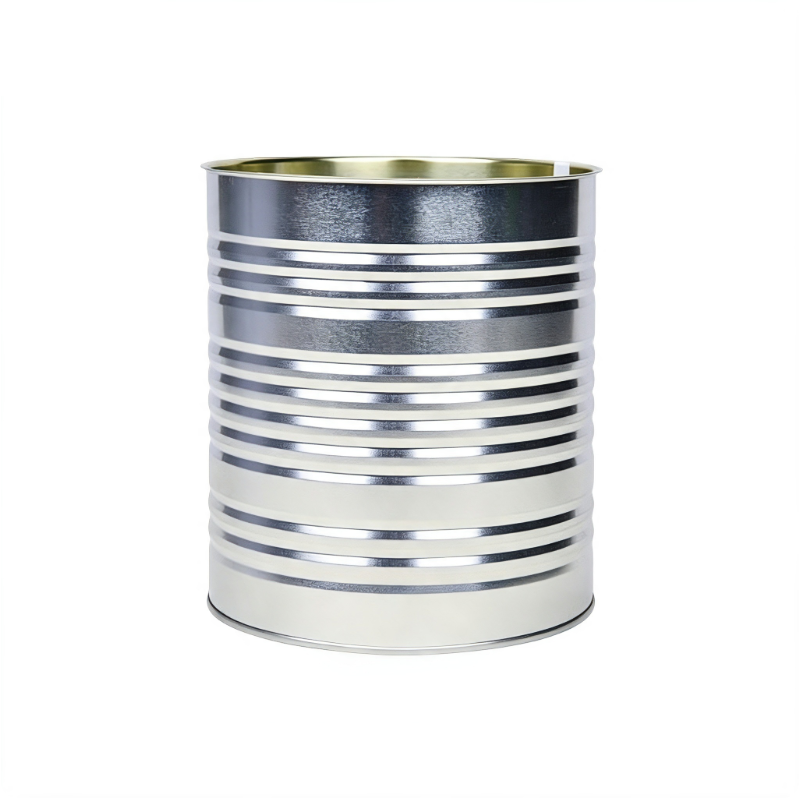
A Tinplate can is made from low‑carbon steel coated with tin. The steel substrate gives the can body strength, while the tin coating and lacquer system help protect the material during use.
Tinplate is commonly used for:
- Food cans
- Seafood and meat cans
- Coffee and milk powder cans
- Biscuit and tea tins
- Paint and chemical cans
- Aerosol cans
- Metal closures and lids
- Decorative gift tins
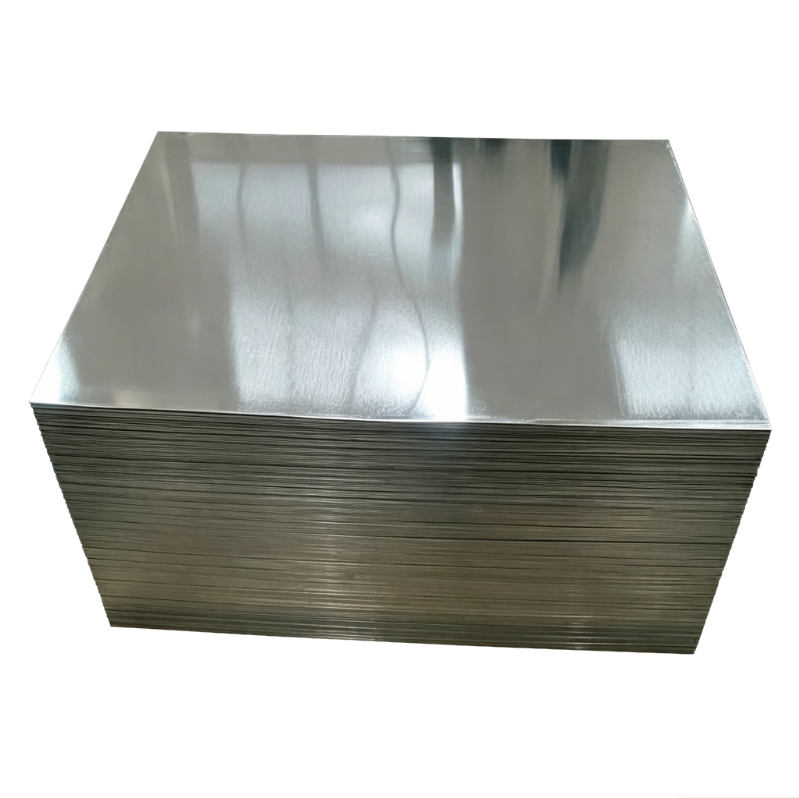
Tinplate can be supplied in coil or cut‑to‑length sheet form. It can be printed, lacquered, stamped, welded and formed into different can shapes.
What Is an Aluminum Can?
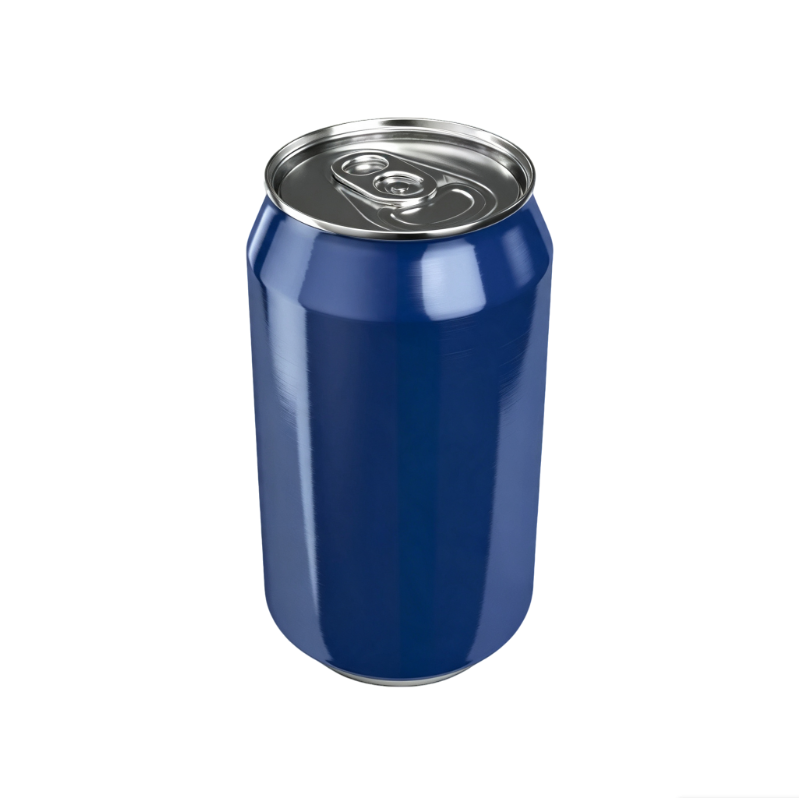
An aluminum can is made from aluminum alloy. It is commonly used for beverage cans, including carbonated drinks, beer, energy drinks and some ready‑to‑drink products.
Aluminum is lightweight and can be formed into thin‑wall containers. It is often used in high‑volume beverage production lines, especially where fast filling and large‑scale distribution are required.
Like Tinplate, aluminum packaging may also use internal coatings or liners depending on the product and application.
Main Differences Between Tinplate and Aluminum Cans
| Feature | Tinplate Cans | Aluminum Cans |
|---|---|---|
| Base material | Steel with electrolytic tin coating | Aluminum alloy |
| Typical applications | Food cans, dry food tins, paint cans, chemical cans, decorative tins | Beverage cans, beer cans, soft drink cans |
| Material strength | High structural strength from the steel substrate | Lightweight material with different structural behavior |
| Can structure | Often used for three‑piece cans, two‑piece cans, lids and closures | Commonly used for two‑piece beverage cans |
| Weight | Usually heavier than aluminum | Usually lighter than Tinplate |
| Printing and decoration | Suitable for printing, lacquering and decorative packaging | Suitable for beverage graphics and branding |
| Forming | Suitable for stamping, welding and different can shapes | Often used in high‑speed drawn‑and‑ironed can production |
| Coating requirement | Internal lacquer selection depends on the product contents | Internal coating may also be required depending on the contents |
| Recycling | Recyclable metal packaging | Recyclable metal packaging |
| Cost decision | Depends on material price, specification, can design and processing | Depends on alloy, can design, volume and processing |
Strength and Can Design
Tinplate uses a steel substrate, so it is commonly selected for applications that require stable can‑body strength, stacking resistance or more complex container shapes.
For example, Tinplate can be suitable for:
- Tall food cans
- Ribbed cans
- Square or rectangular tins
- Paint cans
- Industrial containers
- Decorative packaging
- Three‑piece welded cans
Aluminum is often used for lightweight beverage cans. Its low weight can be an advantage for high‑volume beverage packaging, but the can design, wall thickness and production process must be matched carefully.
The final can strength is not determined by material alone. Can diameter, height, wall thickness, ribs, end design, seam quality and filling conditions also affect packaging performance.
Forming and Manufacturing Process
Tinplate is commonly used in both sheet and coil processing. It can be cut, printed, lacquered, welded, stamped and formed into different types of containers.
This makes Tinplate a practical material for packaging manufacturers producing multiple can sizes, customized shapes or smaller production runs.
Aluminum beverage cans are often produced through a two‑piece drawing and wall‑ironing process. This production method is highly efficient for large‑volume standard beverage cans, but it generally requires dedicated equipment and stable high‑volume production.
| Manufacturing Requirement | Tinplate May Be Suitable When | Aluminum May Be Suitable When |
|---|---|---|
| Can design | Custom, ribbed, square, rectangular or decorative cans | Standard round beverage cans |
| Production volume | Flexible or mixed production programs | High‑volume beverage production |
| Forming process | Welding, stamping, seaming and shaping | High‑speed drawn‑and‑ironed can production |
| Supply format | Coil or cut‑to‑length sheets | Usually matched with dedicated beverage‑can production |
| Product type | Food, dry goods, industrial products and decorative packaging | Beer, soft drinks, energy drinks and ready‑to‑drink beverages |
Coating and Product Compatibility
Both Tinplate and aluminum cans may need suitable internal coatings depending on the packaged product.
Food, beverages, sauces, seafood, oil, chemical products and acidic contents can create different conditions inside the package. The coating system should be selected according to:
- Product contents
- Acidity, salt, oil or moisture
- Filling temperature
- Retort or heat‑processing conditions
- Required shelf life
- Can structure
- Destination‑market requirements
Buyers should not assume that one material is suitable for every food or beverage product without reviewing the full packaging system.
Printing and Shelf Appearance
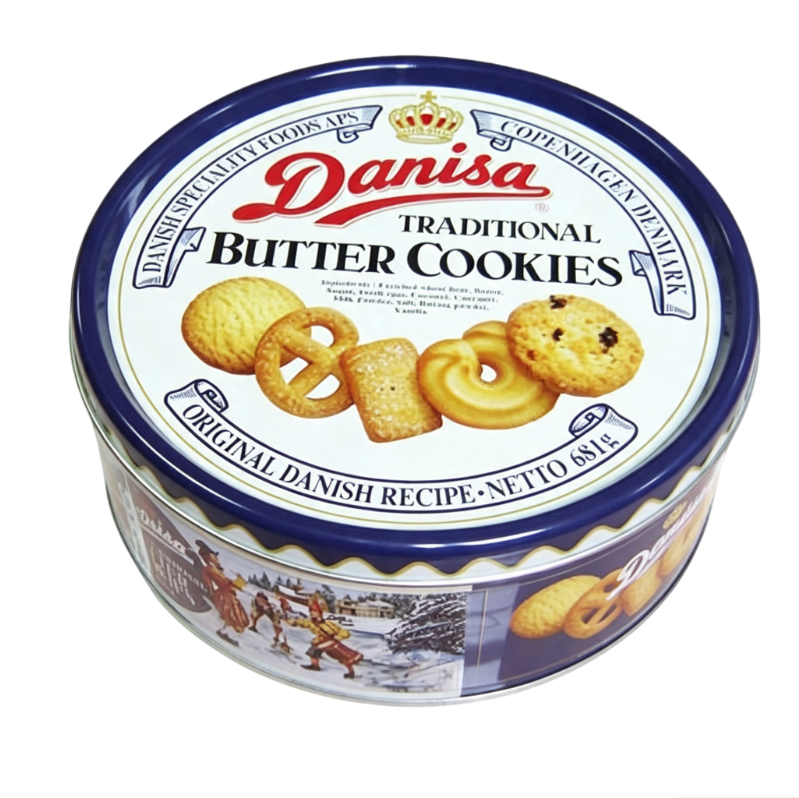
Tinplate is widely used for printed food tins, tea tins, biscuit tins, coffee cans and gift packaging. Its surface can support different finishes and decorative printing designs.
Tinplate can be a good option when packaging appearance is an important part of the product value, especially for premium food products, seasonal gift tins and branded dry food containers.
Aluminum cans are also widely printed, especially for beverage branding. The final printing quality depends on surface preparation, coating, ink system and the production process.
For both materials, buyers should confirm:
- Surface finish
- Printing method
- Ink adhesion
- Lacquer compatibility
- Scratch resistance
- Required color appearance
- Forming after printing
Which Material Should Buyers Choose?
Tinplate may be a suitable option for food cans, dry food containers, decorative tins, paint cans and custom metal packaging. It is especially practical when the project requires material strength, flexible shapes, printing options or sheet‑based can making.
Aluminum may be a suitable option for high‑volume beverage cans where lightweight packaging and dedicated two‑piece can production are important.
---
Related News
Other news you might be interested in

Tinplate Coating Peeling Risk Analysis and Avoidance Under High-Temperature Retort Sterilization
High-temperature retort sterilization is an essential process for shelf-stable food cans. However, long-term high-temperature and high-pressure environments easily cause coating blistering, delamination and peeling on the inner wall of metal cans. Many can manufacturers attribute coating failure solely to lacquer quality or baking process. In fact, **tinplate substrate performance, surface condition and material matching** are the core hidden causes of most high-temperature coating peeling problems. This article professionally analyzes the root causes of tinplate coating peeling under retort conditions, explains the difference in high-temperature resistance between ETP tinplate and TFS steel, and summarizes practical and operable avoidance solutions for mass production.
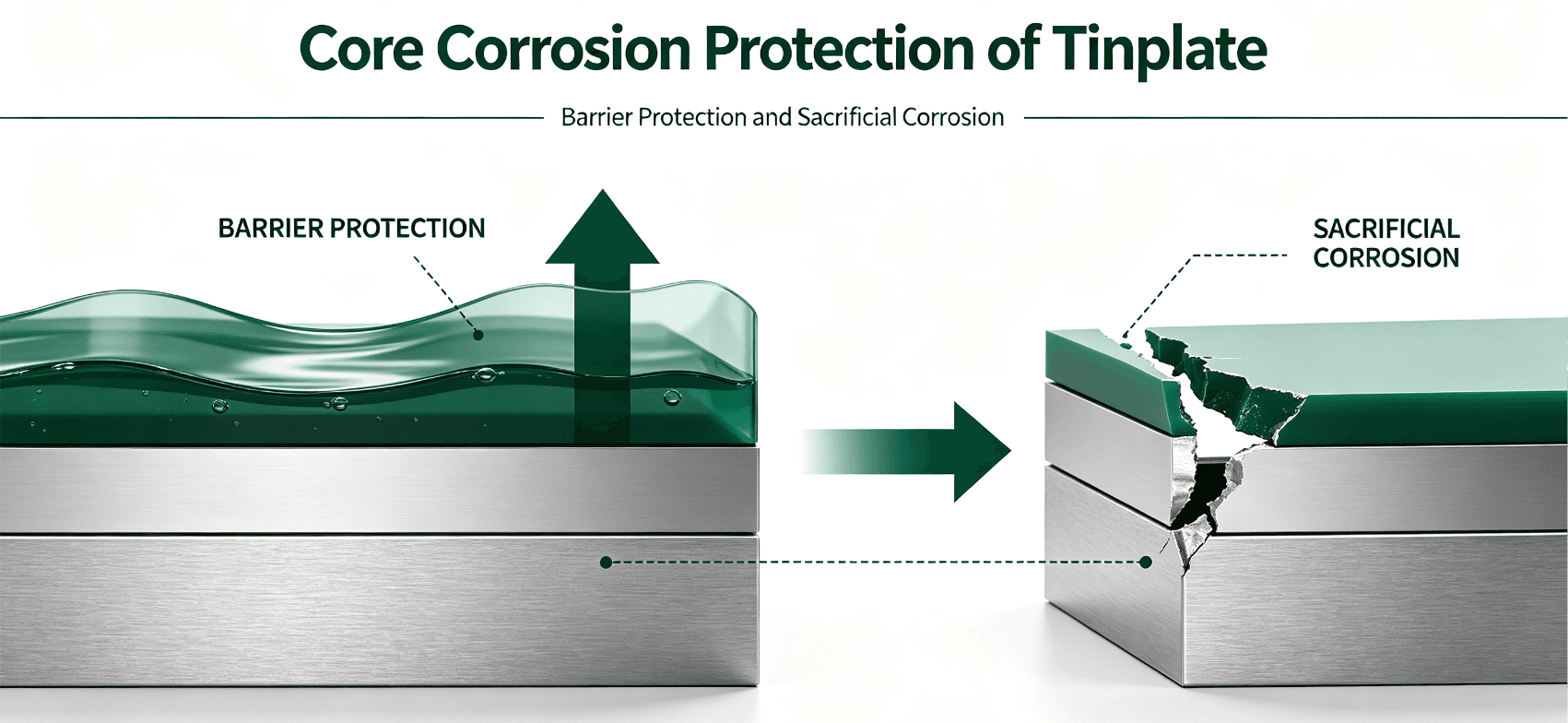
Sacrificial Corrosion & Barrier Protection: Core Anti-Corrosion Principle of Tinplate
The service life and storage safety of metal food cans largely depend on the anti-corrosion performance of packaging materials. As the most widely used substrate for food cans and general metal containers, ETP electrolytic tinplate adopts two core anti-corrosion mechanisms: barrier protection and sacrificial anode protection. These two protection systems work together to ensure stable corrosion resistance in complex food filling and high-temperature sterilization environments.
Want to know more?
Get in touch with us for more information about our services and products.