
How to Reduce Material Waste with Scroll Cut Tinplate Sheets
For can manufacturers, lid producers, and metal packaging factories, tinplate is one of the main production costs. Even a small amount of material waste can affect the final cost, especially when production volume is high.
In many factories, tinplate is purchased in coils or rectangular sheets. These forms are widely used and suitable for many production lines. However, for some can bodies, lids, ends, and special metal packaging parts, a standard rectangular sheet may not always give the best material usage.
This is where scroll cut tinplate sheets can be useful.
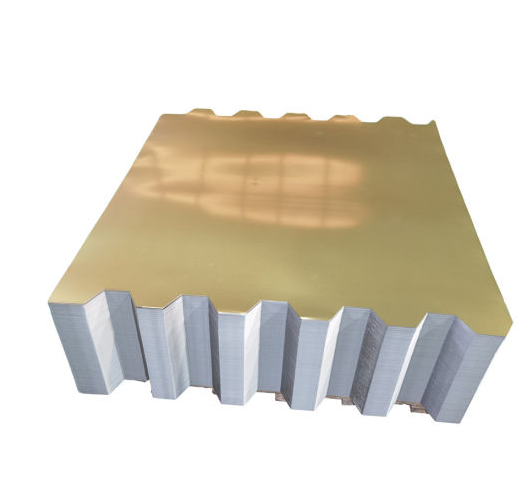
Scroll cut tinplate sheets are cut into a shape or layout that better matches the buyer’s production requirement. Compared with ordinary rectangular sheets, scroll cutting may help reduce edge waste, improve sheet utilization, and make production more convenient in certain applications.
However, scroll cut sheets are not suitable for every factory or every product. Buyers should understand when they are useful, what information needs to be provided, and how to evaluate whether scroll cutting can really reduce waste in their production.
What Are Scroll Cut Tinplate Sheets?
Scroll cut tinplate sheets are tinplate sheets cut into special shapes or layouts instead of simple rectangular sheets. The cutting design is usually based on the final product size, die layout, or production process.
They are commonly used in applications such as:
- Can bodies
- Easy open ends
- Bottom ends
- Lids
- Metal packaging components
- Decorative tins
- Food can parts
- General metal packaging parts
The goal of scroll cutting is to make the sheet shape closer to the actual material needed in production. This can help reduce the unused part of the sheet after stamping, forming, or cutting.
For factories with stable product sizes and repeated orders, scroll cut tinplate sheets can be a practical way to improve material usage.
How Scroll Cut Sheets Help Reduce Waste
Scroll cut tinplate sheets can help reduce waste by matching the sheet shape more closely to the production layout.
Instead of using a full rectangular sheet and cutting away unnecessary parts, the sheet can be pre-cut into a more suitable shape. This may help factories use more of the material in each sheet.
The benefit depends on the product design and production process, but scroll cutting may help in several ways.
1. Better Match with Can Body Layout
For can body production, sheet size and layout are important. If the sheet size is not planned well, the factory may lose material during cutting and trimming.
Scroll cut sheets can be designed according to the can body size and cutting plan. This helps reduce unused areas and makes the production process more efficient.
For factories producing the same can size regularly, this can be especially useful.
2. Improved Material Usage for Lids and Ends
Lids, bottom ends, and easy open ends are often produced by stamping round or shaped parts from tinplate or TFS sheets. If the sheet layout is not optimized, there may be more leftover material between parts or around the edges.
Scroll cutting can help match the sheet shape with the stamping layout, reducing unnecessary waste before the material enters the press line.
This is why scroll cut sheets are often considered by lid and end manufacturers.
3. Less Extra Cutting Before Production
Some factories need to cut standard sheets again before feeding them into production. This takes time, labor, and equipment capacity. It may also create more edge waste or handling damage.
If the tinplate is supplied as scroll cut sheets or customized cut sheets, the factory may reduce some pre-production cutting steps.
This can be useful for buyers who do not have strong cutting equipment or want to simplify their production preparation.
4. More Stable Repeated Production
For repeated orders, keeping the same sheet shape and size can help production become more stable.
Once the buyer confirms a suitable scroll cutting design, future orders can follow the same specification. This helps reduce repeated adjustment and makes material planning easier.
For can makers and lid manufacturers with stable product sizes, this is one of the practical advantages of scroll cut tinplate sheets.
When Scroll Cut Tinplate Sheets Are Useful
Scroll cut sheets are more suitable in some situations than others.
They may be useful when:
- The buyer produces the same can size regularly.
- The product layout creates high waste with rectangular sheets.
- The factory wants to reduce trimming before production.
- The buyer needs tinplate sheets for lids, ends, or shaped components.
- The production volume is large enough to justify customized cutting.
- The factory has a clear drawing or layout.
- The same specification will be ordered repeatedly.
For example, a lid manufacturer producing the same end size every month may benefit more from scroll cutting than a factory producing many small and changing sizes.
When Scroll Cut Sheets May Not Be Necessary
Scroll cut tinplate sheets are not always the best choice.
They may not be necessary when:
- The order quantity is very small.
- The product size changes frequently.
- The factory already has efficient cutting equipment.
- Standard sheet sizes already match production well.
- The buyer has not confirmed the final product design.
- The production layout is still being tested.
- The cost of customized cutting is higher than the material saved.
In these cases, ordinary tinplate sheets or coils may be more practical.
A good supplier should not simply recommend scroll cut sheets for every buyer. The material form should match the buyer’s real production need.
What Buyers Should Confirm Before Ordering Scroll Cut Tinplate Sheets
Before ordering scroll cut tinplate sheets, buyers should provide clear details. This helps the supplier check whether the cutting plan is workable and whether it may help reduce waste.
Important information includes:
- Final application
- Tinplate thickness
- Temper
- Tin coating
- Surface finish
- Sheet shape or drawing
- Required dimensions
- Tolerance requirement
- Quantity
- Packing requirement
- Production process
- Whether the material will be printed or lacquered
- Whether the order is for trial or regular production
If buyers already have a cutting layout, drawing, or sample sheet, it is helpful to share it with the supplier.
For better communication, buyers can also provide photos of the current sheet layout or explain where the waste happens in production.
Scroll Cut Tinplate vs Ordinary Tinplate Sheets
Both scroll cut sheets and ordinary rectangular sheets have their own uses.
| Item | Ordinary Tinplate Sheets | Scroll Cut Tinplate Sheets |
|---|---|---|
| Shape | Rectangular | Customized or special cut shape |
| Flexibility | Suitable for many applications | Better for fixed product layouts |
| Waste control | Depends on buyer’s cutting plan | Can help reduce waste in suitable cases |
| Preparation | May need additional cutting | May reduce some cutting steps |
| Best for | General use, flexible production | Repeated production, lids, ends, specific can sizes |
| Requirement | Basic sheet size | Clear drawing or cutting specification |
The right choice depends on the buyer’s equipment, product size, order quantity, and production plan.
Common Mistakes When Ordering Scroll Cut Tinplate Sheets
Buyers should avoid several common mistakes.
1. Ordering Without a Clear Drawing
Scroll cutting needs clear dimensions. If the drawing is unclear, the final sheet may not match the production line.
2. Ignoring Tolerance Requirements
Small size differences may affect feeding, stamping, or forming. Buyers should confirm acceptable tolerance before ordering.
3. Using Scroll Cut Sheets for Unstable Product Designs
If the product design is still changing, customized cutting may create unnecessary risk. It is better to confirm the design first.
4. Only Comparing Material Price
Scroll cut sheets may have additional cutting cost, but they may also reduce waste or preparation work. Buyers should compare the overall production result, not only the sheet price.
5. Not Testing Before Regular Orders
For new scroll cutting designs, a trial order or sample confirmation can help reduce risk before bulk production.
FAQ
1. What are scroll cut tinplate sheets used for?
Scroll cut tinplate sheets are used for can bodies, lids, ends, easy open ends, metal packaging components, and other products that need a specific sheet shape or cutting layout.
2. Can scroll cut tinplate sheets reduce material waste?
They can help reduce waste in suitable applications, especially when the product size is stable and the cutting layout is optimized. The actual result depends on the buyer’s production design.
3. Are scroll cut sheets better than ordinary tinplate sheets?
Not always. Ordinary sheets are more flexible for general use, while scroll cut sheets are more suitable for repeated production with fixed sizes or special cutting requirements.
4. What information should buyers provide for scroll cut sheets?
Buyers should provide application, thickness, temper, tin coating, surface finish, drawing or dimensions, tolerance, quantity, packing requirement, and production process.
5. Should buyers test scroll cut sheets before bulk orders?
Yes, if it is a new cutting design or new supplier. Testing can help confirm whether the sheet size, shape, tolerance, and production performance are suitable.
Conclusion
Scroll cut tinplate sheets can be a practical option for can manufacturers, lid producers, and metal packaging factories that want to reduce material waste and improve production preparation. They are especially useful for repeated production, fixed product sizes, and applications where ordinary rectangular sheets create unnecessary leftover material.
However, scroll cut sheets are not suitable for every order. Buyers should consider product stability, order quantity, cutting layout, tolerance, and production process before choosing this material form.
A clear drawing, accurate specification, and practical trial can help buyers decide whether scroll cut tinplate sheets are the right choice.
If you are sourcing tinplate sheets, scroll cut tinplate sheets, TFS sheets, or coated steel sheets for can making, lids, ends, or metal packaging production, please send us your application, thickness, temper, coating requirement, surface finish, drawing or sheet size, quantity, and destination port.
Our team can help review suitable material options for your production needs.
Related News
Other news you might be interested in
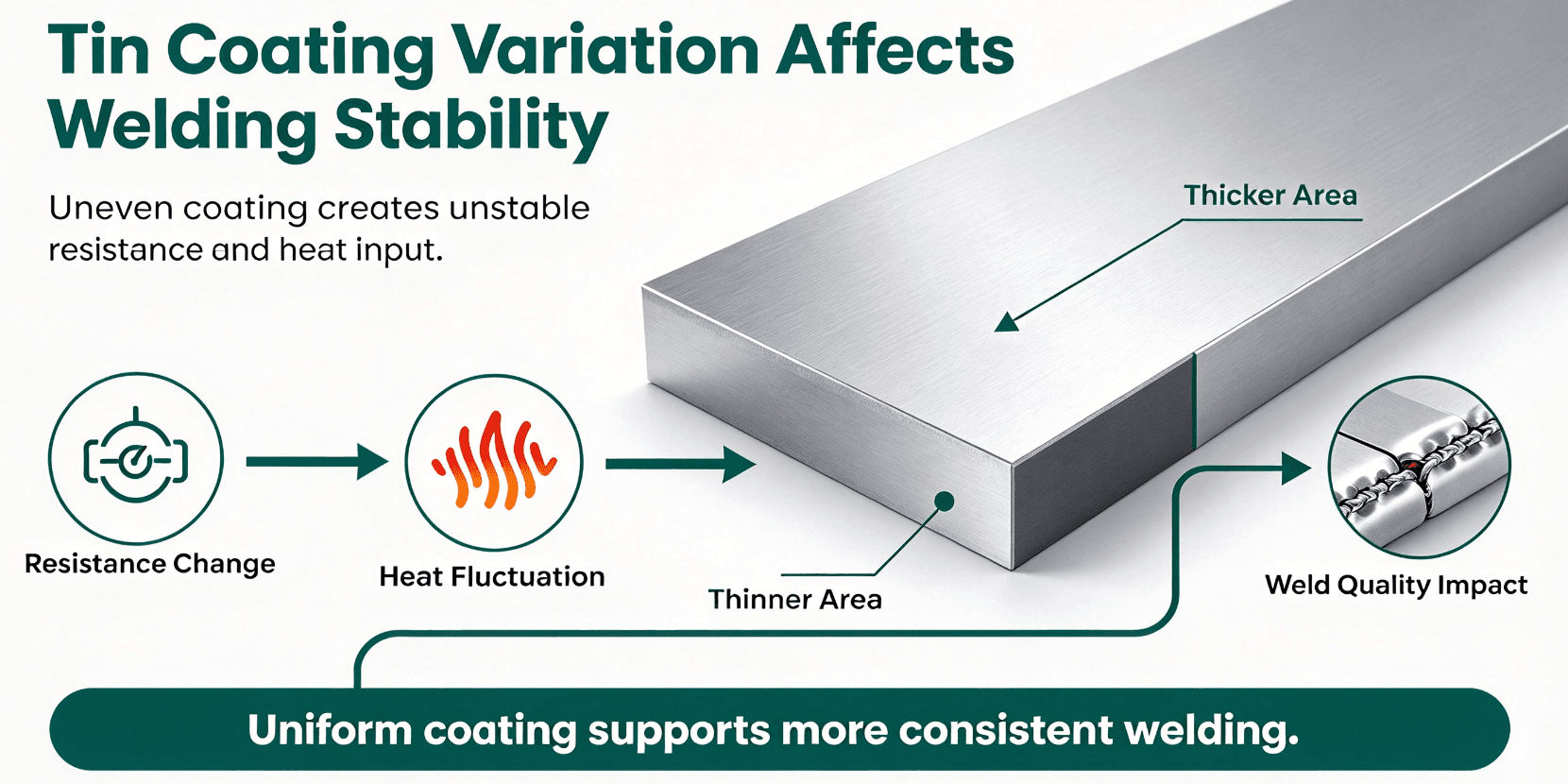
Weld Spatter & Leakage Defects: The Decisive Role of Tin Coating Uniformity in Can Welding Quality
High-speed resistance seam welding is the core forming process for three-piece metal cans. In actual mass production, persistent weld spatter, granular slag residue and hidden seam micro-leakage severely compromise sealing consistency, sterilization resistance and finished product yield. Most manufacturers tend to attribute these defects to unstable current, improper pressure or worn welding wheels. However, industrial verification proves that uneven tin coating distribution on tinplate is the fundamental material-induced root cause of recurring welding spatter and leakage issues.
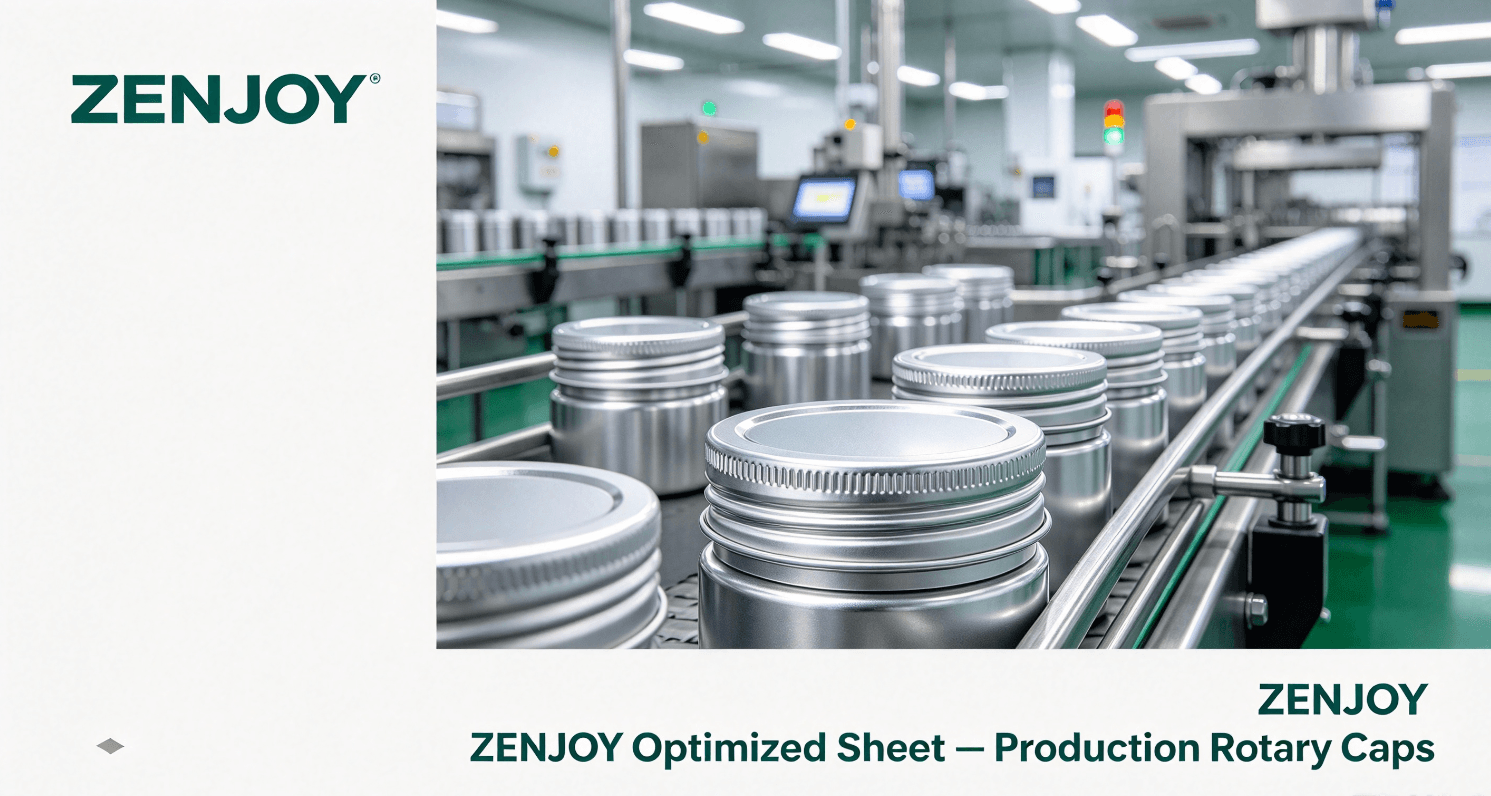
Low-Earing CA Annealed Tinplate: The Optimal Material for Stable Twist-Off Lid Deep Drawing & High Yield Rate
Twist-off lid manufacturing has extremely strict requirements on material anisotropy and ductility. Different from regular can bodies, twist-off lids undergo complex deep drawing, edge trimming and crimping processes, making them highly sensitive to uneven steel performance. According to actual mass production verification, no alternative tinplate grades can achieve stable forming results for twist-off lid production. Low-earning CA continuous annealed tinplate remains the most suitable and high-performance material dedicated for twist-off lid stamping.
Want to know more?
Get in touch with us for more information about our services and products.