
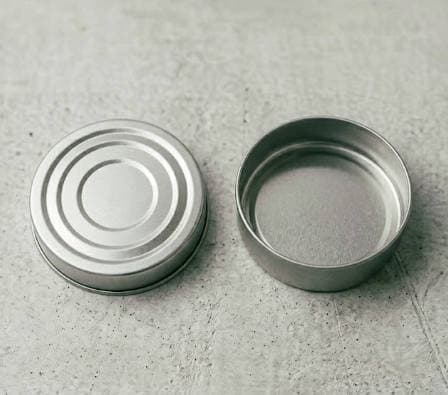
TFS Sheets for Lids and Ends: What Matters Most in Repeated Production
Why Repeated Production Changes the Buying Logic
In lids and ends production, the material decision is rarely just about whether the steel can be supplied once.
Most buyers in this segment are working with:
- repeated dimensions
- repeated tooling
- recurring stamping programs
- structured replenishment
- ongoing component production
That means repeated production changes the supplier-selection logic.
The buyer is not simply asking:
- Can this supplier provide TFS sheets?
The buyer is asking:
- Can this supplier keep supporting the same production line with the same requirements over time?
That is why TFS sheets for lids and ends are usually evaluated through a more disciplined lens than ordinary stock buying.
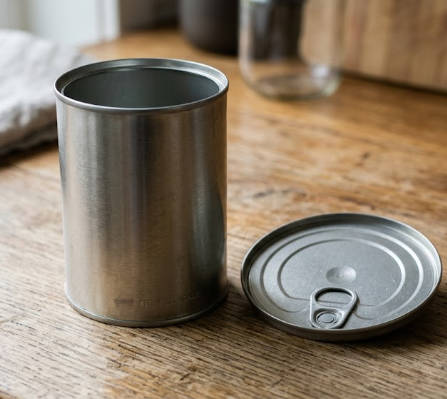
Repeated Dimensions Are One of the Most Important Factors
Lids and ends production often depends on stable repeated dimensions.
This matters because small variation can affect:
- stamping setup
- tooling efficiency
- line continuity
- internal handling
- repeated output control
For many buyers, recurring dimensions are not a minor technical detail.
They are part of the daily production system.That is why buyers usually want to know:
- can the same size be supplied again consistently?
- will repeated orders remain stable?
- can recurring component dimensions be managed without rework each cycle?
A supplier that supports repeated dimensions well usually becomes much more valuable in long-term component production.
Timing Reliability Matters More in Component Production
In repeated component production, timing risk often spreads quickly.
If TFS sheet delivery becomes unstable, the buyer may face:
- interruption in repeated stamping schedules
- pressure on finished component output
- more urgent internal planning
- reduced confidence in replenishment timing
- higher supplier-management cost
This is why timing reliability is often one of the most important supplier evaluation points.
Buyers usually care less about one unusually fast shipment and more about:
- whether delivery timing stays stable over repeated orders
- whether replenishment can be managed predictably
- whether the supplier communicates clearly when pressure increases
A stronger supplier helps repeated production stay smoother because the material arrives with less uncertainty.
Why Repeat-Order Stability Matters More Than One Good Batch
In lids and ends manufacturing, one acceptable batch is useful, but not enough.
The real question is whether the supplier can support the next order, and the order after that, with the same level of control.
Repeat-order stability usually includes:
- recurring dimensions
- recurring order handling
- repeated shipment discipline
- stable communication
- fewer corrections from the buyer
- stronger long-term order memory
This matters because repeated component production creates more stress when the supplier is inconsistent.
The buyer does not want to keep re-explaining the same requirements every cycle.
A reliable supplier should make repeated business easier to manage.
What Buyers Usually Check Before Choosing a Supplier
Buyers sourcing TFS sheets for lids and ends often compare suppliers through several practical questions.
Can the supplier support recurring component dimensions?
Repeated sizes are one of the most important realities of this category.
Does the supplier understand repeated production logic?
The supplier should recognize that this is not spot buying, but recurring industrial support.
Can delivery timing hold up over repeated orders?
Stable replenishment matters more than a one-time strong promise.
Is the quality control good enough for repeated component use?
Buyers want confidence in repeated usability, not only in the first inspection.
Does service reduce or increase procurement friction?
In repeated production, poor communication creates much more cost than many suppliers realize.
These comparison points usually matter far more than basic product claims.
Why a Supplier Must Understand the Production Context
A supplier may know TFS sheets as a material category, but that is not always enough.
Buyers in lids and ends production usually value suppliers who understand:
- repeated tooling logic
- recurring dimensions
- ongoing replenishment patterns
- component-level schedule sensitivity
- the pressure of repeated line-based production
This matters because a supplier who understands the production context will usually:
- communicate more practically
- manage recurring details better
- support repeated orders with less confusion
- become easier to work with over time
That operational understanding often becomes one of the biggest reasons buyers stay with a supplier.
Common Supplier Problems Buyers Try to Avoid
Professional buyers in this category often try to avoid suppliers who show patterns such as:
Inconsistent repeated dimensions
Even small repeated variation can create long-term production inefficiency.
Good first order, weak recurring support
A supplier that looks strong at the start but weakens in repeat business becomes risky for recurring production.
Unclear replenishment timing
If timing is not stable, production control becomes harder.
Weak communication during repeated cycles
Repeated production requires suppliers who stay organized, not only responsive once.
Poor support for structured industrial demand
A supplier may be able to ship material, but still fail to support a real repeated component program.
These are exactly the issues buyers usually screen for when choosing a long-term TFS sheet supplier.
What a Strong Supplier Usually Looks Like in This Segment
A stronger TFS sheet supplier for lids and ends usually offers:
- stable repeated dimension support
- stronger repeat-order discipline
- more reliable replenishment timing
- quality control that supports recurring industrial use
- clearer communication across repeated cycles
- service that reduces buyer workload
- better fit for long-term component production programs
In repeated production, this kind of reliability often matters more than a short-term quotation advantage.
That is why serious buyers often prefer suppliers who make the production system easier to manage, not simply suppliers who make the first order easy to win.

FAQ
Why do repeated dimensions matter so much in lids and ends production?
Because repeated production often depends on the same tooling and the same sizes, so variation creates operational inefficiency very quickly.
What do buyers usually compare besides TFS sheet price?
They often compare repeat-order stability, timing reliability, communication quality, and recurring dimension support.
Is one successful batch enough to judge a supplier?
No. Buyers usually care more about whether the same standard can be repeated across future orders.
Why is timing reliability especially important in this category?
Because lids and ends production is often schedule-sensitive, and delayed material can affect the full component workflow.
What makes a TFS supplier stronger for repeated production?
A stronger supplier usually supports recurring dimensions, repeated replenishment, stable communication, and long-term production logic more effectively.
---
Related News
Other news you might be interested in
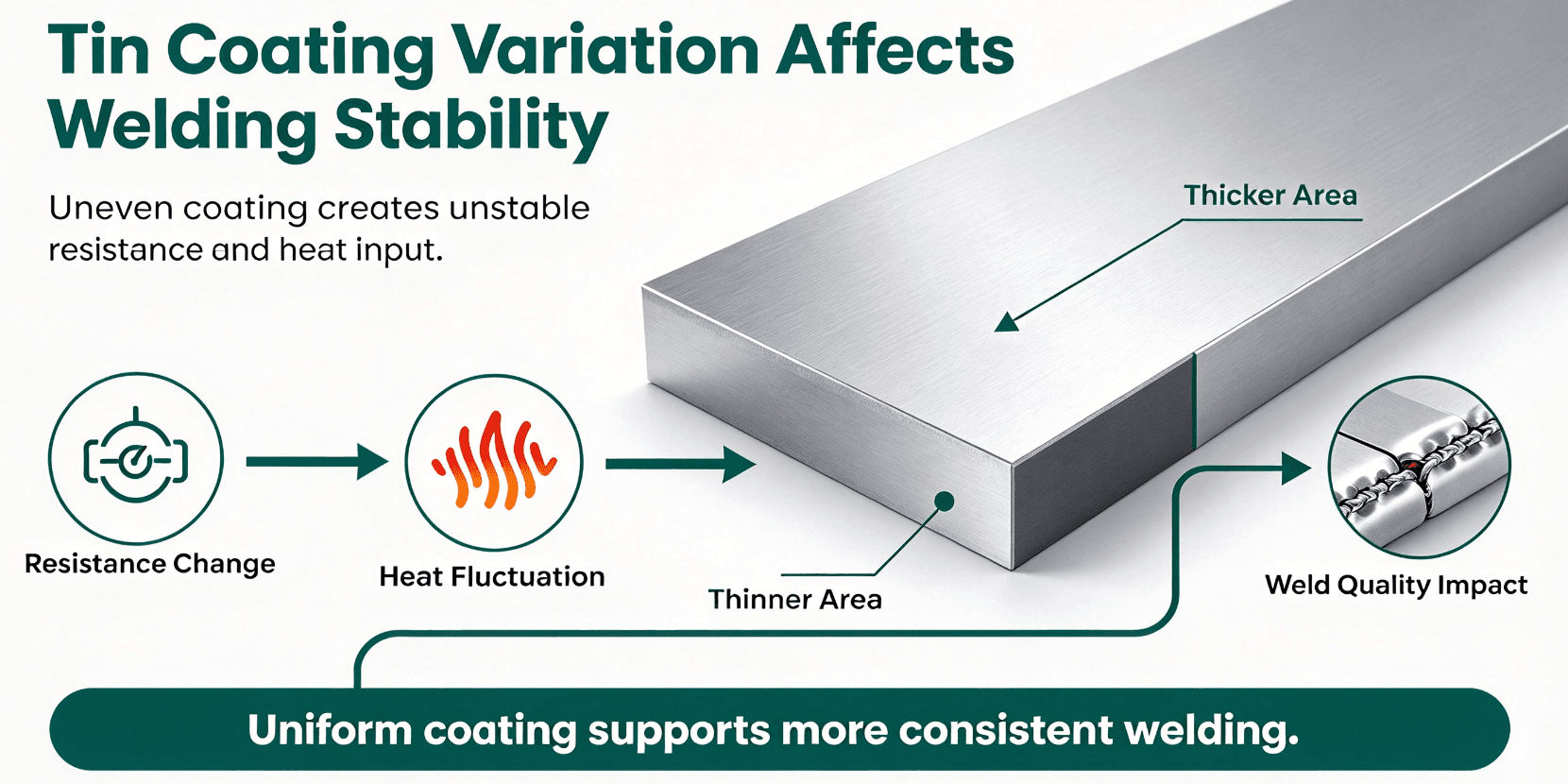
Weld Spatter & Leakage Defects: The Decisive Role of Tin Coating Uniformity in Can Welding Quality
High-speed resistance seam welding is the core forming process for three-piece metal cans. In actual mass production, persistent weld spatter, granular slag residue and hidden seam micro-leakage severely compromise sealing consistency, sterilization resistance and finished product yield. Most manufacturers tend to attribute these defects to unstable current, improper pressure or worn welding wheels. However, industrial verification proves that uneven tin coating distribution on tinplate is the fundamental material-induced root cause of recurring welding spatter and leakage issues.
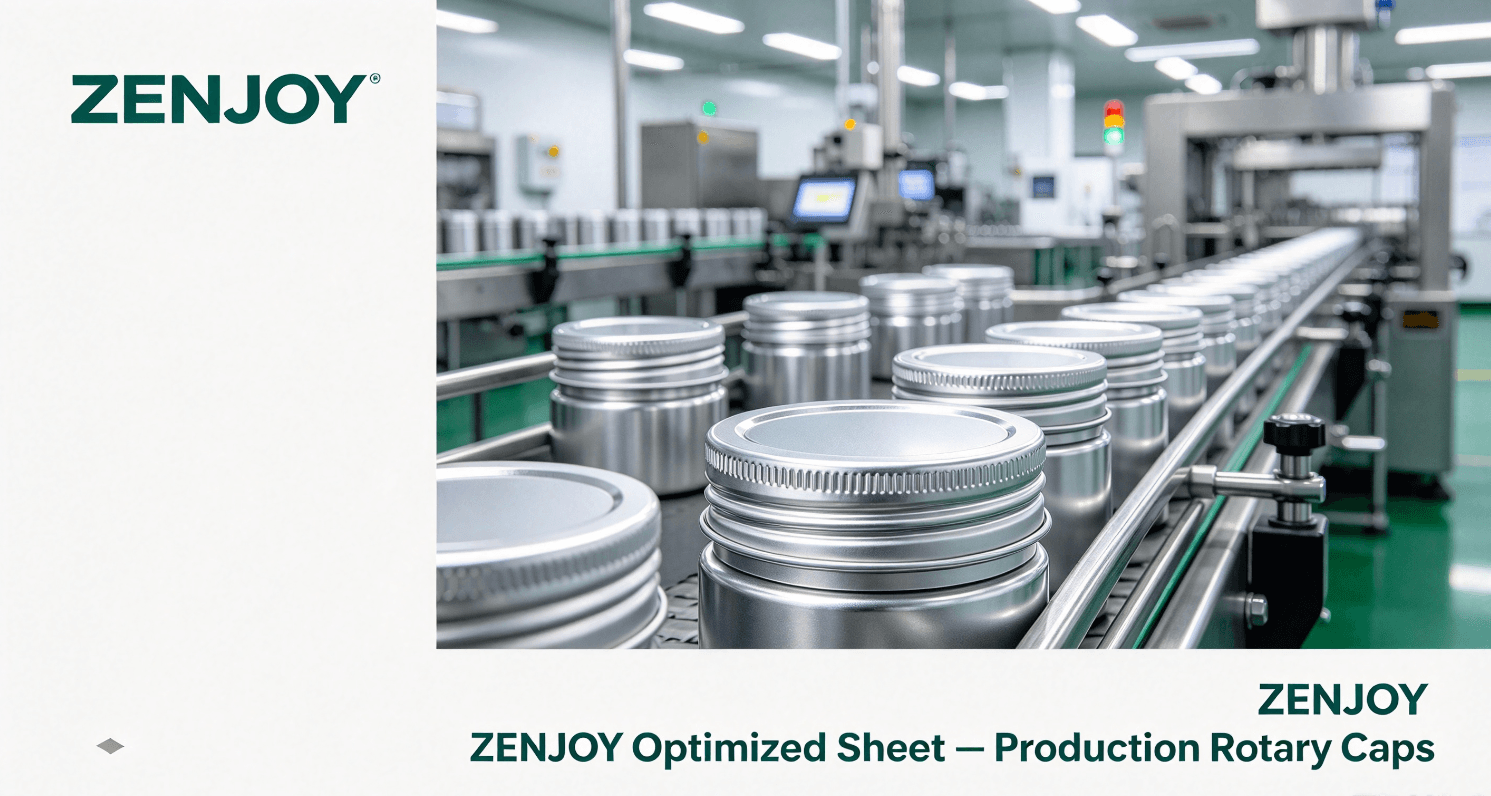
Low-Earing CA Annealed Tinplate: The Optimal Material for Stable Twist-Off Lid Deep Drawing & High Yield Rate
Twist-off lid manufacturing has extremely strict requirements on material anisotropy and ductility. Different from regular can bodies, twist-off lids undergo complex deep drawing, edge trimming and crimping processes, making them highly sensitive to uneven steel performance. According to actual mass production verification, no alternative tinplate grades can achieve stable forming results for twist-off lid production. Low-earning CA continuous annealed tinplate remains the most suitable and high-performance material dedicated for twist-off lid stamping.
Want to know more?
Get in touch with us for more information about our services and products.