
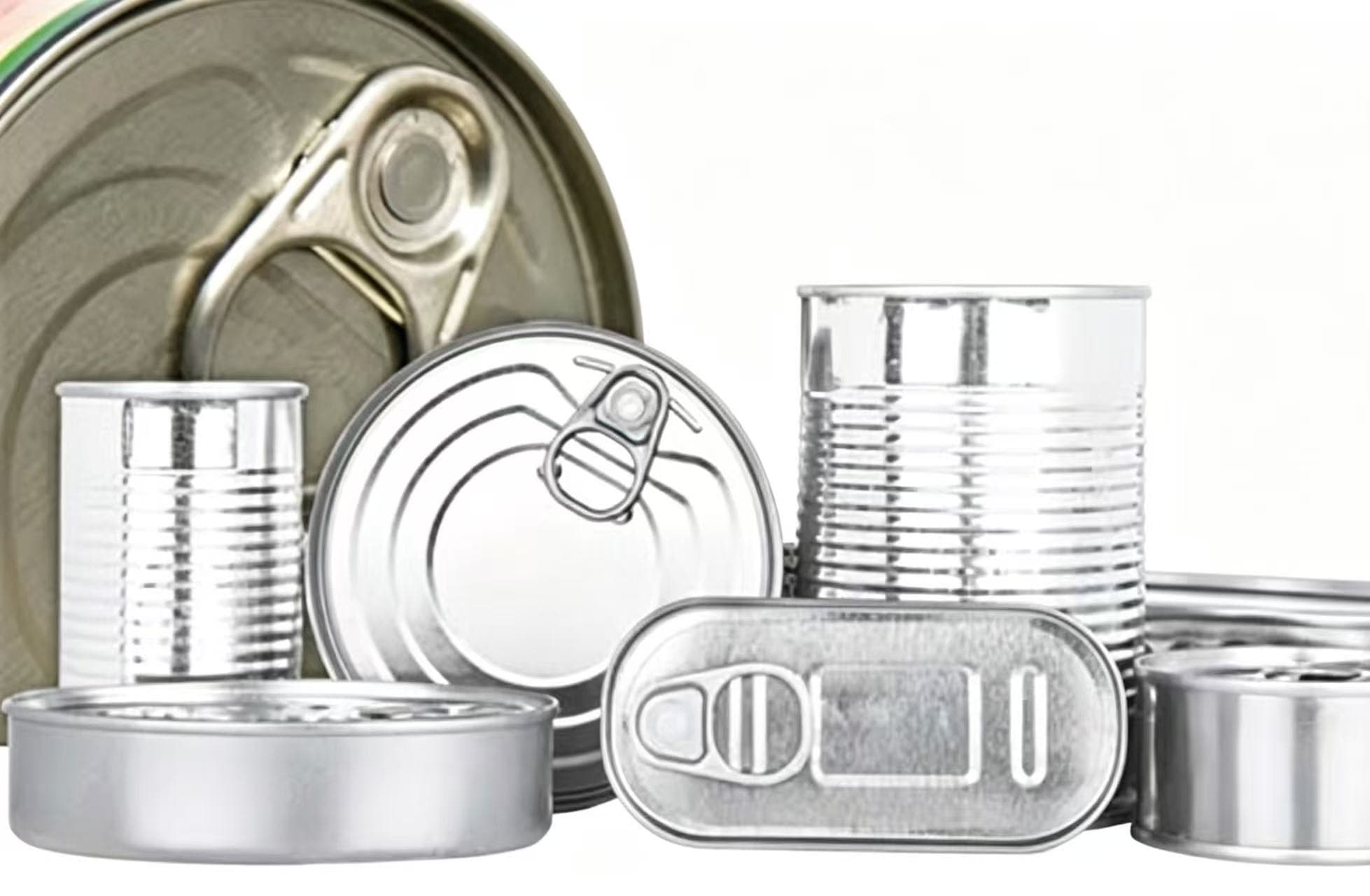
Tinplate for Food Cans: What Buyers Should Check Before Ordering
Why Food Can Buyers Need More Than a Basic Material Quote
Food can procurement often looks straightforward on paper.
The buyer needs tinplate, the supplier gives a quote, and the order moves forward.But in real industrial packaging, the decision is rarely that simple.
Food can buyers are often working under pressure from:
- repeated production schedules
- seasonal output
- customer delivery commitments
- can-making efficiency
- repeated packaging dimensions
- long-term procurement stability
That means the real question is not only whether the material exists.
It is whether the material and the supplier can support the food packaging program without creating avoidable risk.That is why experienced buyers usually check much more than price before placing an order.

The First Check: Is the Material Suitable for the Actual Food Can Application?
One of the most basic but important questions is whether the tinplate fits the actual packaging use.
Food can packaging covers a wide range of applications, including:
- vegetables
- fruits
- seafood
- meat products
- sauces
- ready-to-eat foods
- specialty canned products
Even when buyers already know they need tinplate, they still need to confirm whether the supply matches their actual production and packaging conditions.
A general tinplate offer is not enough if the buyer is still unclear about:
- whether it fits the can structure
- whether it aligns with the factory’s repeated production logic
- whether it supports the required packaging program over time
Professional buyers usually want confidence that the supplier understands not just tinplate as a material, but tinplate in the context of food can production.
The Second Check: Can the Supplier Support Recurring Specifications?
Food can manufacturing is often based on repeated dimensions, repeated SKUs, and recurring order cycles.
That means buyers are not usually looking for a one-time shipment only.
- They often need: recurring specifications
- repeated replenishment
- consistent support across multiple orders
- less variation from one cycle to the next
This is why repeat-order consistency matters so much.
If the supplier cannot support recurring specifications with discipline, buyers may face:
- internal production adjustments
- more inspection pressure
- increased procurement workload
- weaker supply confidence over time
A stronger supplier should make repeated orders easier to manage, not more difficult.
For many food can buyers, this is one of the most important things to check before the first order is even placed.
The Third Check: How Reliable Is the Delivery Timing?
Timing matters in nearly every industrial sector, but in food can production it can become especially important.
Many buyers work with:
- rolling production plans
- seasonal raw-product cycles
- repeated customer commitments
- filling schedules
- export shipment windows
That means a delay in tinplate supply does not stay isolated at the raw material level.
It can affect the entire packaging process.Before ordering, buyers usually want to understand:
- whether the supplier’s delivery timing is realistic
- whether repeated orders can be supported on schedule
- whether the supplier communicates clearly when timing changes
- whether the supplier can handle replenishment under pressure
A short lead time on paper is less useful than a realistic delivery system that holds up over time.
That is why serious buyers usually compare delivery reliability, not only delivery promises.
The Fourth Check: Does the Supplier Understand Repeated Food Packaging Demand?
Food can buyers often need suppliers that can support structured, repeated industrial demand.
This may include:
- recurring annual volume
- long-term packaging programs
- repeated factory demand
- ongoing customer-driven replenishment
- repeated dimensions across multiple production periods
A supplier may be able to quote one order well, but the buyer often wants to know something more important:
- Can this supplier support our program, not just this shipment?
That is why buyers usually look for signs such as:
- recurring order support
- stronger communication discipline
- better understanding of repeated packaging production
- practical capacity for ongoing demand
- long-term service orientation
Food can procurement becomes much easier when the supplier understands that repeated support matters more than one successful quotation.
The Fifth Check: How Strong Is the Supplier’s Quality Discipline?
Food packaging buyers usually want more than a general claim of good quality.
They want to see whether the supplier can support quality in a way that fits repeated industrial use.
In practice, this means checking:
- whether the supplier can support recurring material stability
- whether repeated orders are handled with enough discipline
- whether the supplier is organized in specification management
- whether order execution reduces or increases production risk
- whether documentation and communication are handled clearly
For food can buyers, quality is rarely about one inspection result alone.
It is about how much confidence the supplier creates across repeated orders.That is why quality discipline often matters more than marketing language.
The Sixth Check: Can the Supplier Support Bulk and Ongoing Orders?
Food can buyers are often not small one-time purchasers.
Many manage repeated industrial demand or larger packaging programs.This means buyers usually check whether the supplier can support:
- bulk-order structure
- recurring replenishment
- repeated delivery cycles
- multiple orders across time
- more organized long-term cooperation
A supplier that can only handle limited or irregular orders may create more pressure as the buyer’s program becomes more structured.
That is why many serious buyers compare not just today’s order capacity, but whether the supplier can continue supporting the relationship as procurement becomes more regular.
The Seventh Check: What Is the Quality of Communication and Service?
In repeated food packaging procurement, service matters a lot.
Buyers usually value suppliers that can:
- confirm recurring specifications clearly
- respond efficiently
- follow orders properly
- coordinate shipment timing well
- communicate early if a problem appears
- reduce the buyer’s internal workload
If communication is weak, even acceptable material may become difficult to manage.
This is especially true in food can production, where the raw material is directly linked to repeated output and delivery timing.
A strong supplier should make the order process feel more controlled, not more uncertain.
Common Mistakes Buyers Try to Avoid
Professional food can buyers often try to avoid several common ordering mistakes.
Choosing mainly by price
A lower price may not be valuable if repeated support becomes unstable.
Treating the first order as enough proof
A first shipment is not always enough to judge whether the supplier can support the full program over time.
Ignoring repeated-order logic
Food can supply is often recurring. Suppliers that cannot support repeat demand usually create long-term pressure.
Underestimating delivery risk
Timing problems in food packaging can affect much more than inventory.
Not checking supplier discipline early enough
Weak communication and poor recurring order control are easier to detect early if buyers know what to look for.
These checks help buyers choose suppliers that support the packaging business more effectively, not only the current order.
FAQ
What should buyers check first before ordering tinplate for food cans?
They should first confirm whether the material fits their actual food can application and repeated production requirements.
Why is repeat-order consistency important in food can procurement?
Because many food can factories use recurring specifications, and instability across orders creates production and planning risk.
Is delivery timing especially important for food can buyers?
Yes. Food can production often runs on repeated schedules, filling plans, and customer commitments, so delayed material can affect the full packaging cycle.
Do buyers usually compare only price?
No. Serious buyers also compare recurring support, delivery reliability, supplier discipline, and communication quality.
What makes a supplier stronger for food can programs?
A stronger supplier usually supports recurring specifications, realistic delivery timing, stable quality, and practical long-term service.
---
Related News
Other news you might be interested in
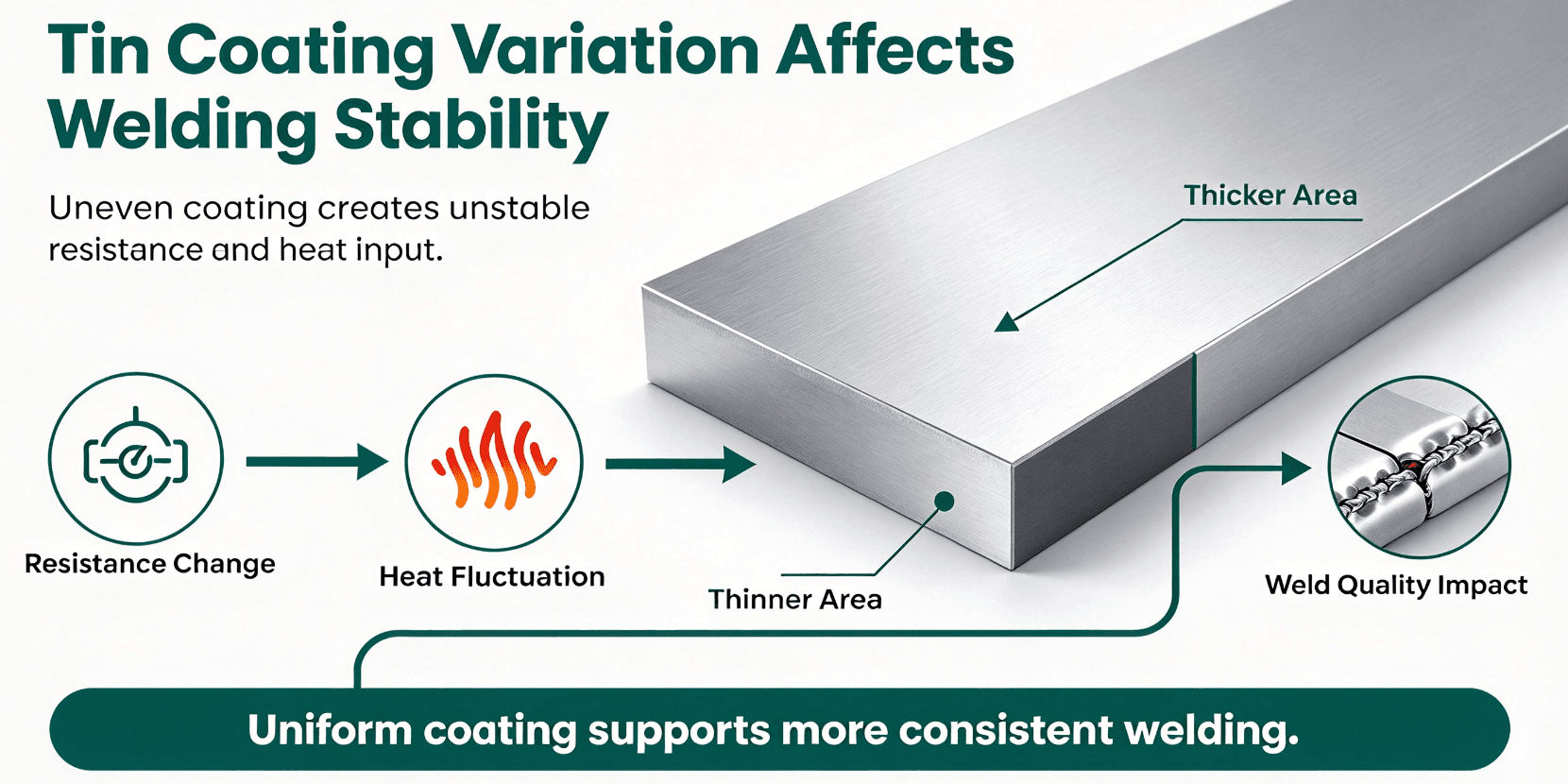
Weld Spatter & Leakage Defects: The Decisive Role of Tin Coating Uniformity in Can Welding Quality
High-speed resistance seam welding is the core forming process for three-piece metal cans. In actual mass production, persistent weld spatter, granular slag residue and hidden seam micro-leakage severely compromise sealing consistency, sterilization resistance and finished product yield. Most manufacturers tend to attribute these defects to unstable current, improper pressure or worn welding wheels. However, industrial verification proves that uneven tin coating distribution on tinplate is the fundamental material-induced root cause of recurring welding spatter and leakage issues.
Low-Earing CA Annealed Tinplate: The Optimal Material for Stable Twist-Off Lid Deep Drawing & High Yield Rate
Twist-off lid manufacturing has extremely strict requirements on material anisotropy and ductility. Different from regular can bodies, twist-off lids undergo complex deep drawing, edge trimming and crimping processes, making them highly sensitive to uneven steel performance. According to actual mass production verification, no alternative tinplate grades can achieve stable forming results for twist-off lid production. Low-earning CA continuous annealed tinplate remains the most suitable and high-performance material dedicated for twist-off lid stamping.
Want to know more?
Get in touch with us for more information about our services and products.