
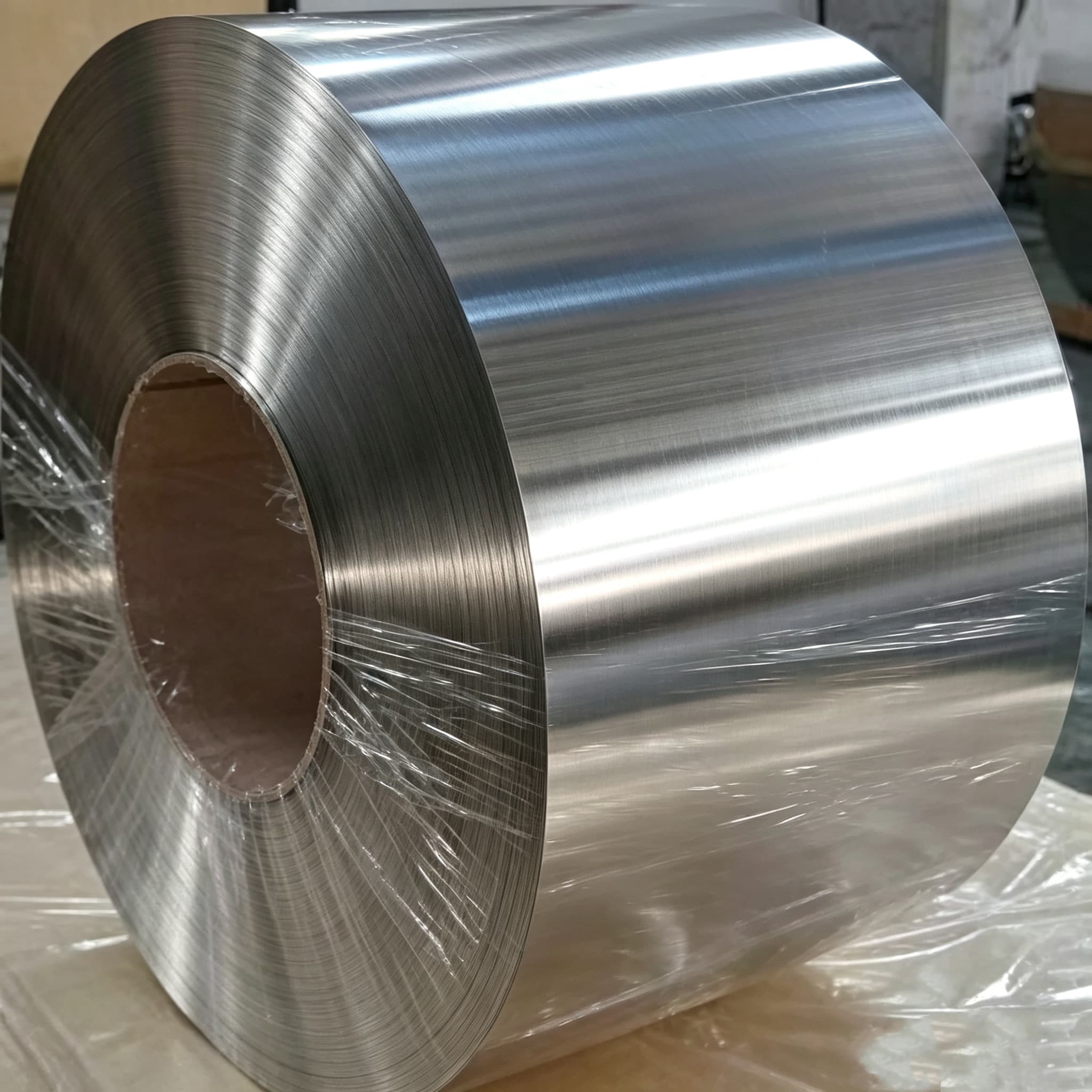
Why Rust Appears on Tinplate After Arrival and How to Reduce the Risk
Tinplate is widely used for food cans, dry food cans, aerosol cans, paint cans, chemical cans, lids, ends, printed tins, and other metal packaging products. For can manufacturers, metal printing factories, lid producers, and packaging material buyers, surface condition is very important.
When tinplate coils or sheets arrive with rust, moisture marks, or surface stains, the buyer may face production delays, extra inspection, material sorting, or even claims. Rust problems can affect printing, lacquering, forming, welding, stamping, and final can appearance.
However, rust after arrival is not always caused by one single reason. It may be related to material condition, packing, sea freight, container humidity, handling, unloading, warehouse storage, or the way the package is opened.
Understanding these factors can help buyers and suppliers reduce the risk before shipment and after arrival.
Why Tinplate Can Rust After Arrival
Tinplate has a layer of tin coating on the steel base, but it is still a metal material that needs proper protection. If moisture reaches the surface and stays there for a period of time, rust or stains may appear, especially around edges, damaged areas, or places where the coating protection is weaker.
Tinplate can be exposed to moisture during several stages:
- Before packing
- During container loading
- During long sea freight
- At the destination port
- During unloading
- In the buyer’s warehouse
- After the package is opened
- During handling before production
In many cases, the material may look acceptable when shipped, but moisture exposure during transport or storage may cause problems after arrival.
This is why rust prevention should be treated as a shared concern in the full supply chain, not only as a material issue.
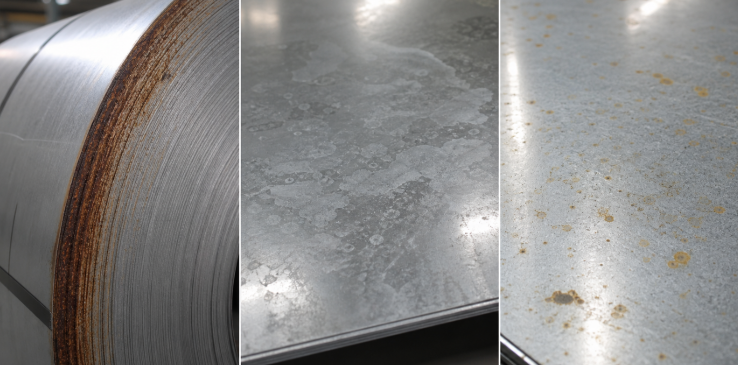
Common Reasons Rust Appears on Tinplate
Below are some common reasons why rust may appear on tinplate coils or sheets after arrival.
1. Moisture During Sea Freight
Long-distance sea freight is one of the main risk factors for tinplate and TFS materials. During shipping, temperature and humidity may change. This can create condensation inside the container or package.
If moisture enters the package and cannot dry quickly, it may stay on the surface of the tinplate. Over time, rust or water stains may appear.
This is especially important for shipments going through humid ports, rainy seasons, or long transit routes.
Good export packing can reduce this risk, but it cannot remove every possible risk during transport.
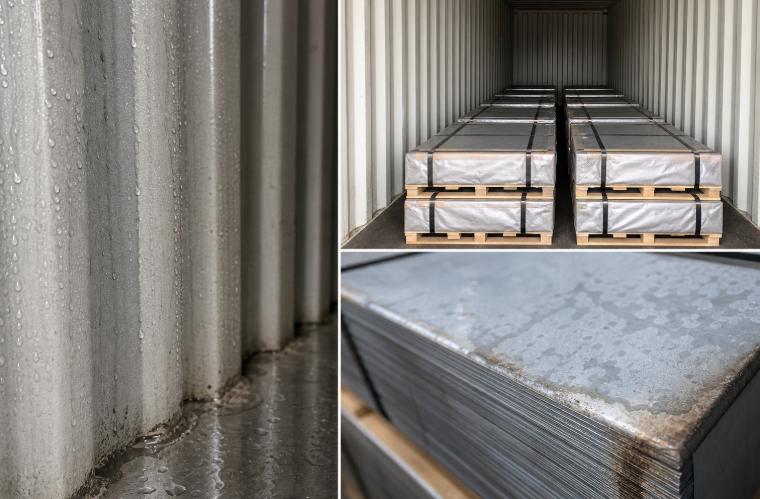
2. Damaged Packing
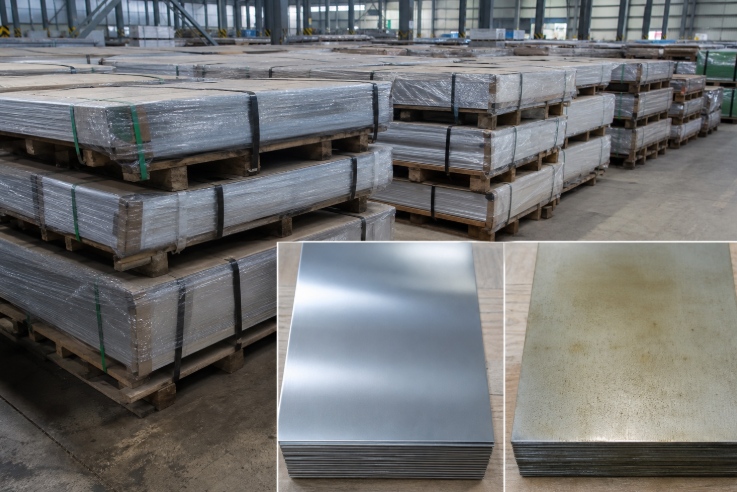
Storing tinplate in humid, poorly ventilated warehouses, directly on the floor, or near damp walls and open doors raises rust risk. Even intact materials can develop stains over time in unsuitable storage conditions.
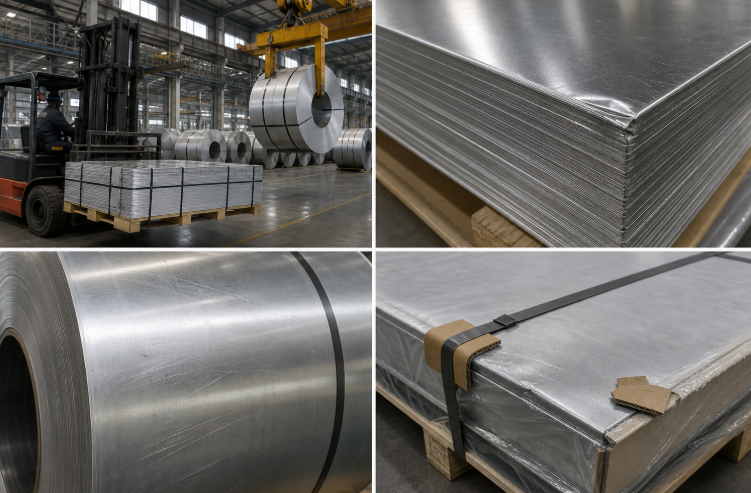
3. Container Condensation
Opening packages too early exposes tinplate to ambient moisture and dust. If production is delayed after unpacking, exposed surfaces are far more likely to rust. Extended storage beyond normal production cycles also degrades surface cleanliness and coating performance.
4. Wet or Humid Warehouse Storage
Scratches, dents and edge damage from forklift movement, lifting or manual handling break the protective tin coating, making damaged areas far more susceptible to moisture and rust.
How Rust Affects Production
Rust on tinplate can cause different problems depending on the application and severity.
Possible effects include:
- Poor printing appearance
- Uneven lacquer coating
- Lower coating adhesion
- Surface stains on finished cans
- Higher rejection rate
- Extra sorting work
- Welding or forming issues
- Customer complaints about final packaging
- Production delay
For printed tinplate, gift tins, tea tins, biscuit tins, and retail packaging, surface stains may directly affect appearance. For food cans, lids, and ends, surface condition is also important for coating and forming.
Small rust spots may sometimes be sorted or avoided, but serious rust can make the material difficult to use.
What Buyers Should Check When Tinplate Arrives
When tinplate arrives, buyers should inspect the cargo before moving it into normal storage or production.
A simple arrival inspection may include:
- Check whether the container has water marks or leakage.
- Check whether the outer packing is damaged.
- Check whether pallets, straps, and covers are intact.
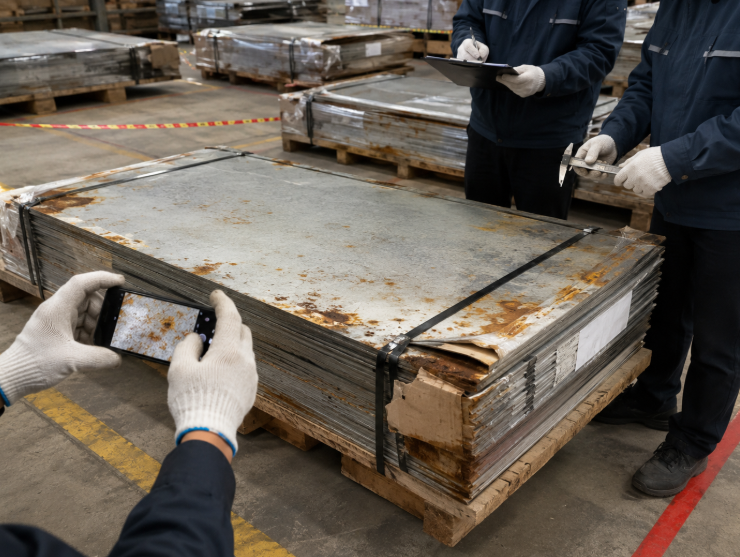
- Take photos before unloading if damage is visible.
- Check coil edges or sheet corners.
- Open the package carefully and inspect the surface.
- Check whether there is moisture inside the packing.
- Record batch number, coil number, or package number.
- Separate suspicious packages for further inspection.
- Inform the supplier quickly if there is a problem.
Early inspection helps both buyer and supplier understand where the problem may have happened.
How Buyers Can Reduce Rust Risk After Arrival
Buyers can reduce rust risk by improving handling and storage after delivery.
Practical suggestions include:
- Store tinplate in a dry indoor warehouse.
- Avoid placing materials directly on the floor.
- Keep materials away from rain, open doors, and wet walls.
- Avoid opening packages too early.
- Use opened materials as soon as possible.
- Re-cover unused materials after opening.
- Avoid rough handling and edge damage.
- Keep the warehouse ventilated.
- Inspect materials regularly if storage time is long.
- Use older stock first when possible.
These steps are simple but useful for reducing rust risk.
How Suppliers Can Help Reduce Rust Risk Before Shipment
Suppliers also play an important role before shipment.
A responsible supplier should pay attention to:
- Dry and clean material before packing
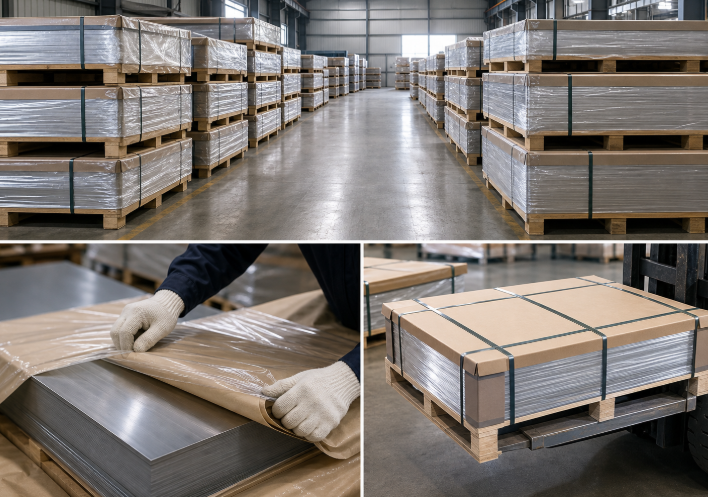
- Proper export packing
- Waterproof protection
- Edge protection
- Strong pallets or supports
- Clear labels
- Container condition check
- Careful loading
- Photos before shipment if needed
- Suitable packing for coils or sheets
For long sea freight, packing should be designed to reduce moisture exposure, edge damage, and movement inside the container.
Good packing does not guarantee that no problem will ever happen, but it can reduce the risk significantly.
Tinplate Coil and Tinplate Sheet Packing Considerations
Tinplate coils and sheets have different packing needs.
For tinplate coils, buyers and suppliers should pay attention to:
- Coil edge protection
- Inner and outer wrapping
- Waterproof layer
- Strong strapping
- Stable loading
- Protection against deformation
- Moisture barrier
For tinplate sheets, important points include:
- Flat pallet support
- Waterproof wrapping
- Corner and edge protection
- Sheet surface protection
- Proper stacking
- Strong outer cover
- Protection against bending and scratches
The packing method should match the material form, shipping route, and unloading condition.
What to Do If Rust Is Found
If rust is found after arrival, buyers should not rush to mix the material with normal production. It is better to record the issue clearly first.
Useful steps include:
- Keep the affected material separate.
- Take clear photos of the outer packing.
- Take photos of the rust or moisture marks.
- Record package number, coil number, or batch number.
- Check whether the container or warehouse had moisture.
- Record the date of arrival and opening.
- Check whether the problem is on all material or only part of it.
- Inform the supplier with details.
- Test whether unaffected areas can still be used if necessary.
- Discuss the next step based on actual condition.
Clear records make communication easier and help avoid misunderstanding.
FAQ
1. Why does tinplate rust after arrival?
Tinplate may rust after arrival because of moisture during sea freight, damaged packing, container condensation, humid storage, early unpacking, handling damage, or long storage time.
2. Does rust always mean the tinplate material was poor quality?
Not always. Rust may be related to material condition, but it can also be caused by transport, packing damage, humidity, storage, or handling after arrival.
3. How should tinplate be stored before production?
Tinplate should be stored in a dry, clean, indoor warehouse. It should be kept away from rain, wet floors, open doors, and high humidity areas.
4. Should buyers open tinplate packages immediately after arrival?
Buyers can inspect the material after arrival, but they should avoid opening many packages too early if the material will not be used soon. Opened material should be protected again if not used immediately.
5. What information should buyers provide if rust is found?
Buyers should provide photos of packing and material, package or coil number, arrival date, opening date, storage condition, and a description of where the rust appeared.
Conclusion
Rust on tinplate after arrival can cause production delays, extra inspection, and quality concerns. However, rust is not always caused by one single factor. Moisture during sea freight, damaged packing, container condensation, warehouse humidity, early unpacking, handling damage, and long storage time can all increase the risk.
For buyers, proper arrival inspection, dry storage, careful handling, and timely use can help reduce rust problems. For suppliers, clean material, reliable export packing, edge protection, and careful loading are important before shipment.
Tinplate and TFS materials need protection throughout the full process from packing to production. When buyers and suppliers both pay attention to moisture control, packing, handling, and storage, the risk of rust can be reduced.
If you are sourcing tinplate coils, tinplate sheets, TFS sheets, lacquered tinplate, printed tinplate, or scroll cut sheets for metal packaging production, please send us your application, thickness, temper, coating requirement, surface finish, size, quantity, packing requirement, and destination port.
Our team can help review suitable material options and export packing details for your order.
Related News
Other news you might be interested in
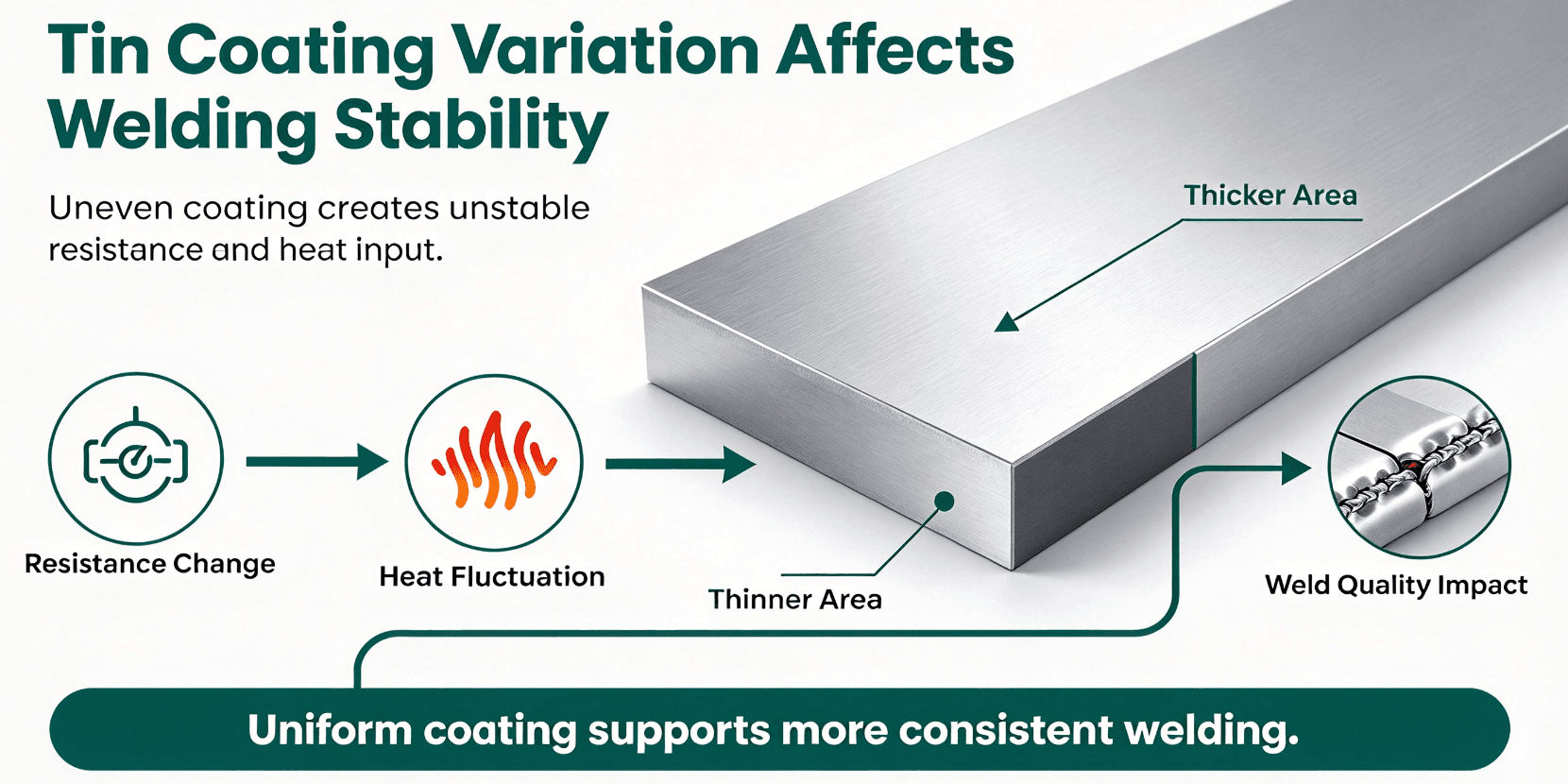
Weld Spatter & Leakage Defects: The Decisive Role of Tin Coating Uniformity in Can Welding Quality
High-speed resistance seam welding is the core forming process for three-piece metal cans. In actual mass production, persistent weld spatter, granular slag residue and hidden seam micro-leakage severely compromise sealing consistency, sterilization resistance and finished product yield. Most manufacturers tend to attribute these defects to unstable current, improper pressure or worn welding wheels. However, industrial verification proves that uneven tin coating distribution on tinplate is the fundamental material-induced root cause of recurring welding spatter and leakage issues.
Low-Earing CA Annealed Tinplate: The Optimal Material for Stable Twist-Off Lid Deep Drawing & High Yield Rate
Twist-off lid manufacturing has extremely strict requirements on material anisotropy and ductility. Different from regular can bodies, twist-off lids undergo complex deep drawing, edge trimming and crimping processes, making them highly sensitive to uneven steel performance. According to actual mass production verification, no alternative tinplate grades can achieve stable forming results for twist-off lid production. Low-earning CA continuous annealed tinplate remains the most suitable and high-performance material dedicated for twist-off lid stamping.
Want to know more?
Get in touch with us for more information about our services and products.