
Why Timely Supply Matters More Than Low Price in Packaging Steel Procurement
Why Low Price Can Be Misleading in Industrial Procurement
In packaging steel procurement, price is always important. No serious buyer ignores cost.But experienced buyers also know that a low price is not always a low-cost decision. A supplier may offer a better quotation on paper, yet still create much higher hidden cost if the material:
- arrives late
- disrupts repeated production
- forces urgent replenishment
- creates planning uncertainty
- weakens downstream delivery schedules
- increases management pressure inside the buyer’s team
That is why many industrial buyers eventually realize a simple truth: In repeated procurement, timely supply often matters more than a lower unit price. This is especially true in packaging sectors where material timing is directly connected to:
- can-making schedules
- repeated component production
- customer commitments
- seasonal demand
- export shipment planning
- warehouse balance and replenishment rhythm
In these situations, delayed material is not just an inconvenience. It becomes a cost multiplier.

Packaging Steel Procurement Is Usually Time-Sensitive Procurement
Many new suppliers assume that buyers compare packaging steel mainly by product and price. In reality, repeated buyers are often managing a much more time-sensitive system. Their procurement decisions are tied to:
- production windows
- repeated order cycles
- recurring dimensions
- scheduled line usage
- customer delivery deadlines
- seasonal packaging programs
- internal stock planning
That means the value of the supplier is not only in the material itself. It is also in how reliably that supplier fits the buyer’s operating schedule.A low price loses much of its value if it creates:
- delayed output
- unstable replenishment
- last-minute rescheduling
- internal urgency across multiple departments
For this reason, timing becomes one of the most commercial parts of the procurement decision, not just a logistics detail.
The Hidden Cost of Delayed Supply Is Usually Much Bigger Than Buyers First Expect
One of the biggest mistakes in industrial procurement is underestimating the true cost of late material. Buyers may compare two suppliers and see a price gap.
- But they often do not immediately calculate the operational cost of delay, which can include:interrupted production
- repeated schedule adjustments
- higher coordination effort
- more urgent freight or replenishment later
- internal pressure on purchasing and warehouse teams
- increased risk of missing customer delivery expectations
- lower confidence in future supply planning
A supplier that is slightly higher in price but much stronger in delivery discipline may therefore be the more profitable long-term choice. That is because timely supply protects the wider production system. Price affects cost at the quotation stage. Timing affects cost throughout the entire execution stage.
Why This Matters Even More in Repeated Orders
The importance of timely supply becomes even greater in recurring procurement. In repeated industrial programs, buyers are not placing isolated orders.
- They are often managing:regular replenishment
- repeated material specs
- recurring factory demand
- multiple SKUs
- long-term packaging commitments
If delivery timing is unstable, the effect compounds over time. Instead of one late order creating one problem, repeated late support may create:
- reduced trust in the supplier
- weaker inventory strategy
- more conservative buying behavior
- extra safety stock pressure
- more buyer workload on every cycle
This is why buyers who manage recurring programs often prioritize suppliers that deliver more predictably, even if the quotation is not the lowest. They are protecting long-term operational efficiency, not just short-term purchase price.
Timely Supply Supports Better Production Control
In many packaging factories, production control depends heavily on material timing. Packaging steel is rarely purchased simply to sit unused.
- It is usually linked closely to:a planned production sequence
- recurring line preparation
- repeated tooling use
- customer shipment deadlines
- packaging conversion schedules
This means timely material helps buyers:
- keep production planning more stable
- reduce interruptions
- improve repeated line efficiency
- lower emergency rescheduling
- keep warehouse and purchasing better aligned
A supplier that delivers on time repeatedly becomes part of the buyer’s production control system. That is much more valuable than a supplier who only helps save a small amount on paper but introduces uncertainty into the factory’s actual workflow.
Buyers Often Prefer Predictable Supply Over Aggressive Quotation
In real packaging steel procurement, many serious buyers eventually move away from "who is cheapest" and toward "who is predictable." That shift usually happens because buyers have already experienced the cost of unreliable timing. They learn that:
- a cheap order can become expensive when late
- repeated supply uncertainty creates internal management pressure
- urgent correction usually costs more than disciplined planning
- supplier reliability improves not only procurement, but factory confidence
A predictable supplier allows buyers to:
- plan better
- repeat better
- communicate better internally
- reduce emergency responses
- support customers more confidently
That is why predictable supply is often one of the strongest competitive advantages a supplier can offer in long-term industrial cooperation.
When Timely Supply Becomes Even More Important
There are several situations where timely supply becomes especially important.
During seasonal demand peaks
Some packaging categories become far more time-sensitive when demand rises. In these periods, late material can create serious commercial pressure.
In recurring production programs
When the same lines and same specs repeat regularly, timing discipline becomes essential to maintaining stable output.
In export-oriented supply chains
Where packaging steel is tied to shipment schedules or downstream export timing, delay creates even more complexity.
In multi-SKU operations
Factories and distributors managing several repeated programs need supply timing that supports coordination across more than one material cycle.
In long-term cooperation
The longer the relationship, the more the buyer values suppliers who reduce uncertainty rather than create it. These are the situations where a "better price" becomes much less important than "better timing."
Common Buyer Mistakes When Comparing Price and Delivery
Buyers often try to avoid several common procurement mistakes.
- Choosing by quote without checking supply discipline
A lower quote may be attractive, but if delivery behavior is weak, the buyer may lose much more later.
- Treating delay as an occasional issue
In repeated procurement, delay often becomes a pattern that affects long-term planning.
- Ignoring internal cost of schedule instability
Procurement decisions affect purchasing, production, warehouse, and even customer service. A timing problem rarely stays isolated.
- Overvaluing first-order speed
Some suppliers move very fast on the first order but become less reliable when repeated support is required.
- Not comparing total execution value
The right question is not only "Which price is lower?" but "Which supplier helps the full operation work better?" Strong buyers eventually compare suppliers this way.
What Strong Buyers Usually Expect from a Supplier
A stronger supplier in packaging steel procurement usually shows:
- better timing discipline
- clearer communication during repeated orders
- stronger support for recurring specs
- more realistic delivery planning
- practical response under schedule pressure
- more organized service before and after shipment
These qualities matter because buyers are not only buying material. They are buying greater control over repeated production and supply execution.That is why timely supply is often a stronger competitive advantage than a low quote.
FAQ
Why does timely supply often matter more than low price?
Because delayed material can create hidden costs in production, planning, inventory, customer commitments, and internal management.
Is this especially important for repeated orders?
Yes. In recurring procurement, timing problems often create repeated pressure across multiple order cycles.
Why do experienced buyers prefer predictable suppliers?
Because predictable supply helps them plan production, reduce internal urgency, and control long-term procurement more effectively.
Can a lower quotation still become the more expensive option?
Yes. If a low-price supplier causes delay, rescheduling, or replenishment problems, the total commercial cost may become much higher.
What should buyers compare besides price?
They should also compare delivery discipline, recurring support, communication quality, and how the supplier performs over repeated industrial orders.
---
Related News
Other news you might be interested in
Weld Spatter & Leakage Defects: The Decisive Role of Tin Coating Uniformity in Can Welding Quality
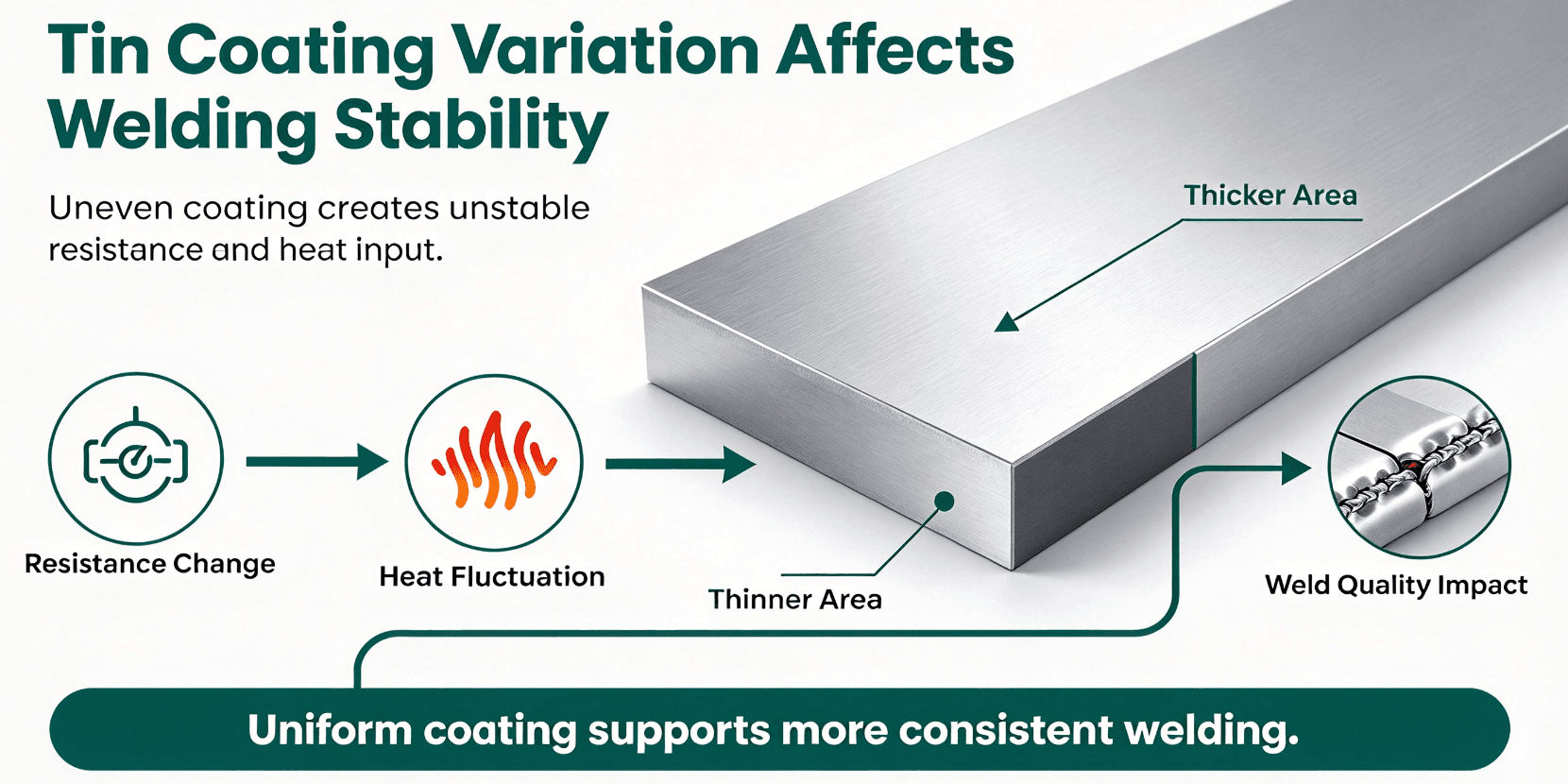
High-speed resistance seam welding is the core forming process for three-piece metal cans. In actual mass production, persistent weld spatter, granular slag residue and hidden seam micro-leakage severely compromise sealing consistency, sterilization resistance and finished product yield. Most manufacturers tend to attribute these defects to unstable current, improper pressure or worn welding wheels. However, industrial verification proves that uneven tin coating distribution on tinplate is the fundamental material-induced root cause of recurring welding spatter and leakage issues.
Low-Earing CA Annealed Tinplate: The Optimal Material for Stable Twist-Off Lid Deep Drawing & High Yield Rate
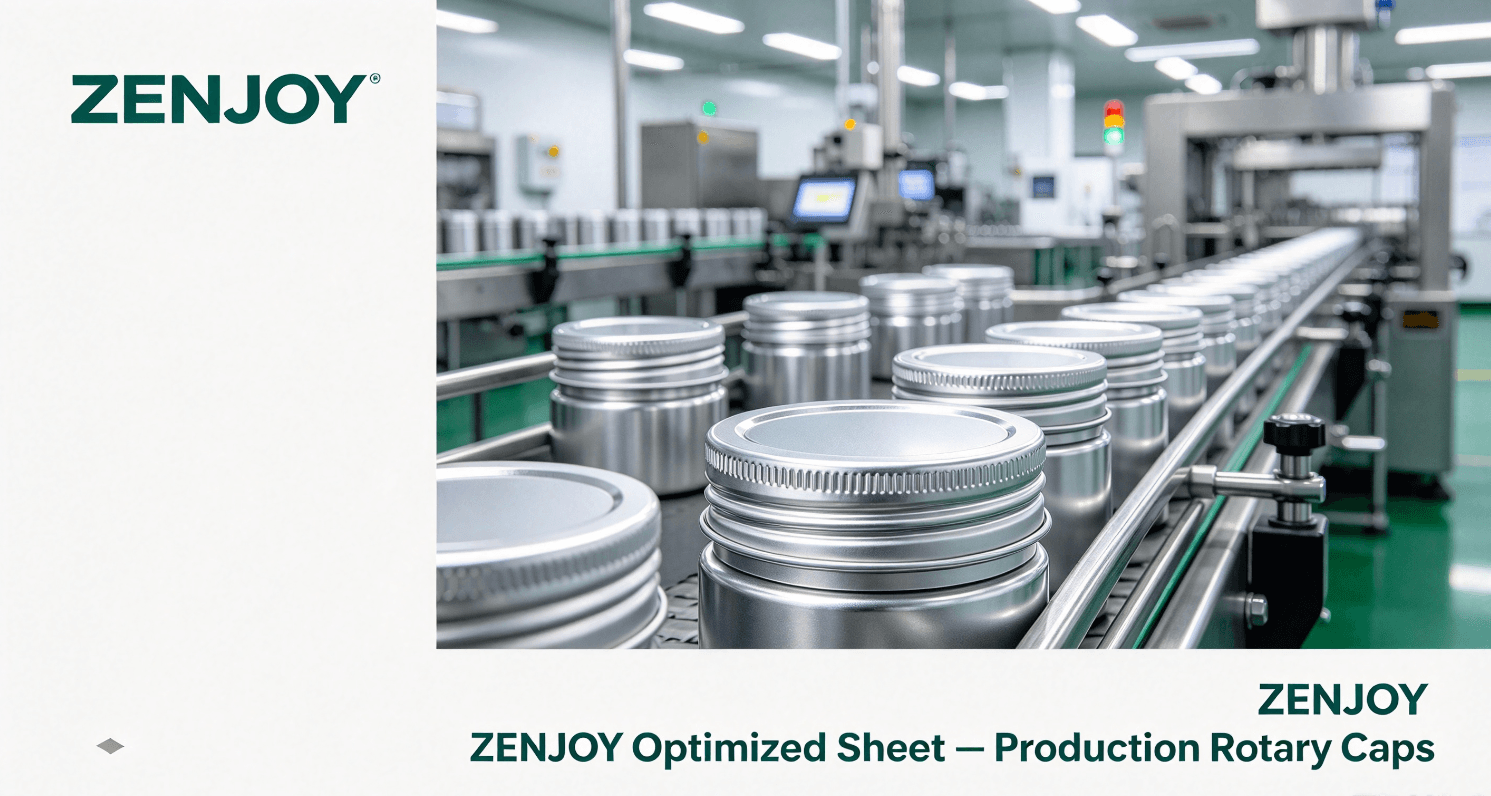
Twist-off lid manufacturing has extremely strict requirements on material anisotropy and ductility. Different from regular can bodies, twist-off lids undergo complex deep drawing, edge trimming and crimping processes, making them highly sensitive to uneven steel performance. According to actual mass production verification, no alternative tinplate grades can achieve stable forming results for twist-off lid production. Low-earning CA continuous annealed tinplate remains the most suitable and high-performance material dedicated for twist-off lid stamping.
Want to know more?
Get in touch with us for more information about our services and products.