
TFS Sheets for Stamping: What Lid and End Manufacturers Should Confirm
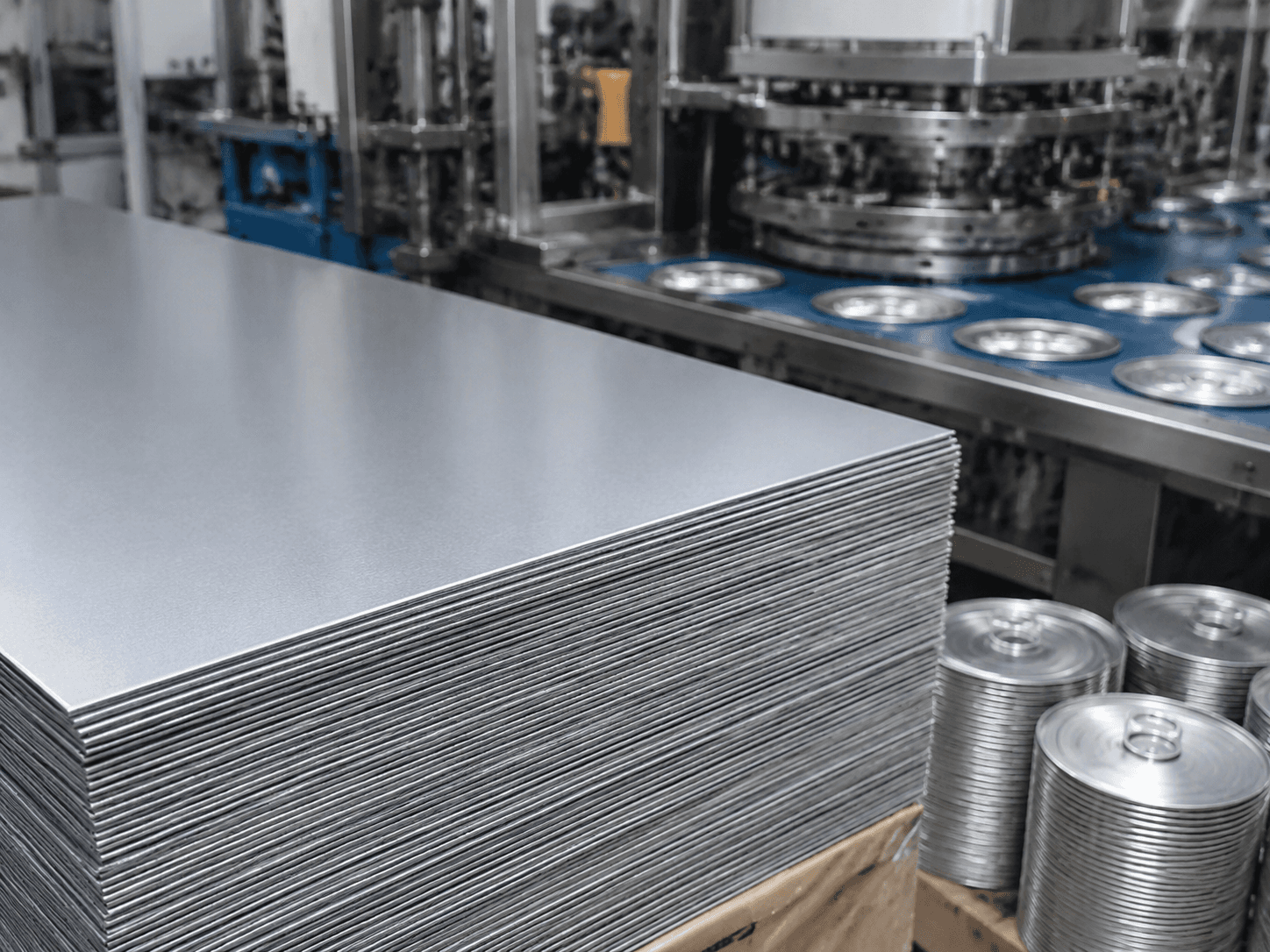
TFS sheets, also called tin free steel or ECCS, are widely used for lids, ends, easy open ends, bottom ends, and other metal packaging components. For lid manufacturers, end producers, and metal stamping factories, TFS can be a practical material when the application requires good coating adhesion, suitable forming performance, and stable sheet processing.
However, TFS sheets for stamping should not be selected only by price or basic thickness. Stamping performance is affected by several details, including temper, surface condition, chrome coating, sheet flatness, edge quality, lacquer compatibility, size accuracy, packing, handling, and the final lid or end design.
If the material does not match the stamping process, buyers may face problems such as poor feeding, coating damage, cracking, surface scratches, unstable forming, or higher rejection rates.
This article explains what buyers should confirm before ordering TFS sheets for stamping.
Key Points Buyers Should Confirm
Before ordering TFS sheets for stamping, buyers should confirm the following details.
1. Final Lid or End Application
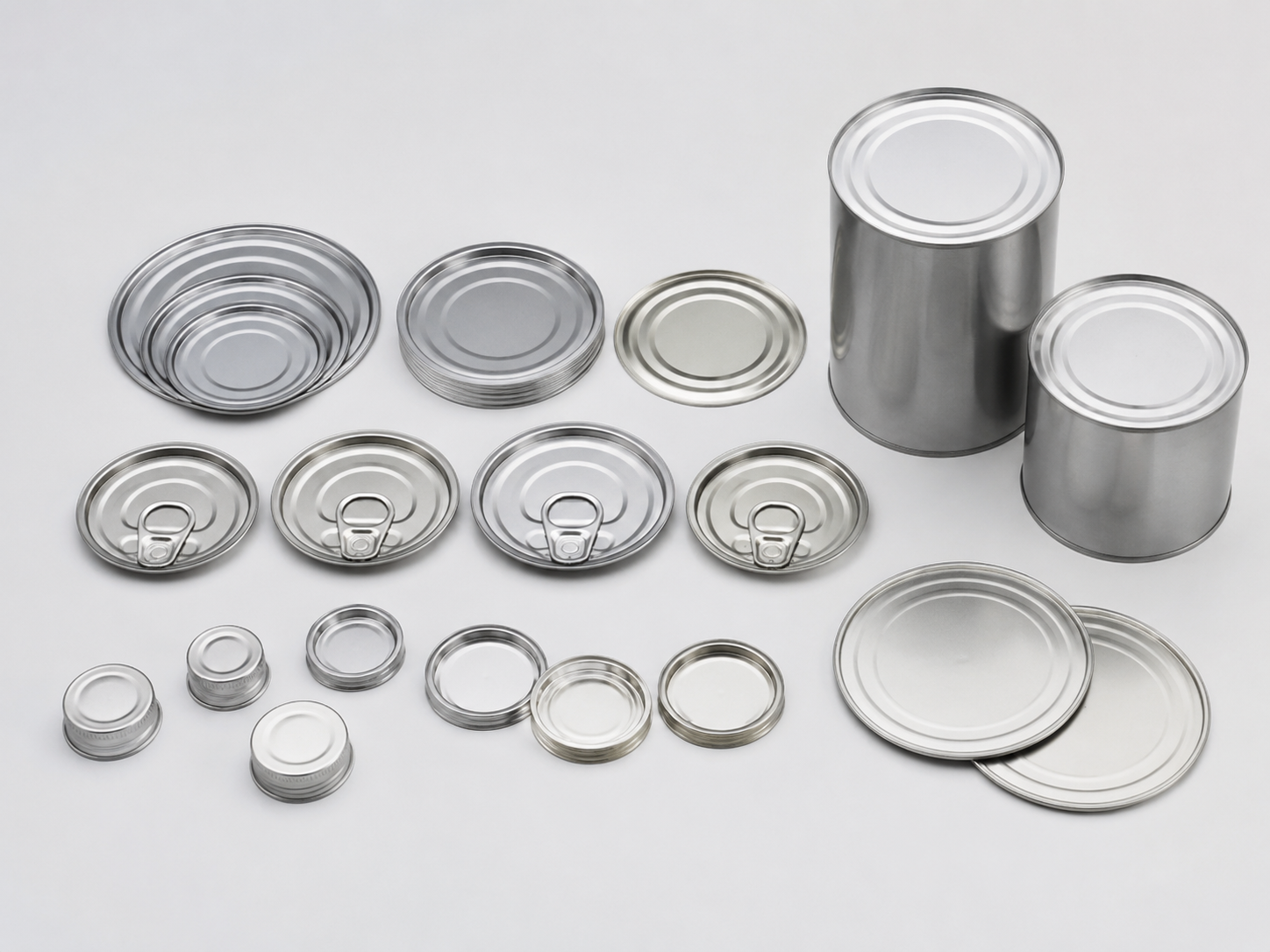
The first point to confirm is the final product. Buyers should explain whether the TFS sheet will be used for:
- Food can lids
- Easy open ends
- Bottom ends
- Dry food can lids
- Beverage or non-beverage ends
- Twist-off lid components
- General stamped parts
- Lacquered or printed metal packaging parts
The final application affects the required thickness, temper, surface, coating, and forming performance. For food packaging, the lacquer or coating system should also match the packed product and production process.
If the supplier only knows “TFS sheet,” it is difficult to recommend the most suitable material.
2. Thickness
Thickness is one of the most important specifications for TFS sheets. It affects stamping performance, final strength, cost, and material usage.
The suitable thickness depends on:
- Lid diameter
- End design
- Stamping depth
- Forming structure
- Seaming requirement
- Strength requirement
- Production speed
- Equipment condition
If the material is too thin, the final lid or end may not have enough strength. If it is too thick, stamping may become more difficult and cost may increase.
Buyers should provide the current thickness they use or share the lid/end size and design requirement.
3. Temper and Mechanical Performance
Temper affects hardness and forming behavior. For stamping, the TFS sheet must be strong enough for the final product but also suitable for the forming process.
If the material is too soft, the stamped part may deform too easily or lack strength. If it is too hard, cracking, springback, tool wear, or forming difficulty may occur.
Buyers should confirm:
- Current temper grade
- Stamping depth
- Forming method
- Required strength
- Whether the part has sharp forming areas
- Whether the production is high-speed
- Whether the product needs repeat order stability
For lid and end production, consistent mechanical performance is important because even small changes may affect forming result and machine adjustment.
4. Chrome Coating and Surface Condition
TFS does not have a tin coating like tinplate. It has a chromium-based surface layer that supports coating adhesion and later processing.
Buyers should pay attention to:
- Chrome coating requirement if specified
- Surface cleanliness
- Surface finish
- Oil level
- Passivation condition
- Whether the material will be lacquered or printed
- Whether the surface is suitable for the buyer’s coating system
Surface condition is important because TFS is often used with lacquer. If the surface does not match the coating process, problems may appear during lacquering, drying, stamping, or later forming.
5. Lacquer and Coating Compatibility
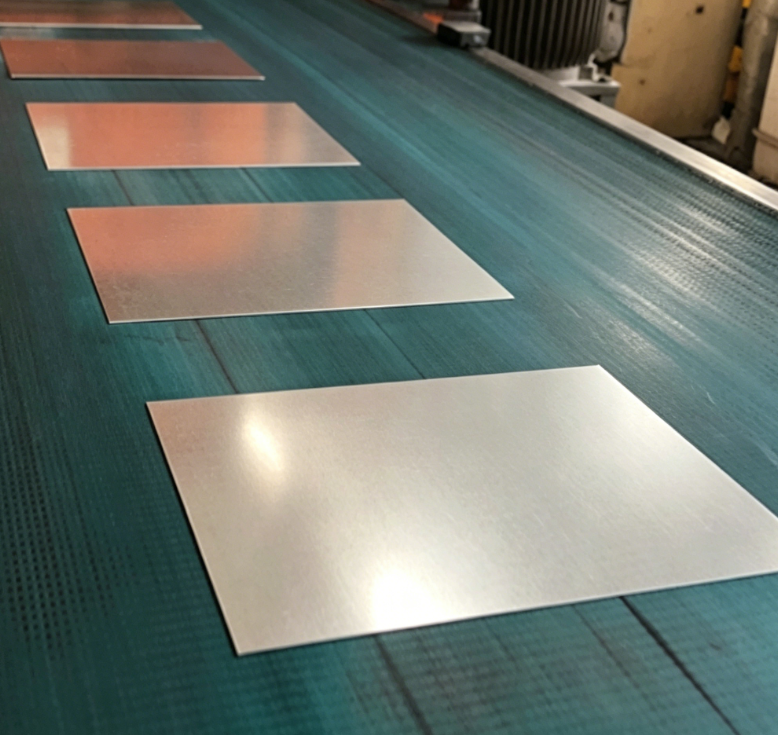
For many lids and ends, TFS sheets are lacquered before stamping. The coating must stay attached during forming and final use.
Buyers should confirm:
- Inner lacquer requirement
- Outer lacquer requirement
- Whether the product contacts food
- Whether the packed product is dry, wet, acidic, oily, or chemical-based
- Whether the coating will go through baking or drying
- Whether the coating must pass forming or adhesion tests
Possible coating-related problems include:
- Poor adhesion
- Cracking after stamping
- Peeling near formed areas
- Uneven coating
- Surface marks
- Rust risk around damaged areas
If buyers already use a certain lacquer system, they should tell the supplier before ordering TFS sheets.
6. Sheet Flatness
Flatness affects feeding, stamping accuracy, coating uniformity, and production stability.
If TFS sheets are not flat enough, factories may face:
- Feeding problems
- Sheet shifting
- Misalignment
- Uneven coating
- Stamping defects
- Machine stops
- Higher rejection rate
Flatness is especially important for high-speed stamping lines. Buyers should check whether the sheet flatness is suitable for their equipment and product size.
7. Edge Quality and Burrs
Edge quality matters because TFS sheets are often cut, stacked, fed, and stamped at high speed.
Poor edge quality may cause:
- Feeding issues
- Scratches
- Burr-related defects
- Coating damage near edges
- Tool wear
- Safety concerns during handling
- Unstable stamping
If buyers use scroll cut sheets or cut-to-size sheets, the cutting quality and tolerance should be confirmed before production.
For lid and end manufacturers, edge quality should be part of material inspection.
8. Sheet Size or Scroll Cutting Requirement
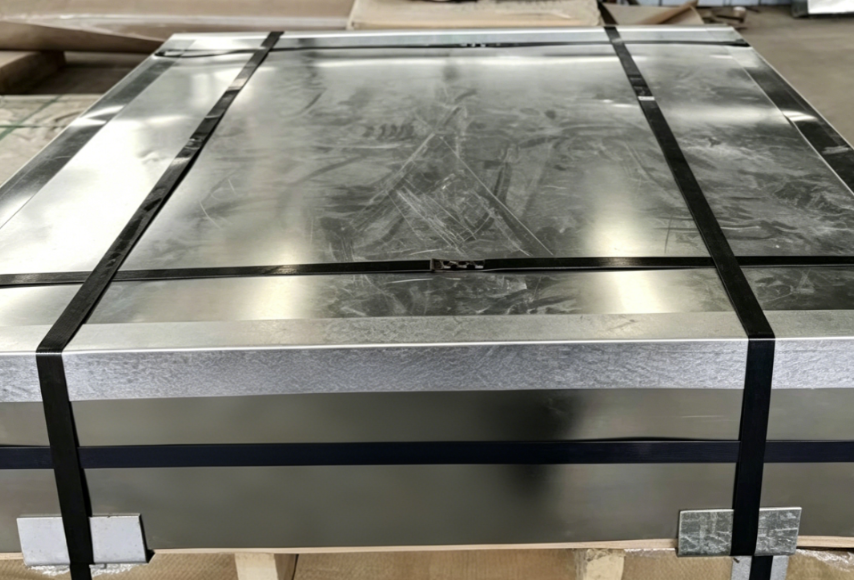
TFS sheets for stamping may be supplied as rectangular sheets, cut sheets, slit materials, or scroll cut sheets.
Buyers should provide:
- Sheet width and length
- Scroll cutting drawing if needed
- Stamping layout
- Tolerance requirement
- Quantity per size
- Whether the same size will be ordered repeatedly
A suitable sheet size can help reduce waste and improve production efficiency. For regular lid or end production, scroll cut TFS sheets may be useful if the layout is stable and the quantity is enough.
However, if the product design is still changing or the order quantity is small, standard cut sheets may be more practical.
9. Packing and Handling
TFS sheets should be protected during transport and storage. Surface scratches, moisture, edge damage, and deformation can affect later coating and stamping.
Buyers and suppliers should pay attention to:
- Export packing
- Moisture protection
- Edge protection
- Pallet strength
- Sheet stacking
- Labeling
- Unloading method
- Warehouse storage
- Protection after opening
TFS sheets should be stored in a dry, clean warehouse and handled carefully before production. Opened sheets should be protected if they are not used immediately.
FAQ
1.What are TFS sheets used for in metal packaging?
TFS sheets are commonly used for lids, ends, easy open ends, bottom ends, dry food can lids, and other stamped metal packaging components.
2.Why is TFS used for lids and ends?
TFS is often selected because it can provide good coating adhesion and suitable performance for many coated and stamped packaging applications.
3.What should buyers confirm before stamping TFS sheets?
Buyers should confirm application, thickness, temper, surface condition, chrome coating, lacquer requirement, sheet size, tolerance, edge quality, packing, and stamping process.
4.Can TFS sheets crack during stamping?
Cracking may happen if the material temper, thickness, forming depth, coating, or stamping condition does not match the application. Testing is useful before bulk production.
5.Are scroll cut TFS sheets useful for lid and end production?
They can be useful when the product size is stable, the layout is clear, and the order quantity is suitable. Scroll cutting may help reduce waste and simplify production preparation in some cases.
Conclusion
TFS sheets can be a practical material for lids, ends, easy open ends, and stamped metal packaging components. However, good stamping performance depends on more than thickness and price. Buyers should also confirm temper, surface condition, chrome coating, lacquer compatibility, flatness, edge quality, sheet size, packing, and the final production process. For lid and end manufacturers, clear material information before ordering helps reduce mismatch, production waste, and unnecessary machine adjustment.
For new specifications or new suppliers, a trial order can help confirm whether the TFS sheet is suitable for the stamping process.
If you are sourcing TFS sheets, TFS coils, TFS scroll cutting sheets, tinplate sheets, or coated steel materials for lids, ends, easy open ends, or metal stamping production, please send us your application, thickness, temper, surface requirement, coating or lacquer need, sheet size or drawing, quantity, production process, and destination port.
Our team can help review suitable material options for your order.
Related News
Other news you might be interested in

Metal Packaging Sourcing Simplified: Choosing Tinplate, TFS, and Easy Open Ends for Your Product Line
Discover how strategic sourcing of tinplate, TFS, and easy open ends reduces risk, stabilizes lead times, and supports flexible can production for food and industrial packaging buyers.

Secure Your Metal Packaging Supply with Premium Tinplate, TFS, and Easy Open Ends
Secure your metal packaging supply with premium tinplate and TFS. Learn how integrated sourcing reduces downtime, cuts costs, and ensures reliable delivery for two-piece and three-piece cans.
Want to know more?
Get in touch with us for more information about our services and products.