
Tinplate for Tea Tins: What Matters Before Printing and Forming
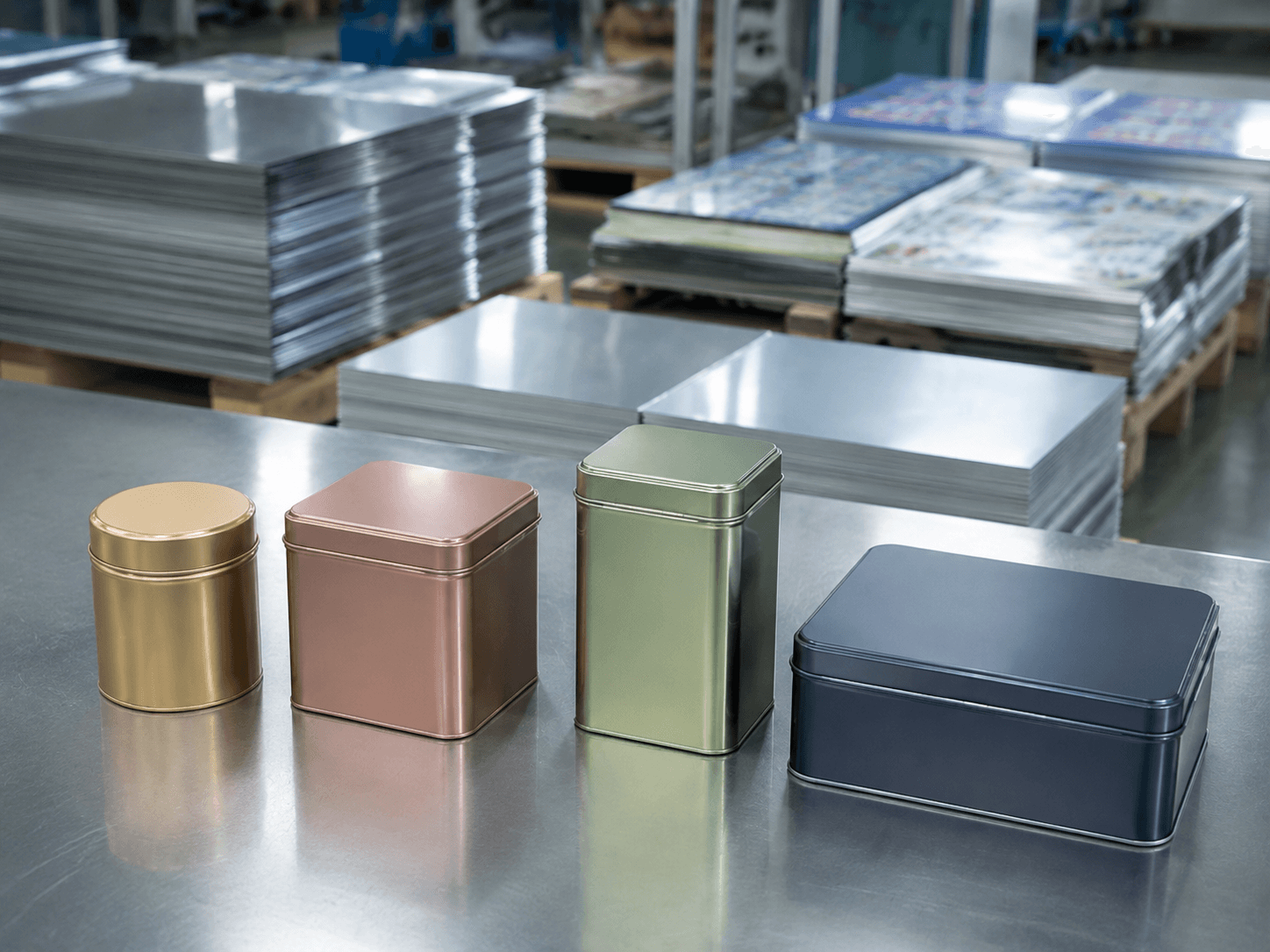
Tea tins are widely used for loose tea, tea bags, gift tea sets, premium packaging, and retail display products. Compared with some industrial cans, tea tins often have higher requirements for appearance because the package is part of the product value.
For tea tin manufacturers, metal printing factories, and packaging material buyers, choosing the right tinplate is important before printing and forming. A clean surface, suitable thickness, stable flatness, good coating compatibility, and proper forming performance can all affect the final tea tin quality.
If the tinplate is not suitable, problems may appear during printing, lacquering, cutting, bending, forming, or assembly. These issues can lead to color defects, scratches, poor shape, coating cracks, unstable appearance, or higher rejection rates.
This article explains what buyers should check when sourcing tinplate sheets for tea tin production.
Why Tinplate Is Commonly Used for Tea Tins
Tinplate is widely used for tea tins because it offers a good balance of appearance, strength, printability, and forming performance. It can be printed with brand designs, lacquered for surface protection, and formed into different shapes such as round tins, square tins, rectangular tins, and gift boxes.
Tea tins may require:
- Printed outer surfaces
- Inner lacquer or protective coating
- Good forming performance
- Clean surface appearance
- Stable sheet flatness
- Good edge condition
- Suitable strength for storage and transport
For retail tea packaging, the visual result is very important. Even small surface defects may become obvious after printing, especially on light colors, large solid color areas, metallic designs, or premium gift packaging.
Key Points Buyers Should Confirm
Before ordering tinplate for tea tins, buyers should confirm several practical details.
1. Surface Quality
Surface quality is one of the most important factors for tea tin production. Since tea tins are often printed and displayed to consumers, scratches, stains, marks, and surface defects can affect the final appearance.
Buyers should pay attention to:
- Scratches
- Oil marks
- Water stains
- Roller marks
- Black spots
- Dents
- Surface contamination
- Uneven gloss
- Edge damage
Some small defects may not matter for hidden parts, but they can be a serious issue on visible printed surfaces. For tea tins with premium branding, buyers should discuss surface requirements clearly before ordering.
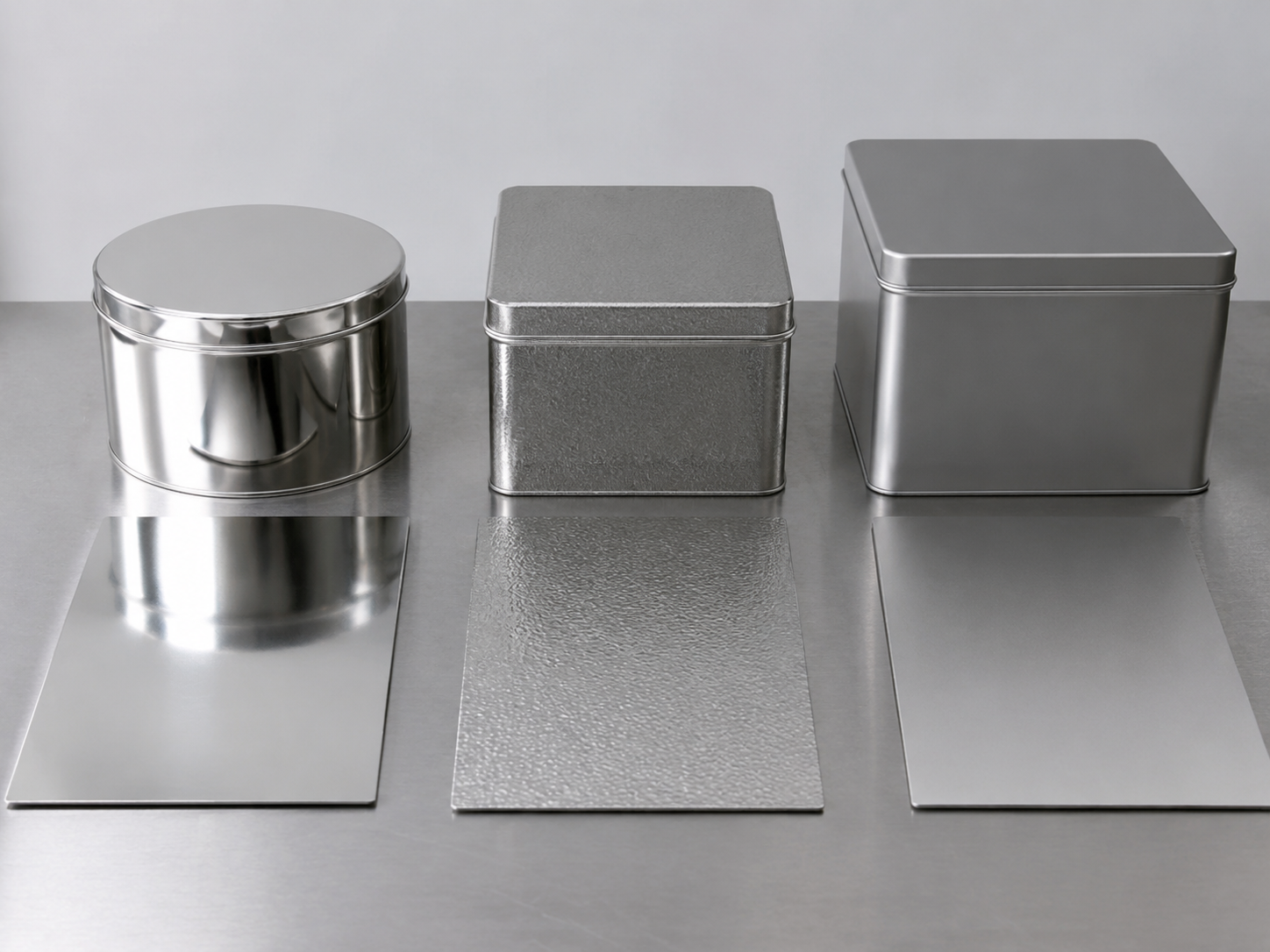
2. Surface Finish
Tinplate surface finish affects printing appearance and final visual effect.
Common surface finishes include:
- Bright
- Stone
- Silver
- Matte
A bright finish may be suitable for some decorative designs, while stone or matte finishes may be preferred for different printing effects. There is no one best surface finish for all tea tins. The right choice depends on the design, printing method, coating requirement, and final appearance.
If the buyer already has a printed design or current material sample, it is helpful to share it with the supplier.
3. Thickness
Thickness affects the strength, forming performance, and cost of tea tins.
If the tinplate is too thin, the finished tin may feel weak or deform easily. If it is too thick, forming may become more difficult and material cost may increase.
The right thickness depends on:
- Tin size
- Tin shape
- Lid structure
- Body design
- Forming method
- Required strength
- Customer appearance requirement
For small tea tins, the thickness requirement may be different from large gift boxes or multi-piece packaging. Buyers should provide the current thickness or final tin size when asking for a quotation.
4. Temper and Forming Performance
Temper affects hardness and forming behavior. Tea tins often need bending, stamping, curling, locking, or other forming steps. If the material is too hard, cracks or forming marks may appear. If it is too soft, the tin may not keep its shape well.
Buyers should consider:
- Whether the tin is round, square, or rectangular
- Whether deep forming is required
- Whether corners are sharp
- Whether the lid needs tight fitting
- Whether the design has embossed or special shapes
- Whether the tin body needs stable strength
For new designs, testing before bulk production is useful, especially when the shape is more complex.
5. Printing Compatibility
Many tea tins use printed tinplate sheets. The printing result depends on the tinplate surface, coating, ink, drying process, and later forming.
Common printing problems include:
- Uneven color
- Poor ink adhesion
- Color difference between batches
- Printing spots
- Low image clarity
- Ink damage after forming
- Gloss difference
Buyers should confirm whether the tinplate will be printed before or after coating, and whether the surface is suitable for the printing process.
For repeat orders, color consistency should also be discussed. If the brand design uses strict colors, buyers should keep material specifications and printing conditions as stable as possible.
6. Lacquer and Food Packaging Considerations
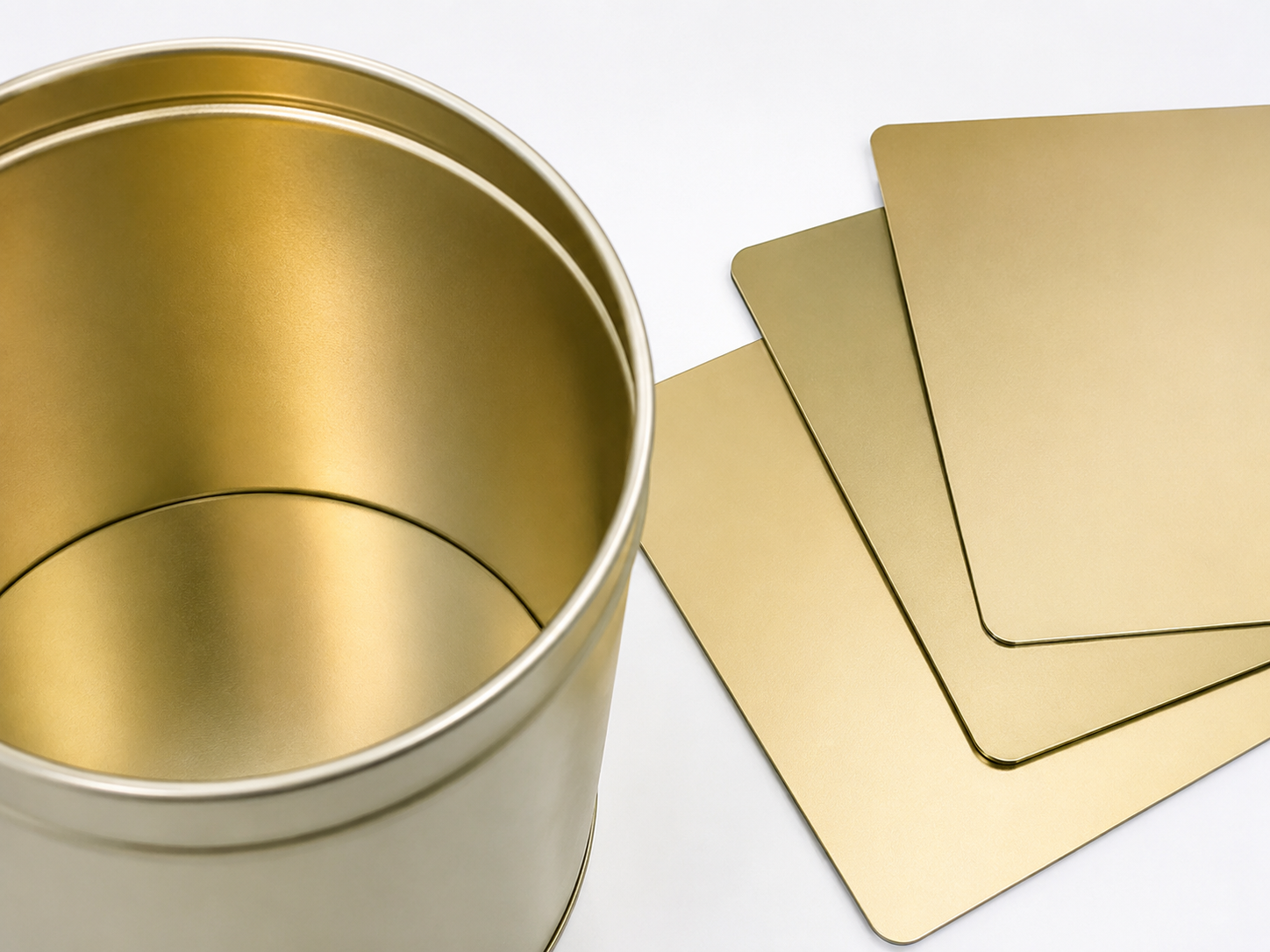
Tea is usually a dry product, but the inside of the tin should still be clean and suitable for packaging use. Some tea tins may require inner lacquer or protective coating to reduce direct contact with the metal and improve surface cleanliness.
Buyers should confirm:
- Whether inner lacquer is required
- Whether outer lacquer is required
- Whether the tin will directly contact tea
- Whether the product is loose tea or packed tea bags
- Whether there are odor requirements
- Whether the packaging is for food contact use
For tea packaging, odor control can be important. Buyers should avoid using unsuitable coating, ink, or storage conditions that may affect the product.
7. Sheet Flatness
Flatness affects printing, cutting, and feeding. If tinplate sheets are not flat enough, the factory may face problems during metal printing or forming.
Possible issues include:
- Feeding problems
- Printing misalignment
- Uneven coating
- Cutting inaccuracy
- Bending difficulty
- Higher rejection rate
For printed tinplate sheets, flatness is especially important because printing requires stable sheet movement and accurate registration.
8. Edge Quality and Cutting Accuracy
Tea tin production often involves cutting, bending, and forming. Poor edge quality may cause scratches, burrs, poor fitting, or handling problems.
Buyers should check:
- Edge damage
- Burrs
- Sheet size tolerance
- Corner damage
- Cutting accuracy
- Surface scratches near edges
If the tinplate is supplied as cut sheets, the sheet size should match the production layout. Clear size information helps reduce waste and avoid production mismatch.
Simple Checklist for Tea Tin Tinplate Buyers
| Item | What to Confirm |
|---|---|
| Application | Tea tin, gift tin, loose tea packaging, tea bag packaging |
| Material form | Tinplate sheet, printed tinplate sheet, lacquered tinplate sheet |
| Thickness | Required thickness or current specification |
| Temper | Forming requirement or current temper |
| Surface finish | Bright, stone, silver, matte, or sample reference |
| Surface quality | Scratches, stains, marks, dents, oil spots |
| Printing | Printing design, color requirement, ink adhesion, repeat order consistency |
| Lacquer | Inner lacquer, outer lacquer, food packaging requirement |
| Sheet size | Width, length, cutting tolerance |
| Forming process | Cutting, bending, stamping, curling, locking, embossing |
| Packing | Moisture protection, surface protection, pallet packing |
| Quantity | Trial order, first order, monthly usage |
| Delivery | Destination port and trade terms |
Common Mistakes When Ordering Tinplate for Tea Tins
Buyers should avoid several common mistakes.
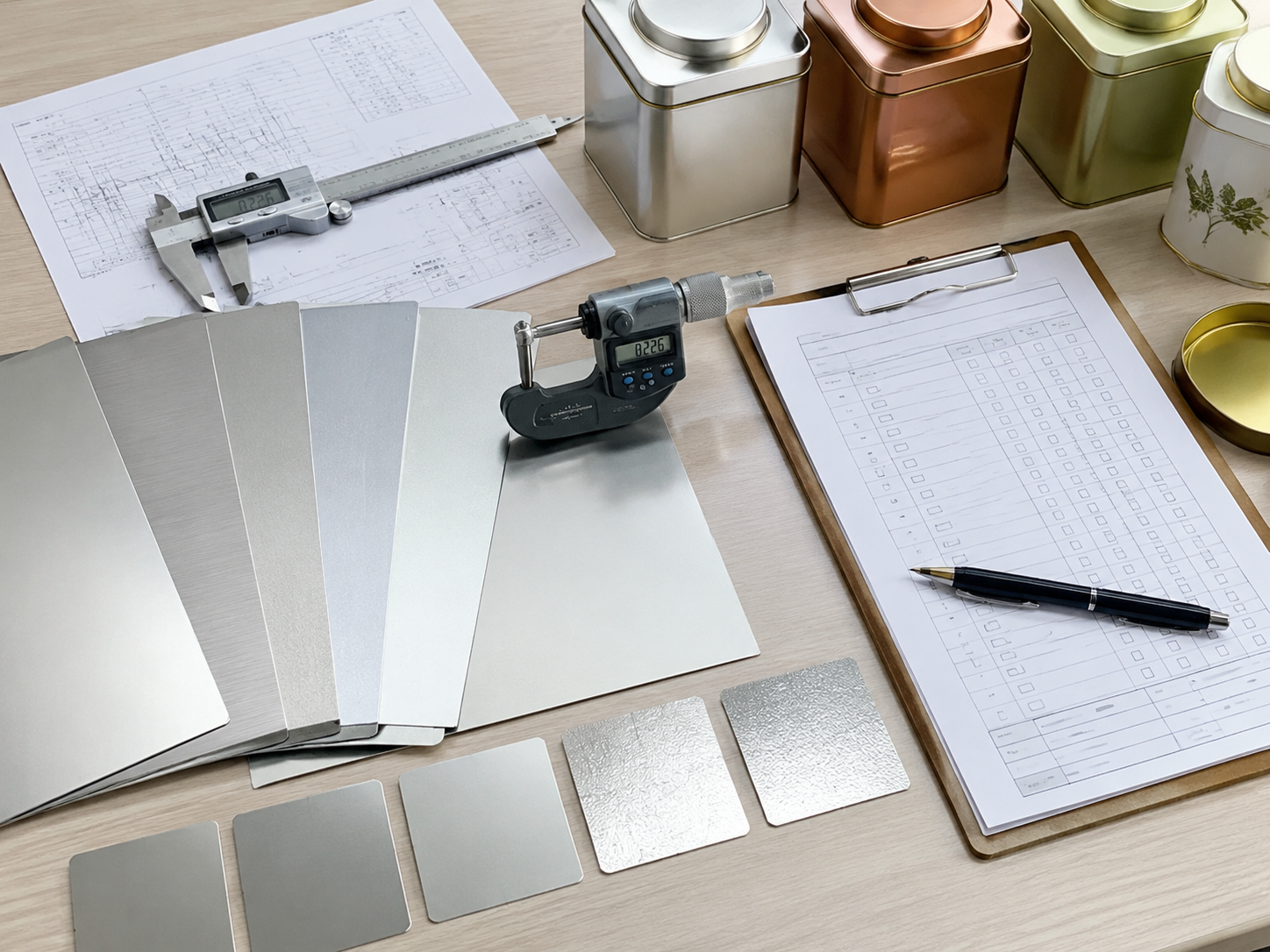
1.Only Checking Price and Thickness
Price and thickness are important, but they are not enough. For tea tins, surface quality, printing performance, flatness, and forming behavior can be just as important.
2.Ignoring Surface Defects Before Printing
Some surface defects may become more visible after printing. It is better to check surface quality before production instead of finding problems after printing.
3.Changing Material Between Repeat Orders
If the same tea tin design is produced repeatedly, changing surface finish, thickness, or coating may affect printing color, forming result, and final appearance.
4.Not Testing New Designs
New tin shapes, special lids, embossed designs, or premium printed surfaces should be tested before bulk orders. A small test can help reduce large production risks.
FAQ
1.What tinplate is used for tea tins?
Tea tins usually use tinplate sheets, printed tinplate sheets, or lacquered tinplate sheets with suitable thickness, surface finish, printing performance, and forming ability.
2.Why is surface quality important for tea tins?
Tea tins are often retail packaging, so scratches, stains, dents, or uneven gloss may affect the final appearance and brand image after printing.
3.Should tea tins use lacquered tinplate?
It depends on the packaging design and product requirement. Some tea tins need inner or outer lacquer for protection, appearance, cleanliness, or food packaging use.
4.What problems can happen during tea tin forming?
Possible problems include coating cracks, scratches, poor corner forming, weak shape, poor lid fitting, and surface marks after bending or stamping.
5.What information should buyers provide when ordering tinplate for tea tins?
Buyers should provide application, thickness, temper, surface finish, printing requirement, lacquer requirement, sheet size, forming process, quantity, packing requirement, and destination port.
Conclusion
Choosing tinplate for tea tins is not only about finding a low price. Buyers should consider surface quality, surface finish, thickness, temper, printing compatibility, lacquer requirement, flatness, edge quality, and forming performance.
A suitable tinplate sheet can help support cleaner printing, better appearance, smoother forming, and more stable repeat production. For tea tins, where packaging appearance is closely connected with product value, material selection before printing and forming is especially important.
Our team can help review suitable material options for your tea tin packaging needs.
Related News
Other news you might be interested in
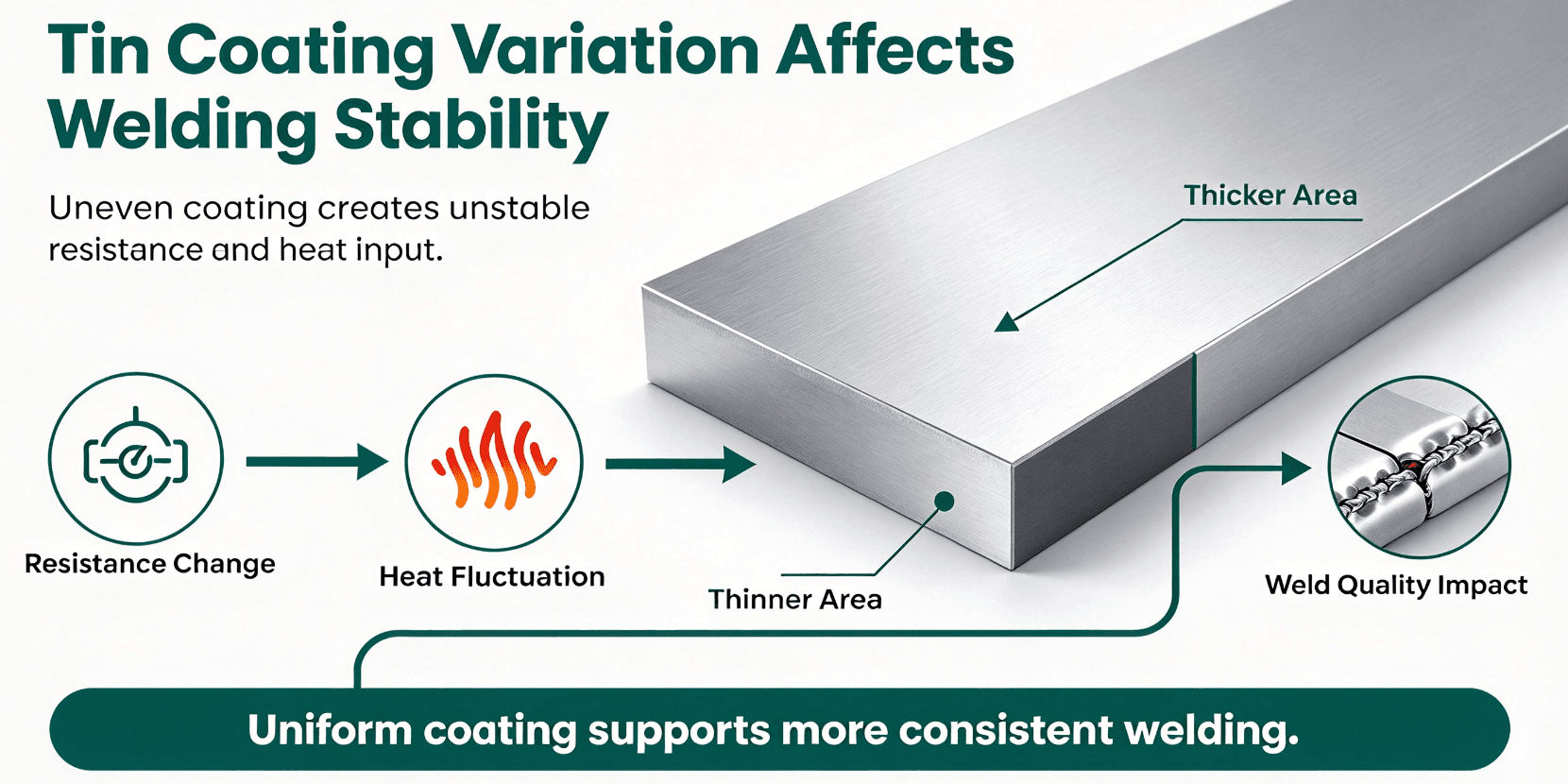
Weld Spatter & Leakage Defects: The Decisive Role of Tin Coating Uniformity in Can Welding Quality
High-speed resistance seam welding is the core forming process for three-piece metal cans. In actual mass production, persistent weld spatter, granular slag residue and hidden seam micro-leakage severely compromise sealing consistency, sterilization resistance and finished product yield. Most manufacturers tend to attribute these defects to unstable current, improper pressure or worn welding wheels. However, industrial verification proves that uneven tin coating distribution on tinplate is the fundamental material-induced root cause of recurring welding spatter and leakage issues.
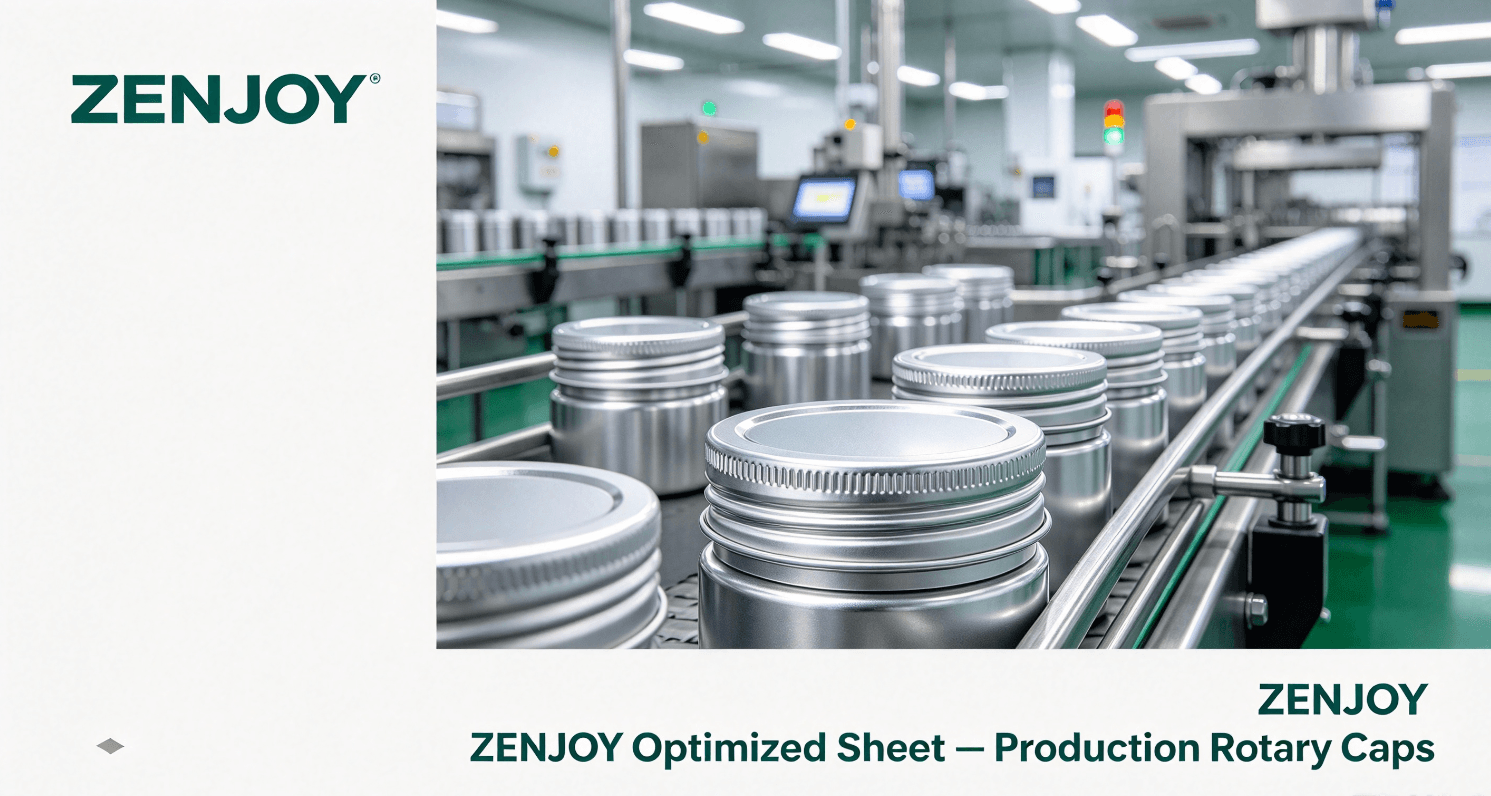
Low-Earing CA Annealed Tinplate: The Optimal Material for Stable Twist-Off Lid Deep Drawing & High Yield Rate
Twist-off lid manufacturing has extremely strict requirements on material anisotropy and ductility. Different from regular can bodies, twist-off lids undergo complex deep drawing, edge trimming and crimping processes, making them highly sensitive to uneven steel performance. According to actual mass production verification, no alternative tinplate grades can achieve stable forming results for twist-off lid production. Low-earning CA continuous annealed tinplate remains the most suitable and high-performance material dedicated for twist-off lid stamping.
Want to know more?
Get in touch with us for more information about our services and products.