
What Procurement Teams Should Check Before Switching Tinplate Suppliers
Why Switching Suppliers Needs More Than a Better Quote
Changing tinplate suppliers can create real value.
A buyer may be looking for:
- better pricing
- more reliable delivery
- wider specification support
- improved communication
- stronger processing capability
But switching suppliers also creates risk.
A lower quote or faster response is not enough by itself.
If the new supplier does not match the production requirement closely enough, the buyer may face:
- qualification delays
- internal production issues
- documentation gaps
- shipment timing problems
- weaker repeat-order stability
That is why switching should be treated as a procurement control decision, not just a commercial opportunity.
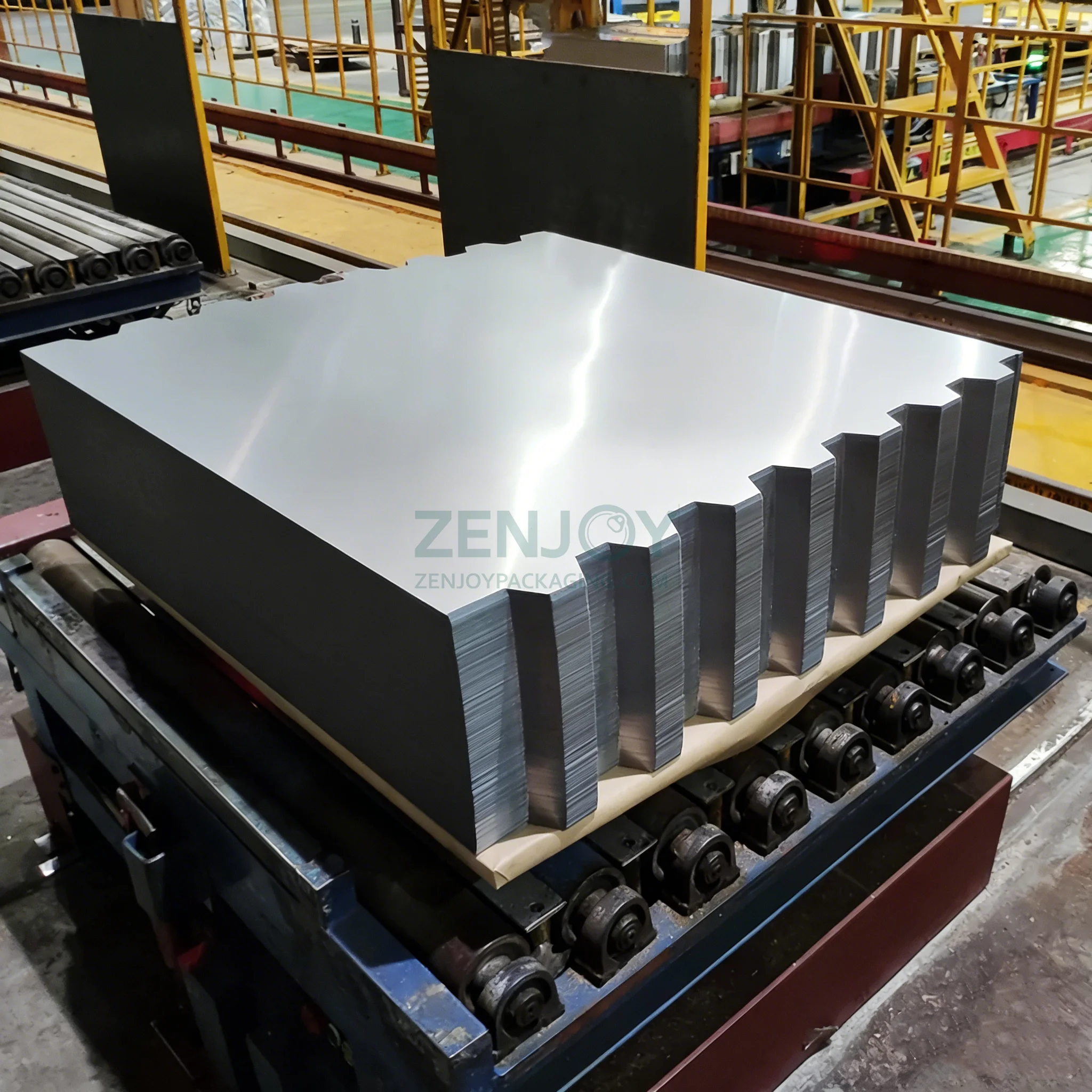
Tinplate scroll cutting sheet
马口铁卷材分切板/镀锡薄钢板卷剪平板 指将大卷的马口铁(镀锡钢板)通过分切、开平工艺,裁切成指定尺寸的平板状马口铁,是罐头、五金、包装等行业的常用原料。 这类板材是马口铁深加工的基础形态,可根据需求分切成不同规格(尺寸按客户订单),后续可冲压、折弯成罐头罐身/易开盖、金属包装盒、五金配件等。
The First Check: Is the Specification Truly Matched?
The biggest switching mistake is to assume that similar wording means the same material performance.
Before changing supplier, buyers should confirm the full match on:
- thickness
- width
- temper
- coating weight
- supply form
- packaging basis
- any application-specific requirement
If the old and new offers are not aligned at this level, the comparison may be misleading from the beginning.
The first goal in supplier switching is not to get a new quote.
It is to establish whether the buyer is actually comparing the same working material.
The Second Check: Will the Material Behave the Same in Production?
Even when the nominal specification looks similar, the production result may not be identical.
Procurement teams should coordinate with quality and production teams to review:
- forming behavior
- line stability
- consistency from batch to batch
- handling suitability
- internal acceptance criteria
This matters especially in can-making, end production, and packaging-related operations where repeat performance affects output efficiency.
A successful supplier switch is not only about material arriving.
It is about material performing smoothly.
The Third Check: Can the New Supplier Support the Required Supply Form?
A supplier may be able to provide tinplate, but not necessarily in the most useful format.
Before switching, buyers should confirm whether the new supplier can reliably support:
- full coil
- sheet
- cut-to-length supply
- repeated custom dimensions
- packing by size or item
- processing requirements linked to the buyer’s equipment
If the new supply format creates more internal work, the price benefit may become much smaller than expected.
The Fourth Check: Is the Lead Time Really Better?
Some supplier switches are driven mainly by timing pressure.
But buyers should check whether the new supplier’s lead time is:
- realistic under current conditions
- valid for the exact specification
- inclusive of processing time
- workable during busy season
- repeatable beyond the first shipment
Trade-policy uncertainty and broader trade friction have already affected timing patterns in global trade, so buyers should be cautious about assuming that a new supplier’s first promise will always hold under future pressure.
The Fifth Check: Are Documents and Traceability Clear Enough?
Before switching, procurement teams should also verify whether the new supplier can support:
- material certificates
- inspection records
- packing clarity
- shipment documents
- batch or coil traceability
- consistent follow-up after dispatch
A supplier switch becomes much easier when documentation standards are reviewed early rather than after the first shipment is already moving.
For bulk users, document quality is part of supplier reliability.
The Sixth Check: Can the Supplier Support Repeat Orders, Not Just Trial Orders?
A new supplier may perform well on the first order, especially if the volume is controlled and the order receives extra attention.
The more important question is:
Can this supplier support the same standard under repeat conditions?
Buyers should evaluate:
- repeat-order consistency
- communication quality over time
- support during peak season
- ability to manage multiple future orders
- long-term fit with the buyer’s planning model
Switching suppliers is far more valuable when it improves the recurring supply program, not just one transaction.
Why Trial Thinking Is Important
Procurement teams often benefit from treating a supplier switch as a controlled qualification step.
That may involve:
- confirming the benchmark specification
- running an internal review with quality and production
- comparing not only price but usable production outcome
- evaluating the first order as a learning stage
- defining what success should look like before scaling volume
This approach usually reduces switching risk and improves internal alignment.
Common Mistakes Procurement Teams Should Avoid
Several switching mistakes are common:
- Choosing too quickly on price alone
A lower quote may hide differences in usability, timing, or service quality.
- Assuming nominal specs guarantee identical performance
Production reality may still differ.
- Ignoring supply-form fit
Operational efficiency can change if the delivered format is less practical.
- Not checking repeat-order support
A trial order does not always predict long-term performance.
- Delaying internal coordination
If quality, production, and procurement are not aligned early, later qualification becomes harder.
These mistakes are avoidable if switching is treated as a structured review process.
Why a Better Supplier Switch Can Still Be Worth It
None of this means buyers should avoid changing suppliers.
A well-managed switch can improve:
- cost control
- delivery reliability
- processing convenience
- sourcing flexibility
- long-term procurement resilience
The goal is not to avoid change.
It is to make sure the new supplier improves the full supply program rather than creating a different type of risk.
For industrial buyers, good switching discipline protects both operations and commercial performance.
FAQ
What is the first thing buyers should check before switching tinplate suppliers?
They should confirm that the full specification is genuinely matched, not just generally similar.
Is a lower quote enough reason to switch?
No. Buyers should also review production fit, lead time, supply form, documentation, and repeat-order reliability.
Why is supply form important in a supplier switch?
Because coil, sheet, or cut-to-length differences can change internal handling and production efficiency.
Should buyers test the new supplier before allocating larger volume?
Yes. A controlled trial approach is usually safer than a full immediate switch.
What makes a supplier switch successful?
A successful switch improves recurring procurement performance, not just the first order.
---
Thinking about switching tinplate suppliers for a better long-term program?
Related News
Other news you might be interested in
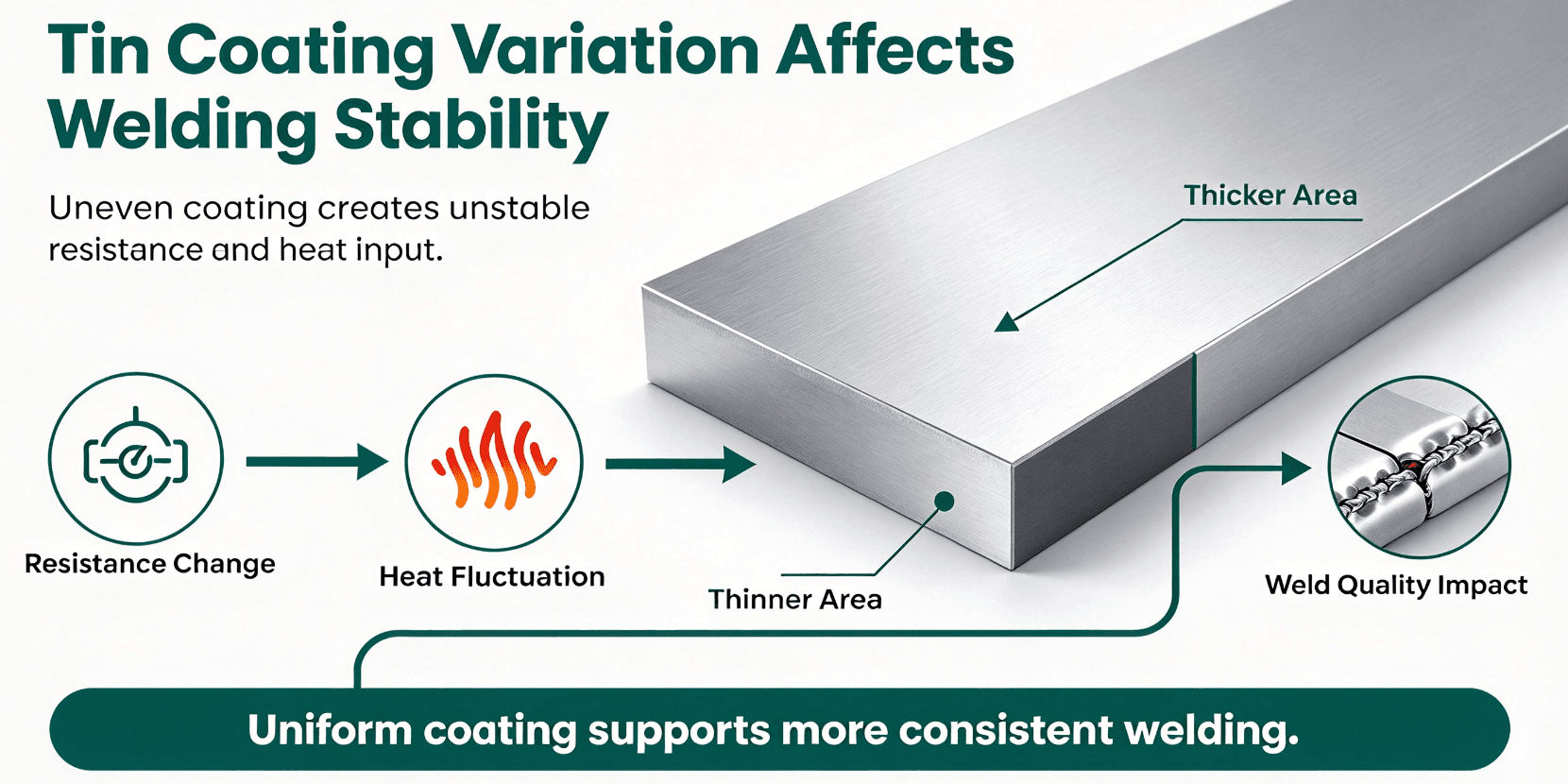
Weld Spatter & Leakage Defects: The Decisive Role of Tin Coating Uniformity in Can Welding Quality
High-speed resistance seam welding is the core forming process for three-piece metal cans. In actual mass production, persistent weld spatter, granular slag residue and hidden seam micro-leakage severely compromise sealing consistency, sterilization resistance and finished product yield. Most manufacturers tend to attribute these defects to unstable current, improper pressure or worn welding wheels. However, industrial verification proves that uneven tin coating distribution on tinplate is the fundamental material-induced root cause of recurring welding spatter and leakage issues.
Low-Earing CA Annealed Tinplate: The Optimal Material for Stable Twist-Off Lid Deep Drawing & High Yield Rate
Twist-off lid manufacturing has extremely strict requirements on material anisotropy and ductility. Different from regular can bodies, twist-off lids undergo complex deep drawing, edge trimming and crimping processes, making them highly sensitive to uneven steel performance. According to actual mass production verification, no alternative tinplate grades can achieve stable forming results for twist-off lid production. Low-earning CA continuous annealed tinplate remains the most suitable and high-performance material dedicated for twist-off lid stamping.
Want to know more?
Get in touch with us for more information about our services and products.