
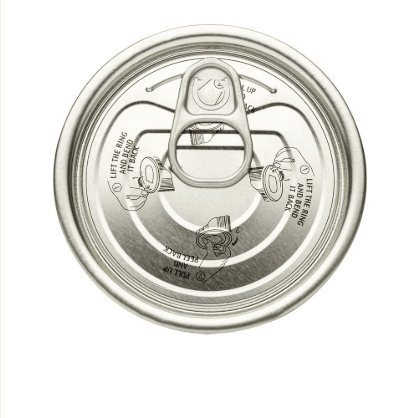
Full Aperture Ends for Wet Food Packaging: How Buyers Evaluate Long-Term Supply Fit
Why Long-Term Supply Fit Matters in Full Aperture End Procurement
When buyers evaluate full aperture ends for wet food packaging, the first questions often sound simple:
- What format is needed?
- What size is required?
- What is the quotation?
- What is the lead time?
But in real industrial procurement, those are only the starting questions.
For many wet food packaging buyers, the more important question is:
Does this supplier fit our long-term packaging program?
That is because full aperture ends are often purchased as part of repeated industrial packaging systems involving:
- recurring sizes
- repeated can formats
- repeated order cycles
- ongoing production continuity
- long-term packaging planning
Full Aperture End Procurement Is Usually Part of a Repeated Packaging Program
In many wet food packaging applications, full aperture ends are not bought once and forgotten. They are part of repeated industrial procurement. This is especially true in:
- tuna can packaging
- seafood canning
- meat and luncheon meat packaging
- pet food wet can packaging
- other repeated wet food packaging systems
That means buyers usually care about:
- recurring size continuity
- repeated order stability
- practical long-term coordination
- repeated delivery performance
- recurring support fit over time
This is why supplier fit matters more than first-order convenience.
Recurring Size Support Is a Major Evaluation Point
One of the first things buyers usually check is whether recurring sizes can be supported consistently.
This matters because repeated wet food packaging often depends on the same dimensions being supplied again and again across long-term packaging cycles. If recurring size support is weak, buyers may face:
- repeated clarification work
- weaker packaging continuity
- more internal checking
- more supplier follow-up effort
- less confidence in repeated procurement
That is why serious buyers usually compare not only whether a supplier can provide a format once, but whether the same format can be supported clearly across future orders.
Delivery Timing Matters More Than It First Appears
Full aperture ends may look like one component inside a larger packaging system, but their delivery timing can affect much more than many new suppliers expect. Delayed component supply may affect:
- can-making preparation
- filling schedules
- repeated packaging continuity
- warehouse coordination
- customer shipment timing
That is why buyers usually care not only about headline lead time, but about whether repeated delivery timing remains stable across recurring industrial orders. In long-term wet packaging programs, timing reliability often matters as much as size support.
A supplier who repeatedly communicates clearly and delivers more predictably usually becomes a much stronger long-term fit than one who only looks attractive in the first quotation.
Communication Quality Is Part of Long-Term Supplier Fit
In repeated industrial packaging, communication quality becomes a major supplier difference. Buyers often evaluate:
- whether recurring order details are handled clearly
- whether repeated sizes are remembered correctly
- whether communication becomes easier over time
- whether shipment coordination remains organized
- whether long-term cooperation reduces or increases internal workload
A supplier may look acceptable on product and price, but still be a weak long-term fit if repeated communication creates too much friction.
That is why communication quality is often a major part of how buyers judge long-term supply fit in full aperture end procurement.
What Buyers Usually Compare Before Choosing a Supplier
When evaluating full aperture end suppliers for repeated wet food packaging programs, buyers often compare:
1.Recurring size continuity
Because repeated packaging programs depend on stable recurring dimensions.
2.Repeated-order support
Because many buyers need long-term continuity rather than isolated shipment handling.
3.Delivery discipline
Because delayed supply affects repeated packaging schedules and downstream operations.
4.Long-term coordination fit
Because wet food packaging usually depends on a supplier who can support repeated industrial logic.
5.Communication quality
Because recurring industrial procurement becomes easier when the supplier handles repeated details clearly. These are often the factors that determine whether a supplier becomes a workable long-term packaging partner.
Common Problems Buyers Try to Avoid
Professional buyers often try to avoid several recurring problems.
- Weak recurring size handling
The same format is needed repeatedly, but recurring order support remains inconsistent.
- Delivery becomes less predictable over time
The first order looks fine, but long-term replenishment becomes harder to trust.
- Repeated procurement creates too much friction
Too much repeated clarification, checking, and follow-up weakens procurement efficiency.
- The supplier does not understand repeated packaging logic
This leads to weaker long-term fit even if the first transaction looks acceptable.
- Buyers judge only the first order
This often hides the real problems that appear in repeated industrial cooperation later. That is why long-term supply fit is such an important comparison point.
What Strong Suppliers Usually Do Better
A stronger supplier for full aperture ends usually does several things better:
- supports recurring dimensions more clearly
- handles repeated orders with less friction
- delivers more predictably over time
- communicates recurring order details more clearly
- fits repeated industrial packaging programs more effectively
- reduces long-term procurement uncertainty
These strengths matter because wet food packaging depends on repeated industrial execution, not one good opening order.
FAQ
Why is long-term supply fit so important in full aperture end procurement?
Because full aperture ends are often part of repeated industrial wet food packaging programs, where recurring size continuity and repeated supplier coordination matter over time.
What do buyers usually compare besides size and quotation?
They usually compare recurring size support, repeated-order continuity, delivery reliability, communication quality, and long-term packaging fit.
Why does delivery timing matter so much here?
Because delayed component supply can affect repeated packaging schedules, filling plans, and downstream shipment timing.
What makes a supplier stronger over the long term?
A stronger supplier usually supports recurring dimensions clearly, handles repeated orders with less friction, and delivers more predictably across repeated industrial cycles.
Why is communication quality part of supplier fit?
Because repeated industrial packaging becomes much easier to manage when recurring order details, shipment timing, and long-term coordination are handled clearly.
---
Related News
Other news you might be interested in

Tinplate Coating Peeling Risk Analysis and Avoidance Under High-Temperature Retort Sterilization
High-temperature retort sterilization is an essential process for shelf-stable food cans. However, long-term high-temperature and high-pressure environments easily cause coating blistering, delamination and peeling on the inner wall of metal cans. Many can manufacturers attribute coating failure solely to lacquer quality or baking process. In fact, **tinplate substrate performance, surface condition and material matching** are the core hidden causes of most high-temperature coating peeling problems. This article professionally analyzes the root causes of tinplate coating peeling under retort conditions, explains the difference in high-temperature resistance between ETP tinplate and TFS steel, and summarizes practical and operable avoidance solutions for mass production.
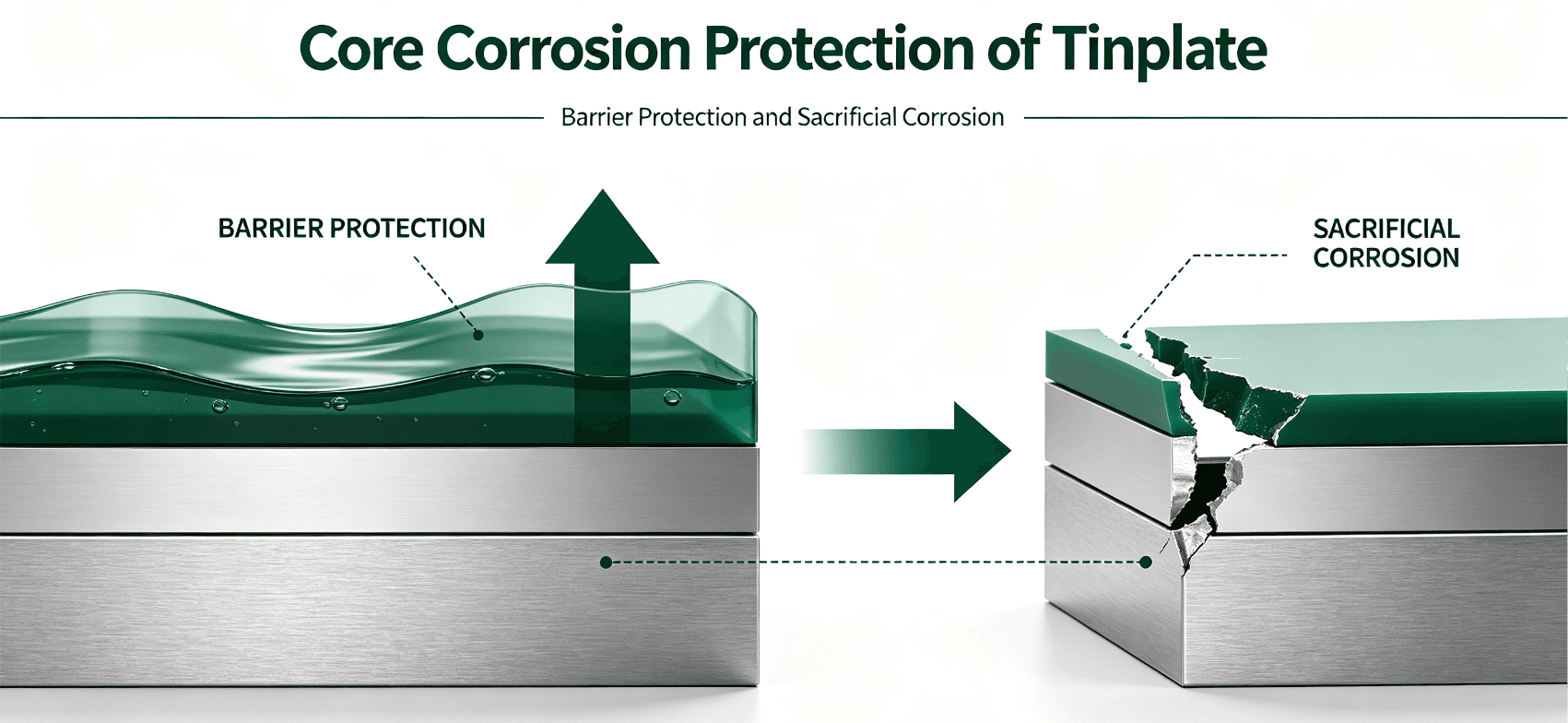
Sacrificial Corrosion & Barrier Protection: Core Anti-Corrosion Principle of Tinplate
The service life and storage safety of metal food cans largely depend on the anti-corrosion performance of packaging materials. As the most widely used substrate for food cans and general metal containers, ETP electrolytic tinplate adopts two core anti-corrosion mechanisms: barrier protection and sacrificial anode protection. These two protection systems work together to ensure stable corrosion resistance in complex food filling and high-temperature sterilization environments.
Want to know more?
Get in touch with us for more information about our services and products.