
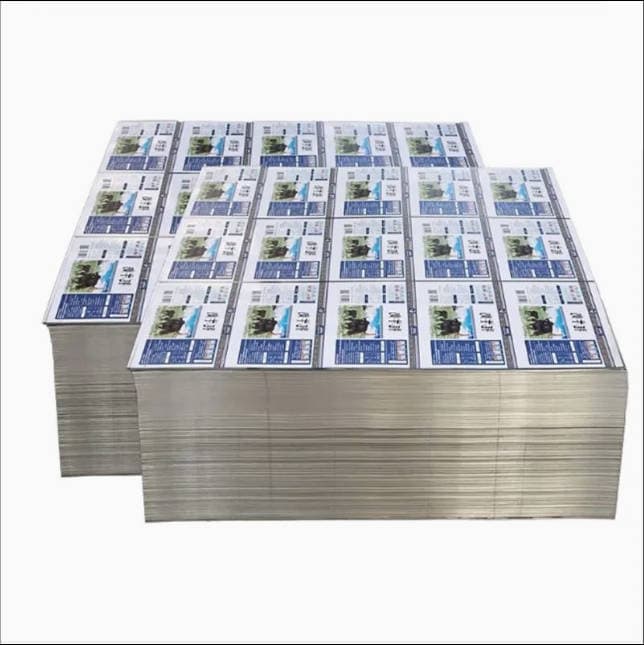
How to Avoid Color Shift in Metal Lithography: A Surface Finish Guide for Printed ETP
In electrolytic tinplate (ETP) procurement, buyers usually focus first on base weight, temper, and coating mass. Those parameters are foundational, but for lithography plants and high-end brand packaging, another technical area is often handled too casually: surface finish consistency.
Because metal printing relies on the precise interaction between wet ink, coating lacquers, and the tinplate surface, any microscopic variation in the steel’s finish will alter how the ink behaves. A well-controlled surface finish specification helps buyers:
- prevent batch-to-batch color shifts (visual mismatch)
- ensure uniform ink and lacquer adhesion
- reduce expensive ink waste and press recalibration time
- minimize rejected shipments from high-end brand clients
- evaluate supplier reliability in repeated manufacturing
In recurring industrial procurement, the way a supplier controls ETP surface parameters says a lot about their overall cold-rolling and tinning process. That is why experienced packaging buyers do not only ask "What is the tin coating weight?" They also ask "How strictly is the surface roughness and passivation controlled for printing?"
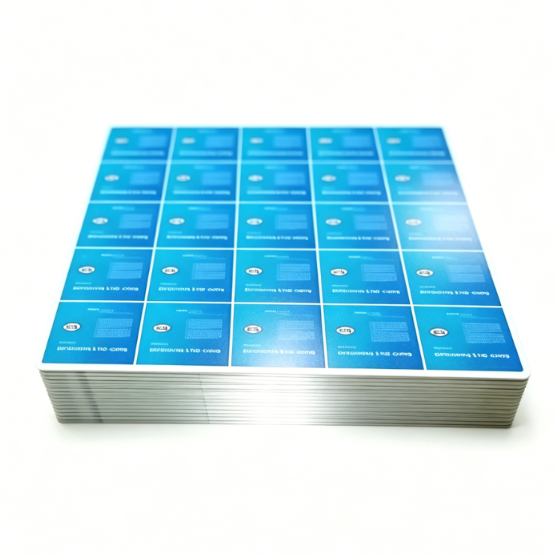
Color Consistency Is Part of Procurement Risk Control
Buyers often demand strict surface specifications because they want more than raw material; they want printing stability. When ETP surface conditions fluctuate from coil to coil, it creates severe procurement and production risks:
- it forces press operators to constantly adjust ink keys and printing pressure
- it causes unexpected ink crawling ("fish eyes") or poor wetting
- it leads to failed tape tests (adhesion failure) after the curing oven
- it creates disputes with brand owners over packaging color mismatch
- it forces internal QC teams to quarantine printed sheets
For one-time spot buying, inconsistent surface finishes might just mean a slower printing run. For recurring industrial metal lithography, inconsistent surfaces create a pattern of uncertainty and hidden costs. Serious buyers evaluate surface finish as part of the supplier’s overall quality discipline.
The Root Causes of Color Shift in Metal Lithography
To prevent printing defects, buyers need to understand what actually goes wrong at the microscopic level when ETP hits the printing press. The most common failures linked to poor surface control include:
- Inconsistent Surface Roughness (Ra value): Tinplate comes in various finishes, most commonly Stone, Bright, or Matte. The roughness of the steel dictates how much ink is trapped on the surface. If the "Stone" finish fluctuates between coils, the same volume of ink will reflect light differently, causing a visible color shift—even if the ink formula is identical.
- Uneven Passivation Layer: After tinning, ETP undergoes a chemical passivation process (usually CDC-311) to stabilize the surface and prevent oxidation. If this layer is uneven or too heavy, it acts as a barrier that prevents printing inks and base coatings (sizing) from properly wetting and adhering to the tinplate.
- Fluctuating Oil Film: To prevent scratches during transit, ETP is lightly oiled (typically with DOS or ATBC). If a supplier applies too much oil, the ink will not spread evenly, causing spotting. If there is too little oil, the sheets will scratch each other during feeding, ruining the printed surface.
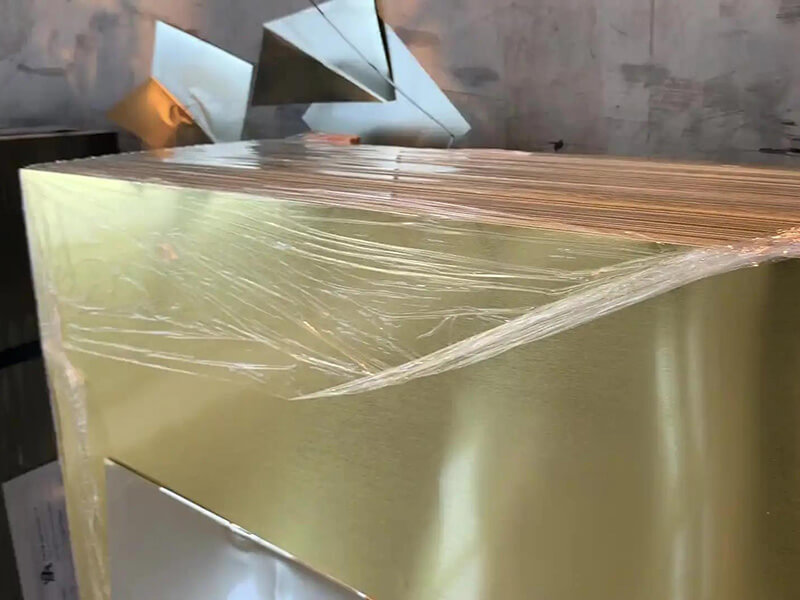
Critical ETP Surface Specifications Buyers Must Control
A basic expectation in printing-grade ETP procurement is that the material should behave predictably on the press. Buyers usually want enough technical discipline from the supplier to control three key areas:
1. Defined and Consistent Surface Finish
Choosing the right finish depends on the final visual requirement.
- Stone Finish (Ra 0.25 - 0.60 µm): The industry standard. It helps carry the ink and reduces scratching during processing. Buyers must ensure the supplier maintains a tight Ra tolerance across all batches.
- Bright Finish (Ra ≤ 0.25 µm): Used when a highly reflective, metallic background is desired. It requires extreme cleanliness, as any surface defect will be magnified through the transparent inks.
2. Strictly Controlled Passivation Target
Passivation is not just about preventing rust; it is the foundation for lacquer adhesion.
- Buyers must specify the passivation method (e.g., Code 311) and demand quality documents verifying that the chromium weight from the passivation process is consistent (typically targeting 3.5 to 9.0 mg/m²).
- Uneven passivation across the width of a coil will lead to edges where ink simply wipes off after baking.
3. Precise Oil Coating Weights
The oil layer must be temporary and easily compatible with printing inks.
- Buyers should specify the exact type of oil (DOS is standard for lithography) and demand an application weight of 2.0 to 6.0 mg/m².
- A disciplined supplier uses electrostatic oiling technology to ensure the oil is applied in a microscopic, uniform layer, rather than relying on outdated spray methods that leave heavy streaks.
Why Surface Control Signals a Stronger Supplier
Surface specifications often reveal how seriously a supplier manages recurring industrial orders. Strong surface control discipline suggests that the supplier is also stronger in:
- cold-rolling roller maintenance (which dictates the roughness)
- chemical bath management (which dictates passivation)
- internal QC testing before shipment
- long-term supply support for sensitive printing applications
This matters because buyers are not only judging the current shipment of ETP. They are asking whether this supplier can support repeated procurement with less risk of printing downtime. A supplier that controls Ra values and oil weights consistently is usually easier to trust in recurring industrial cooperation.
Common Buyer Mistakes in Printing-Grade ETP Procurement
Buyers often try to avoid several common mistakes when sourcing ETP for metal lithography:
- Failing to communicate the end-use: Ordering standard ETP without specifying it is for high-end lithography means the mill may not prioritize strict surface tolerances.
- Mixing different finishes in one run: Buying from multiple unverified spot markets often results in mixing coils with different roughness levels, making color consistency impossible on the press.
- Ignoring the oil specification: Over-oiled coils are a nightmare for printers and require expensive, unplanned pre-baking processes to burn off the excess oil before printing.
- Underestimating documentation: Not checking the mill's test certificates for passivation and oiling weights before the material arrives at the printing facility.
FAQ
Why does my printed color look different even though the ink recipe is exactly the same?
This is most likely due to a change in the surface roughness (Ra value) of the tinplate. A rougher surface scatters light differently than a smoother surface, making the same ink appear darker or less vibrant.
What is the best tinplate finish for general food can printing?
Stone finish is the most widely used. Its micro-rough surface provides excellent mechanical grip for base coats and inks while hiding minor processing scratches better than a Bright finish.
Why is the ink failing the tape adhesion test after the baking oven?
Adhesion failure is usually caused by either an excessively heavy passivation layer or excessive DOS oil on the surface, which prevents the lacquer from chemically bonding to the tin layer.
How much oil should be on printing-grade ETP?
For standard metal lithography, the DOS oil weight should be strictly controlled between 2.0 and 6.0 mg/m². Anything heavier will disrupt the ink's wetting properties.
Can I fix an over-oiled coil at the printing plant?
Yes, but it is costly. The sheets must be run through the curing oven blank (without ink) to flash off the excess oil, wasting significant energy, labor, and machine time.
---
At Zenjoy Packaging, we understand that printing presses cannot afford material inconsistencies. Backed by 40,000 MT of prime stock from top-tier mills (HBIS, Shougang, Baosteel) and 20+ years of material control expertise, we ensure your ETP arrives with the exact finish, passivation, and oiling your lithography line demands.
Send us your application and surface expectations to discuss a more practical supply arrangement.
- Email: [email protected]
- Phone / WhatsApp: +86 185 0122 2689
- Location: Handan, Hebei, China
Related News
Other news you might be interested in
Tinplate Sheet: Uses, Specifications, and Buying Guide for Can Making
Tinplate sheet is used for food cans, paint cans, aerosol cans, lids, ends, and printed metal packaging. Learn key uses, specifications, and buying tips before ordering.

How to Choose the Right Metal Packaging Supplier Without Sacrificing Quality or Scalability
Selecting a metal packaging supplier? Balance cost, quality, and scalability. Avoid hidden risks from inferior materials and supply disruptions. Explore flexible tinplate, easy open ends, and custom cans.
Want to know more?
Get in touch with us for more information about our services and products.