

Optimizing Metal Packaging Procurement: From Tinplate to Custom Easy Open Ends
Introduction: The Hidden Costs of Metal Packaging Sourcing
When buyers evaluate tinplate can lid manufacturer quotes or easy open end supplier pricing, the lowest unit cost often masks serious downstream exposure. A quote that undercuts competitors by pennies per piece can deliver inconsistent gauge tolerances, poor coating adhesion on electrolytic tinplate sheet, or lids that fail during retort processing—triggering spoilage, rework, and brand damage far exceeding the initial savings. Too many procurement decisions fixate on the ex-factory price while ignoring the total cost of ownership, where a single line stoppage erases months of paper savings. A systematic approach to comparing tinplate prices shifts the focus from unit cost to delivered value, a discipline that separates market leaders from companies forever firefighting quality and delivery crises.
This guide equips packaging managers and sourcing professionals with a rigorous framework for qualifying metal packaging materials supplier partners—for tinplate, tin free steel sheet supplier products, custom size easy open lid solutions, and fully decorated custom printed tin cans—so you can lock in reliability without overpaying.
Understanding the Core Materials: Tinplate vs. Tin-Free Steel (TFS)
The foundation of any metal can program is the substrate. Tinplate (cold-rolled steel electrolytically coated with tin) delivers dependable corrosion resistance and excellent solderability, which keeps it the default for three-piece food cans and many lids. Yet a significant percentage of dry goods, non-acidic products, and decorative tins can be engineered on chromium coated steel coil (Tin-Free Steel, TFS) at a 10–20% lower material cost. TFS, supplied by any competent tin free steel supplier, provides superior lacquer adhesion and printability, often making it the smarter choice when the product does not demand tin’s sacrificial protection.
Procurement teams that accurately map product chemistry to substrate can unlock immediate margin improvement without compromising performance. For example, a tuna can supplier packing in oil might specify high-quality electrolytic tinplate to handle the aggressive fill, while a meat can supplier for dry-cured product and a milk can supplier for powder rely on a TFS specification. The same logic applies to precision components: whether you source tinplate scroll cutting sheets or TFS scroll cutting sheets for end conversion, specifying the correct temper, coating weight, and passivation film prevents micro-leakers and lacquer cracking down the line. Understanding the difference between mill source, traders, and processing suppliers is critical when securing coil and sheet that performs repeatably on high-speed lines.
Customization: The Key to Production Efficiency and Brand Differentiation
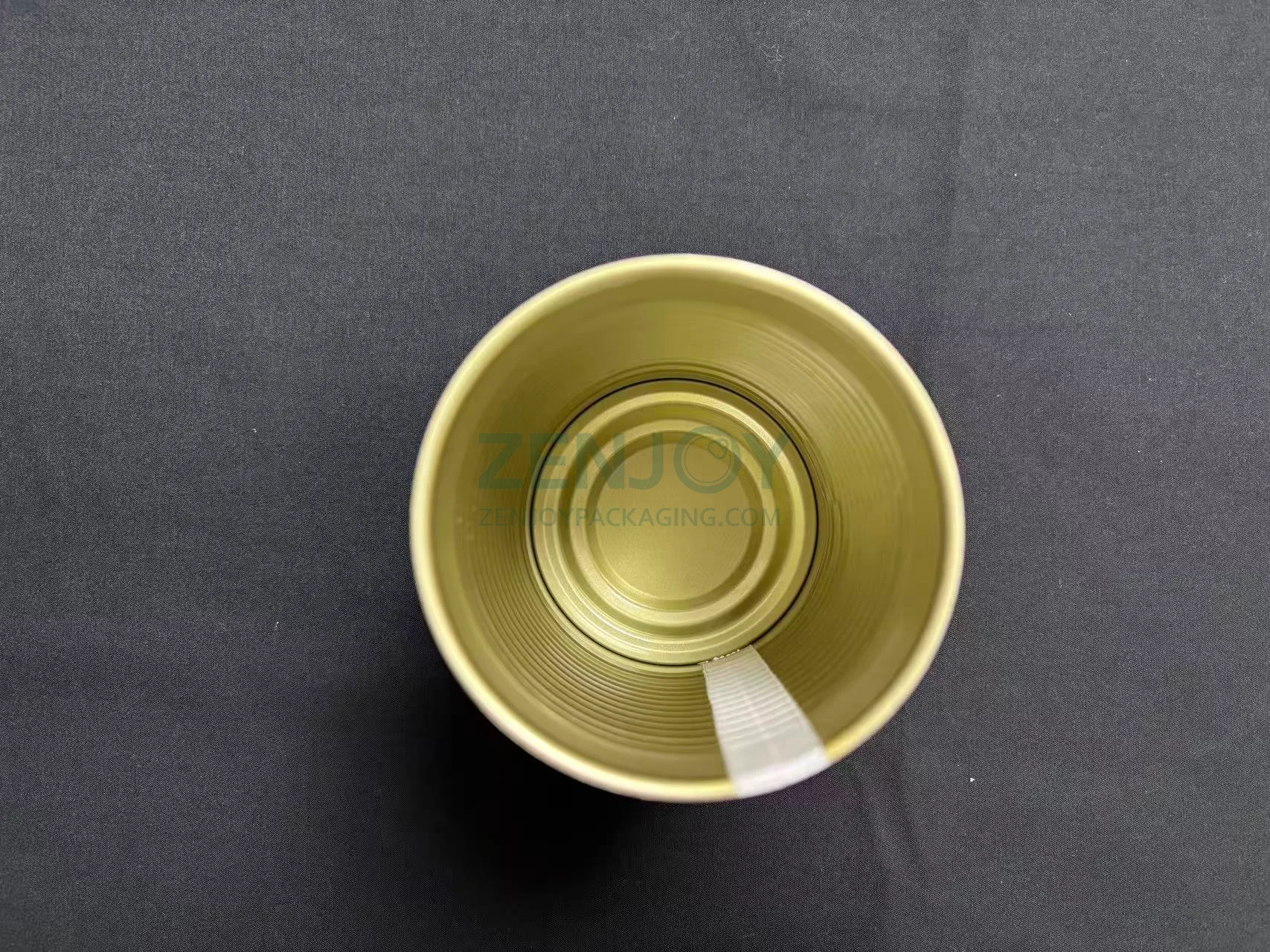
Off-the-shelf diameters and standard steel can lid for cans formats rarely match filling line dynamics perfectly. A lid that runs at 90% efficiency because it is slightly out of spec for the seamer generates massive waste across millions of units. Engaging a can lid manufacturer that offers true customization—not just choosing from a catalog—enables distinct advantages. For example, a full aperture oval easy open end in 159.8×106.8 mm allows large-fruit or solid-pack fills to exit cleanly, turning a functional component into a user preference driver.
Equally, working with a three-piece tin can manufacturer that tailors body blank dimensions and custom printed tin cans to your exact dieline eliminates under-fill or over-fill, reduces product giveaway, and strengthens shelf impact with brand-specific lithography. Even adjustments that appear minor—tightening the claw profile on a twist-off lug cap for viscous sauces, or calibrating the score residual on an EOE lid supplier’s easy open end—can reduce consumer complaints and returns by double-digit percentages, directly protecting repeat purchase rates.
Selecting a Reliable Can Lid and Easy Open End Supplier
Qualifying suppliers on dimensional capability, substrate integrity, and food-grade certification separates value partners from transaction-level vendors with no long-term accountability. Look for a tinplate coil supplier and tinplate sheet supplier that can document gauge consistency across batches; erratic thickness forces seamer adjustments and accelerates tooling wear. Any easy open end supplier should provide detailed SPC data on key parameters such as countersink depth, curl dimensions, and compound placement—not merely a certificate of conformity.
Another critical filter: versatility. A partner that qualifies as both a tinplate can lid manufacturer and an EOE lid supplier reduces the number of managed relationships and spec interfaces, simplifying quality control. For can makers, a two-piece metal can supplier may need one set of liners and coatings, while a three-piece can supplier working on larger formats demands precision scroll sheets. Beware of cut-rate suppliers substituting thinner-gauge tinplate coil for manufacturing or under-cured internal lacquers; these appear cost-competitive initially but produce corrosion, flavor transfer, and score failures in the field. Ask directly about line speed capability for custom size easy open lid production, and how they manage the common causes of tinplate lead time delays to avoid bottlenecking your production schedule.
Real-World Results: How One Food Manufacturer Reduced Costs by 15%
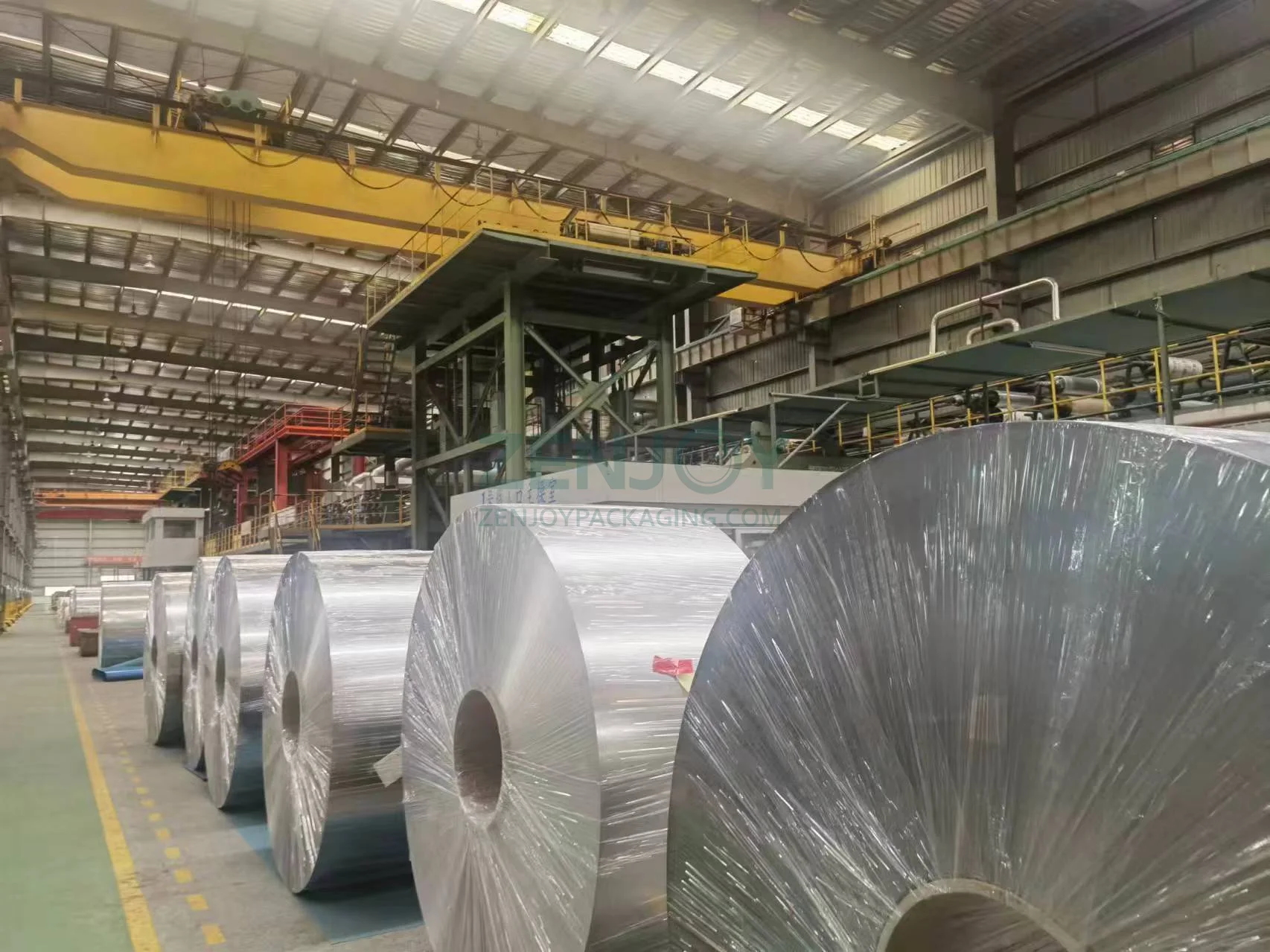
A round metal can supplier producing tuna packs for multiple export markets had fragmented sourcing: one metal packaging components supplier for tinplate coil, a separate tin free steel sheet supplier for bottom ends, and a third for easy open end supplier stock. The result was bloated inventory, misaligned specifications, and chronic lid-leaker rates exceeding 2%. Ahmed’s experience consolidating his supply base mirrors what many food packers face—hidden complexity that drives cost rather than value.
By moving to a single metal packaging materials supplier that could provide the tinplate coil for manufacturing, TFS sheets, scroll-cut bodies, and fully qualified custom size easy open lid inventory under one quality system, the company achieved a 15% reduction in total material cost, a 20% drop in filling line changeover frequency, and a 95% reduction in sealing failures. Just-in-time delivery of tinplate coil from a qualified tinplate coil supplier collapsed warehousing costs, and technical support from the can lid manufacturer fine-tuned double-seam parameters to eliminate micro-leaks entirely. The integrated model is not about aggregation for its own sake—it is about forcing specification accountability and continuous improvement across every metal packaging component.
Next Steps: Partnering for Quality and Reliability in Metal Packaging
Audit your current supply base for hidden fragmentation: separate vendors for prime tinplate sheet supplier stock, three-piece tin can manufacturer services, two-piece can supplier lines, and aftermarket metal packaging components supplier trim might feel convenient but almost always adds cost layers. Request production-grade samples of tinplate scroll cutting sheets, chromium coated steel coil, and easy open ends from candidates, then run them on your actual lines, not lab testers. Prioritize partners that offer contractually stable tinplate coil supplier pricing tied to index mechanisms, and that maintain capable after-sales technical support for troubleshooting seam integrity, compound distribution, and corrosion management.
Whether you need a tuna can supplier, meat can supplier, milk can supplier, or a vertically integrated round metal can supplier for non-food applications, the right partner treats your packaging not as a commodity transaction but as a performance guarantee. To discuss your specific requirements for custom components, decorated cans, or full-scale supply of electrolytic tinplate sheet and TFS, contact our team today.
Related News
Other news you might be interested in
Weld Spatter & Leakage Defects: The Decisive Role of Tin Coating Uniformity in Can Welding Quality
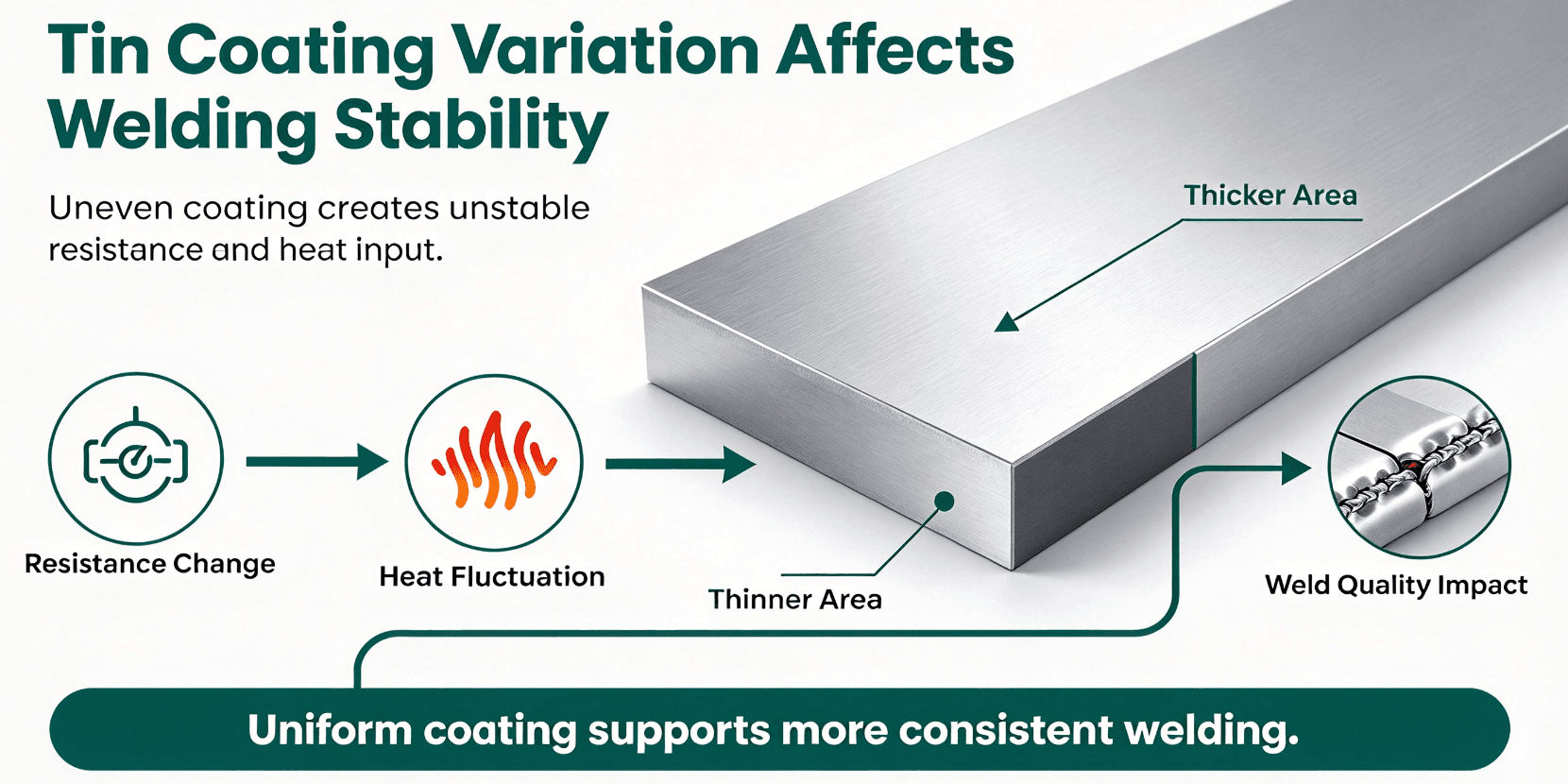
High-speed resistance seam welding is the core forming process for three-piece metal cans. In actual mass production, persistent weld spatter, granular slag residue and hidden seam micro-leakage severely compromise sealing consistency, sterilization resistance and finished product yield. Most manufacturers tend to attribute these defects to unstable current, improper pressure or worn welding wheels. However, industrial verification proves that uneven tin coating distribution on tinplate is the fundamental material-induced root cause of recurring welding spatter and leakage issues.
Low-Earing CA Annealed Tinplate: The Optimal Material for Stable Twist-Off Lid Deep Drawing & High Yield Rate
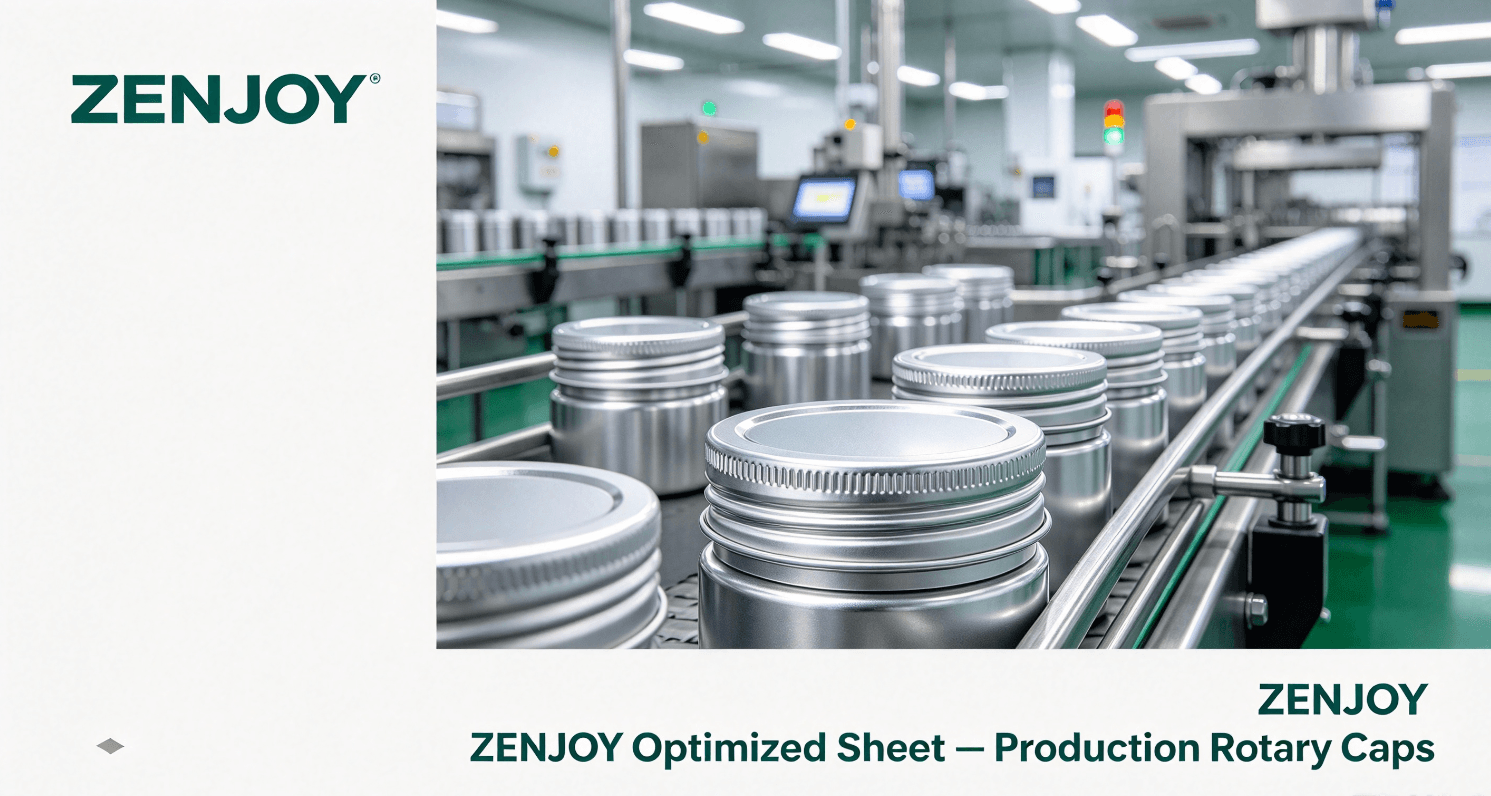
Twist-off lid manufacturing has extremely strict requirements on material anisotropy and ductility. Different from regular can bodies, twist-off lids undergo complex deep drawing, edge trimming and crimping processes, making them highly sensitive to uneven steel performance. According to actual mass production verification, no alternative tinplate grades can achieve stable forming results for twist-off lid production. Low-earning CA continuous annealed tinplate remains the most suitable and high-performance material dedicated for twist-off lid stamping.
Want to know more?
Get in touch with us for more information about our services and products.