
How to Compare Mill Source, Trader, and Processing Supplier for Tinplate Orders
Why Supplier Model Matters
When buyers source tinplate, the most common question is often:
Who can give the best price?
But a better question is:
What type of supplier fits this order best?
In real procurement, buyers may choose among:
- mill source
- trader
- processing supplier
- or a mixed sourcing model
This decision affects more than price.
It influences:
- flexibility
- lead time
- minimum order expectation
- processing convenience
- communication speed
- repeat-order efficiency
In a market where steel trade remains under pressure from excess capacity and policy uncertainty, buyers often benefit from choosing the supplier model that reduces friction, not just the one that looks strongest on paper.
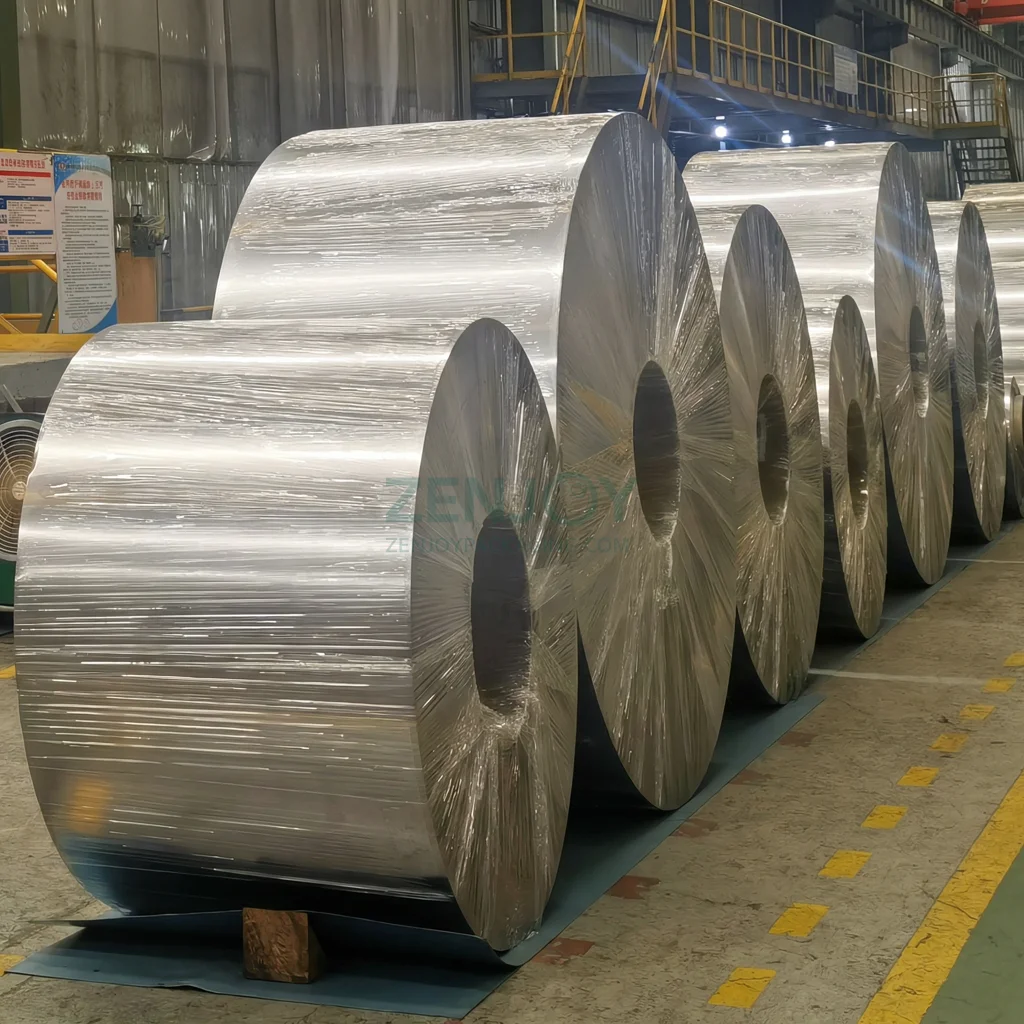
Tinplate Steel Sheet in Coil
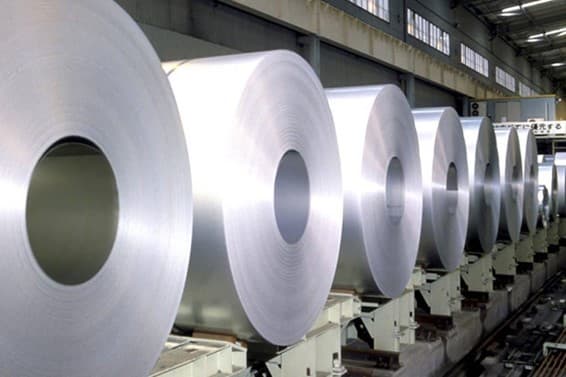
Electrolytic Tinplate (ETP) is a low-carbon steel sheet that has been electrolytically coated with tin, widely used in packaging for food, beverages, chemical products, and other applications. With its excellent corrosion resistance, superior processability, and attractive appearance, tinplate has become an indispensable material in modern packaging industry. Our tinplate products strictly adhere to international standards and utilize advanced manufacturing processes to ensure exceptional quality in every coil.
What Buyers Usually Mean by Mill Source
A mill source is usually understood as supply coming directly from a producing mill or through a structure closely tied to the mill.
Buyers often look to mill source when they want:
- larger standard-volume supply
- closer link to original production
- stronger fit for repeat bulk demand
- potentially better alignment for stable standard specifications
For some high-volume programs, this can be a strong option.
However, direct mill supply is not always the best answer for every buyer.
Some orders need more flexibility than a mill-oriented structure can easily provide.
What Buyers Usually Mean by Trader
A trader often acts as a sourcing and coordination channel rather than a pure producer.
This model may be useful when buyers need:
- wider sourcing flexibility
- faster commercial comparison
- access to multiple supply channels
- more support for mixed order structures
- easier coordination across several requirements
A trader can be especially useful when the buyer values optionality and market responsiveness.
The trade-off is that buyers must still check whether the trader can provide the level of specification control, follow-up, and repeat-order discipline required for the program.
What Buyers Usually Mean by Processing Supplier
A processing supplier is often strongest when the buyer needs more than raw material.
This may include:
- coil-to-sheet supply
- cut-to-length service
- custom dimensions
- organized packing by size
- supply closer to production-ready condition
For buyers with practical production requirements, a processing supplier may create more value by reducing internal conversion work and simplifying factory handling.
In many cases, the best procurement result comes not from buying the earliest stage of material, but from buying the form that fits the production line most efficiently.
When Mill Source May Be the Better Choice
Mill source may be more suitable when:
- the buyer has large repeat demand
- the specification is stable
- the order structure is relatively standardized
- the buyer can handle the material in bulk form
- internal processing capability already exists
This model is often attractive when procurement scale and standardization are more important than flexibility.
For buyers with a stable annual program, mill-linked sourcing may support stronger continuity.

When a Trader May Be the Better Choice
A trader may be the better choice when:
- the buyer wants several sourcing options
- the market is changing quickly
- the order needs more commercial flexibility
- multiple supplier comparisons are needed
- the buyer values faster market response
This can be especially useful when the buyer is still evaluating sourcing routes or when procurement risk is better managed through optionality.
In a more uncertain market environment, flexibility itself can be a form of value.
When a Processing Supplier May Be the Better Choice
A processing supplier may be the better choice when:
- the buyer needs sheet instead of full coil
- cut-to-length improves utilization
- the factory wants less internal handling
- custom dimensions are important
- downstream production speed matters more than raw-material simplicity
For processors, can makers, and packaging factories, this model can often reduce hidden internal cost.
A slightly higher purchase price may still be commercially better if it reduces labor, waste, delay, and setup time inside the buyer’s own operation.
Why the Lowest Price Does Not Automatically Decide the Best Model
A common mistake is to compare a mill, trader, and processing supplier using only a per-ton quote.
That comparison is incomplete because each model may offer different value in:
- flexibility
- usable supply form
- lead-time control
- order management
- repeat-order support
- internal workload reduction
A direct material price may look lower from one route, but the total operating result may be weaker if the buyer must add more handling, conversion, or coordination later.
The better comparison is total procurement efficiency.
What Buyers Should Review Before Choosing a Supplier Model
A practical evaluation usually includes these questions:
1.What is the real order structure?
Is this a standard repeat bulk order, or a more flexible mixed requirement?
2.What supply form is most useful?
Does the factory need full coil, sheet, or cut-to-length input?
3.How much internal processing capability exists?
Can the buyer process raw material efficiently, or is converted supply more practical?
4.How important is sourcing flexibility?
Does the buyer need optionality, or is long-term standardization the higher priority?
5.How important is repeat continuity?
Will this likely become a recurring program rather than a one-time purchase?
These questions usually reveal that the best supplier model depends on the buyer’s actual operating reality, not on a general preference.
Why Some Buyers Use a Mixed Model
In practice, some larger buyers do not rely on only one sourcing route.
They may:
- use one model for standard repeat volume
- use another for urgent support
- use a processing supplier for custom-size needs
- keep a trader relationship for market flexibility
This mixed approach can improve resilience when market timing, policy conditions, or demand patterns become less predictable.
For some procurement teams, the best answer is not either-or, but a more balanced sourcing structure.
FAQ
Is mill source always the best option for tinplate?
No. It may work well for large standard programs, but it is not always the best fit for buyers needing more flexibility or processing support.
When is a trader useful?
A trader is often useful when buyers want more sourcing flexibility, faster comparison, or access to multiple channels.
What is the main advantage of a processing supplier?
The main advantage is usually supply in a more production-ready format, such as sheet or cut-to-length material.
Should buyers compare these options only by price?
No. They should also compare supply form, flexibility, lead time, and internal operating impact.
Can buyers use more than one sourcing model?
Yes. Some larger buyers use a mixed model to balance continuity, flexibility, and risk.
---
Related News
Other news you might be interested in
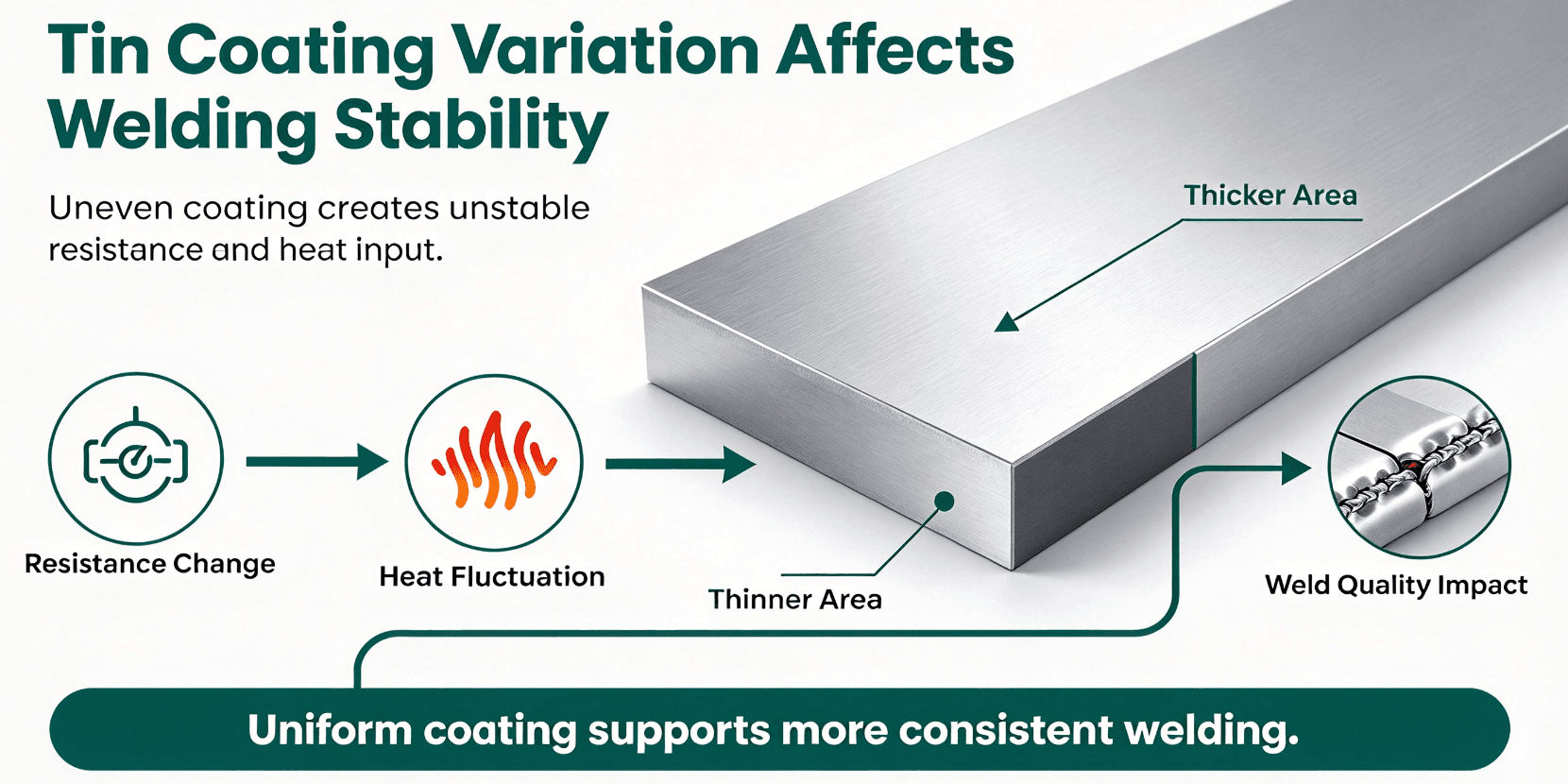
Weld Spatter & Leakage Defects: The Decisive Role of Tin Coating Uniformity in Can Welding Quality
High-speed resistance seam welding is the core forming process for three-piece metal cans. In actual mass production, persistent weld spatter, granular slag residue and hidden seam micro-leakage severely compromise sealing consistency, sterilization resistance and finished product yield. Most manufacturers tend to attribute these defects to unstable current, improper pressure or worn welding wheels. However, industrial verification proves that uneven tin coating distribution on tinplate is the fundamental material-induced root cause of recurring welding spatter and leakage issues.
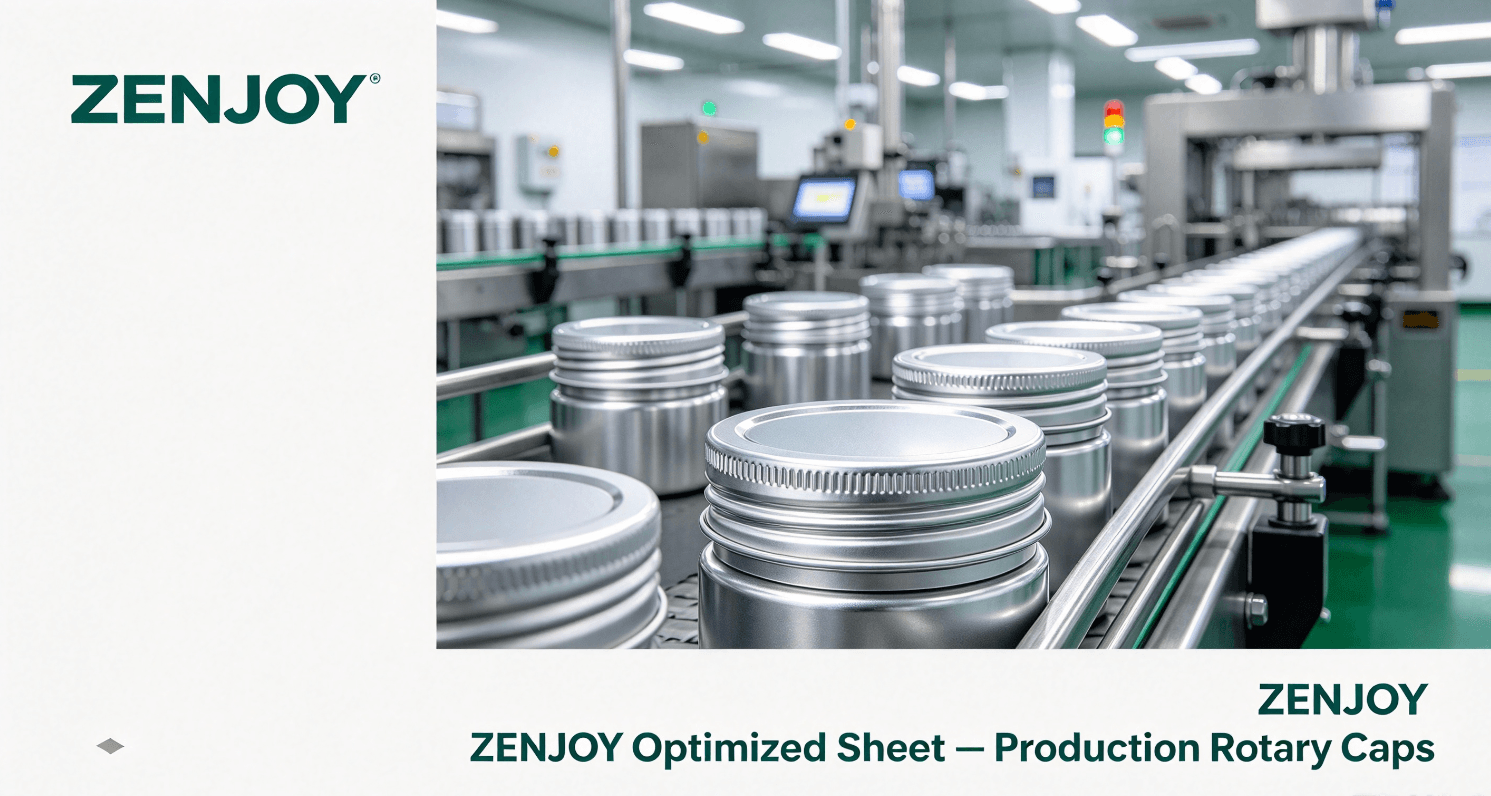
Low-Earing CA Annealed Tinplate: The Optimal Material for Stable Twist-Off Lid Deep Drawing & High Yield Rate
Twist-off lid manufacturing has extremely strict requirements on material anisotropy and ductility. Different from regular can bodies, twist-off lids undergo complex deep drawing, edge trimming and crimping processes, making them highly sensitive to uneven steel performance. According to actual mass production verification, no alternative tinplate grades can achieve stable forming results for twist-off lid production. Low-earning CA continuous annealed tinplate remains the most suitable and high-performance material dedicated for twist-off lid stamping.
Want to know more?
Get in touch with us for more information about our services and products.