
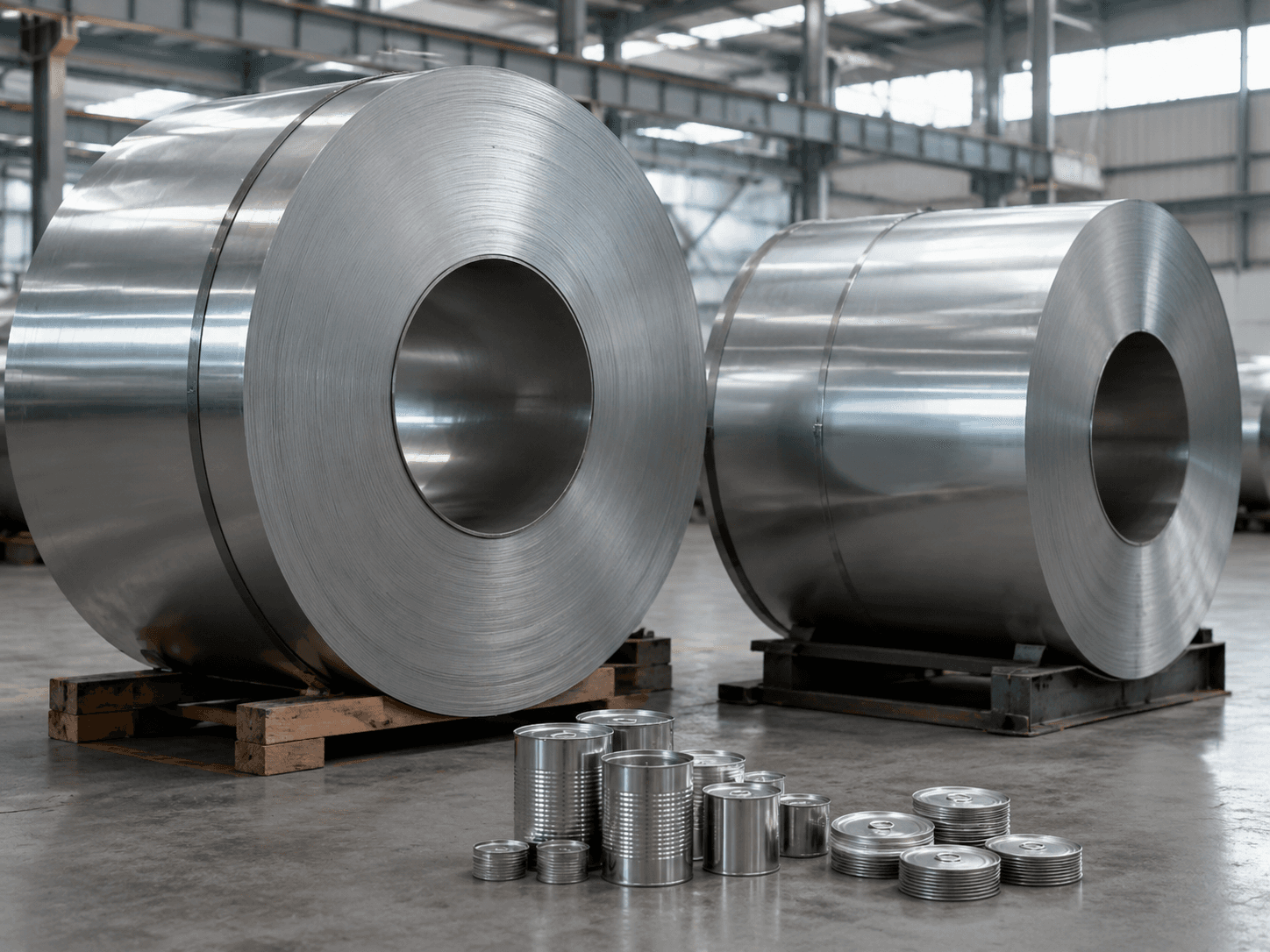
Reducing Tinplate and TFS Thickness While Maintaining Packaging Strength: What Can Buyers Expect?
Why Thickness Reduction Matters in Metal Packaging
For many packaging applications, raw material cost is one of the main cost factors. Tinplate and TFS are widely used in food cans, can ends, easy open ends, caps, closures, and other metal packaging components. If the material thickness can be reasonably reduced without affecting packaging performance, buyers may benefit from lower material consumption and improved cost control.
In addition, lighter packaging can help reduce total shipment weight. This is especially important for buyers who import tinplate coils, cut sheets, can ends, or finished metal packaging components in large quantities. Even a small reduction in thickness can become meaningful when annual demand is high.
For can makers, another important reason is market competition. Food brands and packaging users often want more economical packaging, but they still expect the same reliability in sealing, stacking, sterilization, storage, and transportation. This means suppliers must improve material selection and process control instead of only reducing the gauge.

Thinner Material Must Still Meet Structural Requirements
Although thickness reduction is an important trend, packaging strength cannot be ignored. Food cans, seafood cans, wet pet food cans, tomato paste cans, and sauce cans may go through filling, seaming, retorting, transportation, stacking, and shelf storage. During these processes, the packaging must keep its shape, sealing performance, and protective function.
For example, a seafood can may need to resist internal pressure and thermal processing. A wet pet food can must keep good sealing after sterilization. A sauce or tomato paste can may require suitable corrosion protection because the content can be acidic. If the material is too thin or not properly selected, problems such as deformation, poor seaming, paneling, denting, coating damage, or leakage may occur.
Therefore, when buyers consider thinner tinplate or TFS, they should not only ask for a lower thickness. They should confirm whether the material can still meet the packaging's structural specifications, including forming performance, stiffness, end-use strength, and compatibility with the can-making process.
Key Factors That Support Thickness Reduction
Thickness reduction depends on several technical factors. A stable supplier should help buyers evaluate these points before changing material specifications.
1.Proper Temper Grade
Temper grade has a direct influence on material hardness, stiffness, and forming performance. When thickness is reduced, selecting a suitable temper grade becomes more important. If the material is too soft, the can body or lid may not have enough strength. If it is too hard, forming or flanging may become difficult. For different packaging applications, the suitable temper grade may vary. Can bodies, can ends, easy open ends, caps, and shallow-drawn parts may require different combinations of thickness and hardness.

2.Stable Thickness Tolerance
When using thinner material, thickness tolerance becomes more sensitive. If the actual thickness varies too much, the production process may become unstable. This can affect forming, welding, seaming, stacking strength, and final appearance. For buyers who produce food cans or can ends at high speed, stable thickness control is essential. It helps reduce production defects and keeps the packaging performance consistent from batch to batch.

3.Suitable Coating or Surface Treatment
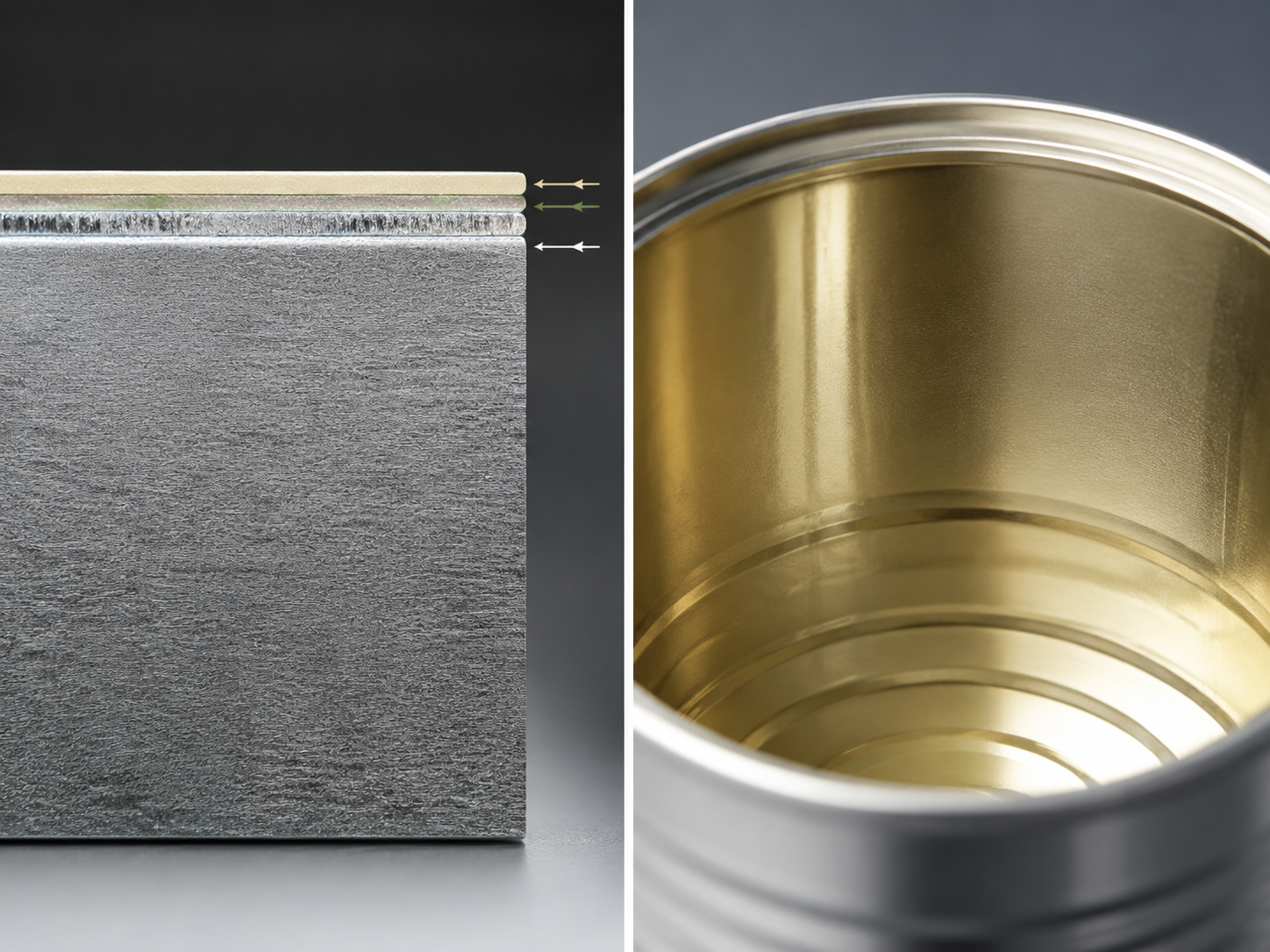
For tinplate and TFS materials, surface quality is also important. Tinplate has a tin coating that provides corrosion resistance and solderability or weldability, depending on the application. TFS is often used for can ends, caps, closures, and coated packaging parts because of its coating adhesion and surface performance. When thickness is reduced, the material still needs to match the required lacquer, printing, forming, and food contact performance. For acidic foods such as tomato paste, sauce, pickled food, or some seafood products, coating compatibility should be carefully checked.
4.Good Forming and Processing Performance
A thinner material may behave differently during forming, cutting, bending, drawing, flanging, curling, or seaming. Before switching to a thinner specification, buyers should test whether the material works well on their production line. For example, easy open ends require stable forming performance and good dimensional accuracy. Food can bodies require reliable welding and seaming. Caps and closures require suitable shape retention and coating adhesion. These practical production details are more important than thickness alone.

Application Examples in Food Metal Packaging
Thickness reduction can be considered in many metal packaging applications, but the evaluation should be application-specific.
For wet pet food cans, the packaging must withstand thermal processing and protect high-moisture food. Stable can ends and body materials are important for leakage prevention and shelf life.
For tomato paste and sauce cans, buyers should pay attention to corrosion resistance and internal lacquer compatibility because the content may be acidic. Reducing thickness without checking coating performance may increase packaging risk.
For easy open ends and closures, TFS or ETP materials should have suitable temper, surface quality, and coating adhesion. Dimensional stability is very important because the end must fit the can body correctly and open smoothly.
What Buyers Should Confirm Before Reducing Thickness
Before changing to a thinner tinplate or TFS specification, buyers should evaluate the following information:
| Item to Confirm | Why It Matters |
|---|---|
| Application | Different foods and packaging types require different material performance |
| Current thickness | Helps compare the original and proposed specification |
| Can type or component | Can body, can end, cap, closure, or shallow-drawn part may need different material |
| Temper grade | Affects stiffness, forming, and final strength |
| Coating requirement | Important for corrosion resistance, printing, lacquer adhesion, and food safety |
| Production process | Welding, drawing, seaming, retorting, or capping may affect material choice |
| Filling and sterilization conditions | Heat and pressure can influence packaging performance |
| Target market and storage conditions | Long-distance transport and shelf life may require stronger packaging control |
How a Supplier Can Help
A good tinplate and TFS supplier should not only provide material by thickness. The supplier should understand the buyer's packaging application and recommend suitable specifications based on actual use.
For example, if a buyer needs material for seafood cans, the supplier should consider forming performance, corrosion resistance, inner coating compatibility, and can end matching. If the buyer produces easy open ends, the supplier should focus more on TFS or ETP surface quality, temper grade, and dimensional stability.
For buyers who want to reduce material thickness, supplier support becomes even more important. Proper specification matching can help buyers control cost while maintaining packaging reliability.
Conclusion
Reducing the thickness of tinplate and TFS materials is a practical direction in metal packaging development. It can help buyers improve material efficiency and control packaging cost. However, thinner material must still meet the structural specifications and performance requirements of the final packaging.
For food cans, seafood cans, wet pet food cans, tomato paste cans, sauce cans, easy open ends, caps, and closures, thickness reduction should be supported by proper temper selection, stable thickness tolerance, suitable coating, good forming performance, and strict quality control.
If you are planning to optimize tinplate or TFS thickness for your packaging project, please share your application, current material specification, can type, thickness, width or sheet size, temper grade, coating requirement, annual demand, and destination market.
Related News
Other news you might be interested in
Deep Drawing Cracking Dilemma: How Tinplate Hardness and Elongation Affect Can Forming
Deep drawing cracking is one of the most common mechanical defects in DRD two-piece cans and complex shaped metal containers. Most stamping failures are not caused by mold parameters or lubrication issues, but by mismatched tinplate hardness and insufficient elongation. Unreasonable material temper selection will lead to edge cracking, body tearing and high scrap rate during high-speed continuous forming.

Tinplate Coating Peeling Risk Analysis and Avoidance Under High-Temperature Retort Sterilization
High-temperature retort sterilization is an essential process for shelf-stable food cans. However, long-term high-temperature and high-pressure environments easily cause coating blistering, delamination and peeling on the inner wall of metal cans. Many can manufacturers attribute coating failure solely to lacquer quality or baking process. In fact, **tinplate substrate performance, surface condition and material matching** are the core hidden causes of most high-temperature coating peeling problems. This article professionally analyzes the root causes of tinplate coating peeling under retort conditions, explains the difference in high-temperature resistance between ETP tinplate and TFS steel, and summarizes practical and operable avoidance solutions for mass production.
Want to know more?
Get in touch with us for more information about our services and products.