
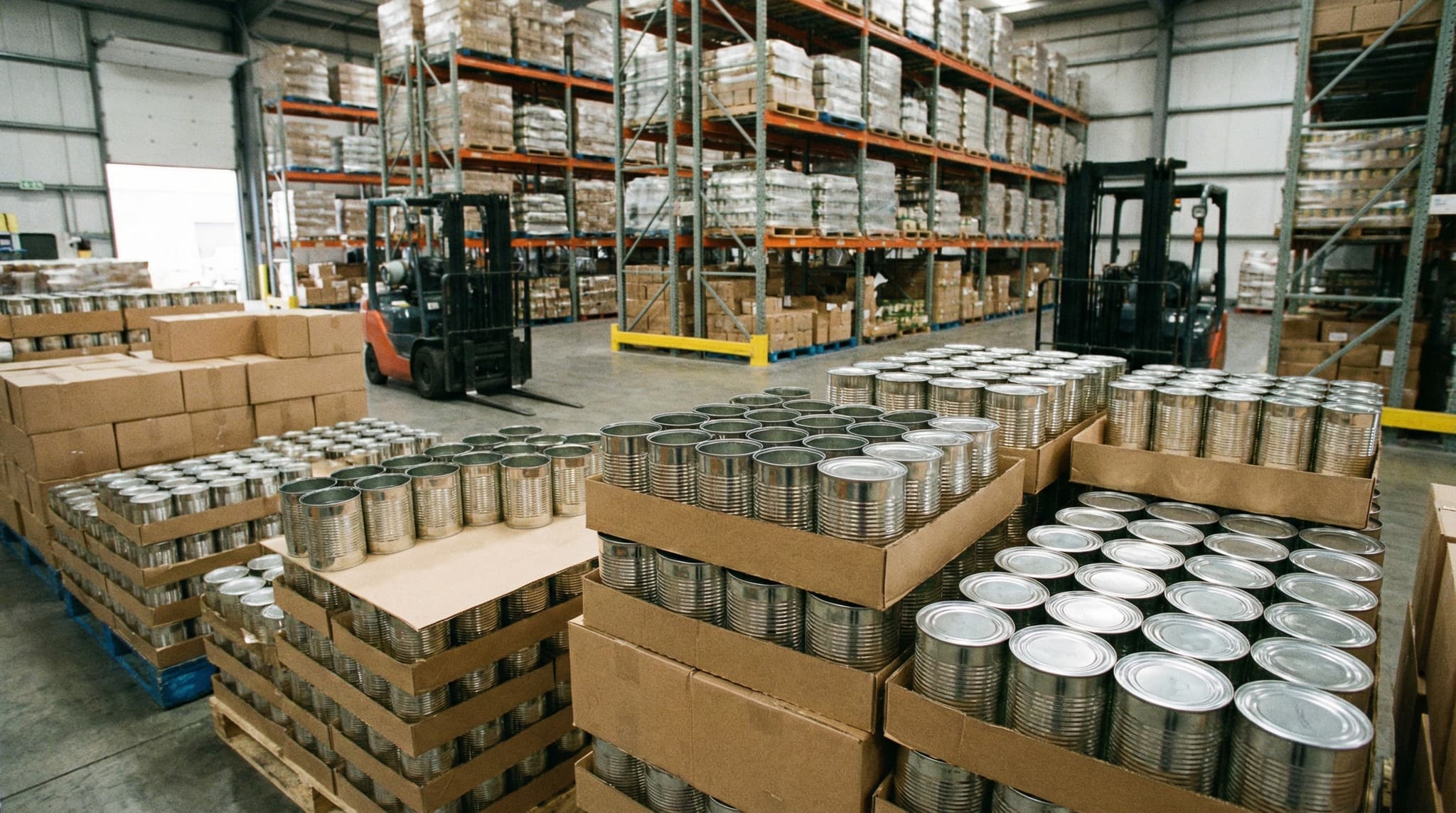
SR vs DR Tinplate: Differences, Benefits, and Application Guide
SR vs DR Tinplate: Understanding the Difference
When sourcing tinplate for packaging production, industrial buyers often come across two important categories: SR tinplate and DR tinplate.
- SR means single reduced
- DR means double reduced
Both are used in metal packaging and industrial applications, but they serve different needs. Choosing the wrong one can affect line performance, forming behavior, material efficiency, and final package reliability.
For large-volume buyers, the SR vs DR decision is not just a technical issue. It directly affects procurement cost, production efficiency, and supply stability.
What Is SR Tinplate?
SR tinplate, or single reduced tinplate, is produced through standard cold reduction followed by annealing and finishing processes.
It is generally associated with:
- balanced formability
- good general-purpose process compatibility
- suitability for a wide range of packaging applications
- flexibility for applications requiring shaping and forming
Because of this balance, SR tinplate is commonly used in many established packaging production systems.
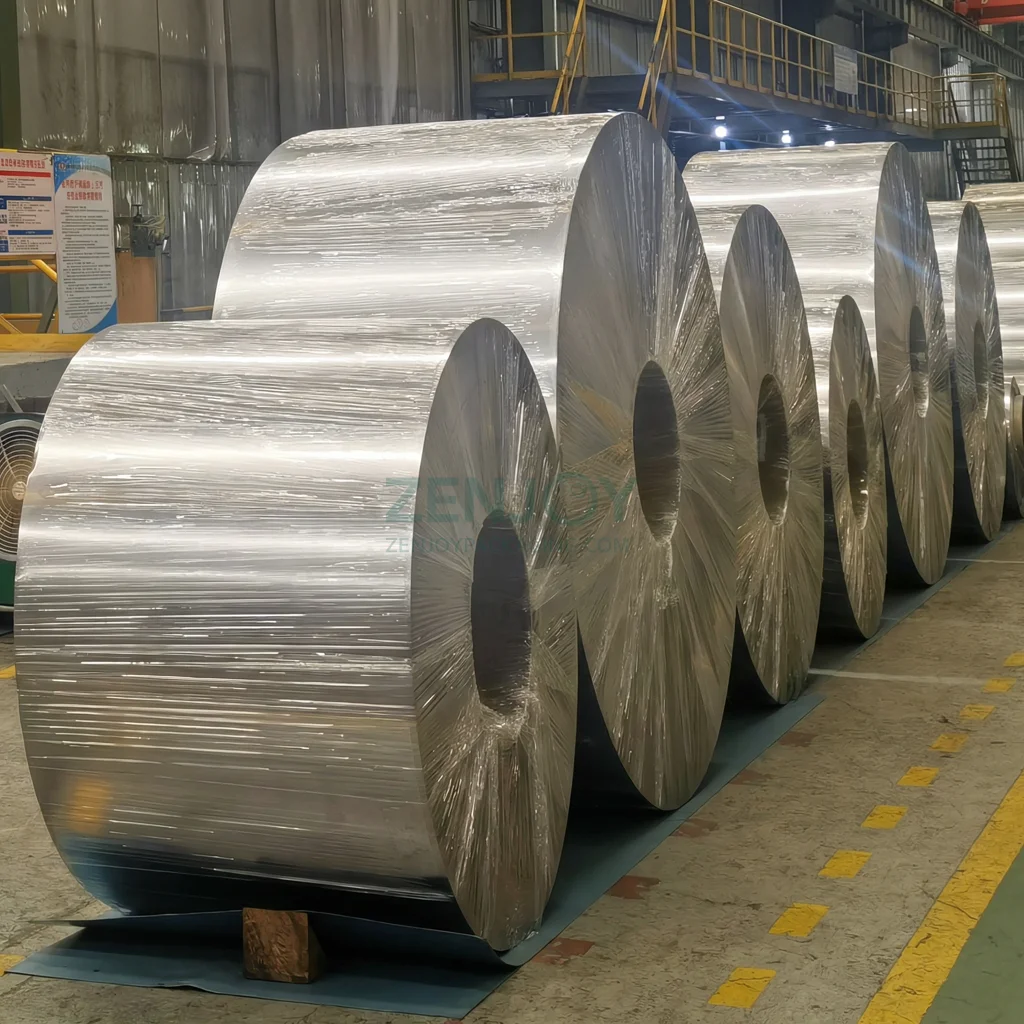
Tinplate Steel Sheet in Coil
Electrolytic Tinplate (ETP) is a low-carbon steel sheet that has been electrolytically coated with tin, widely used in packaging for food, beverages, chemical products, and other applications. With its excellent corrosion resistance, superior processability, and attractive appearance, tinplate has become an indispensable material in modern packaging industry. Our tinplate products strictly adhere to international standards and utilize advanced manufacturing processes to ensure exceptional quality in every coil.
What Is DR Tinplate?
DR tinplate, or double reduced tinplate, undergoes an additional reduction process after annealing, which changes its mechanical behavior.
DR tinplate is generally associated with:
- higher strength
- increased stiffness
- thinner gauge potential with maintained rigidity
- suitability for selected high-efficiency packaging applications
Because of these properties, DR tinplate is often considered in projects where buyers are focused on lightweighting, strength, or specific production requirements.
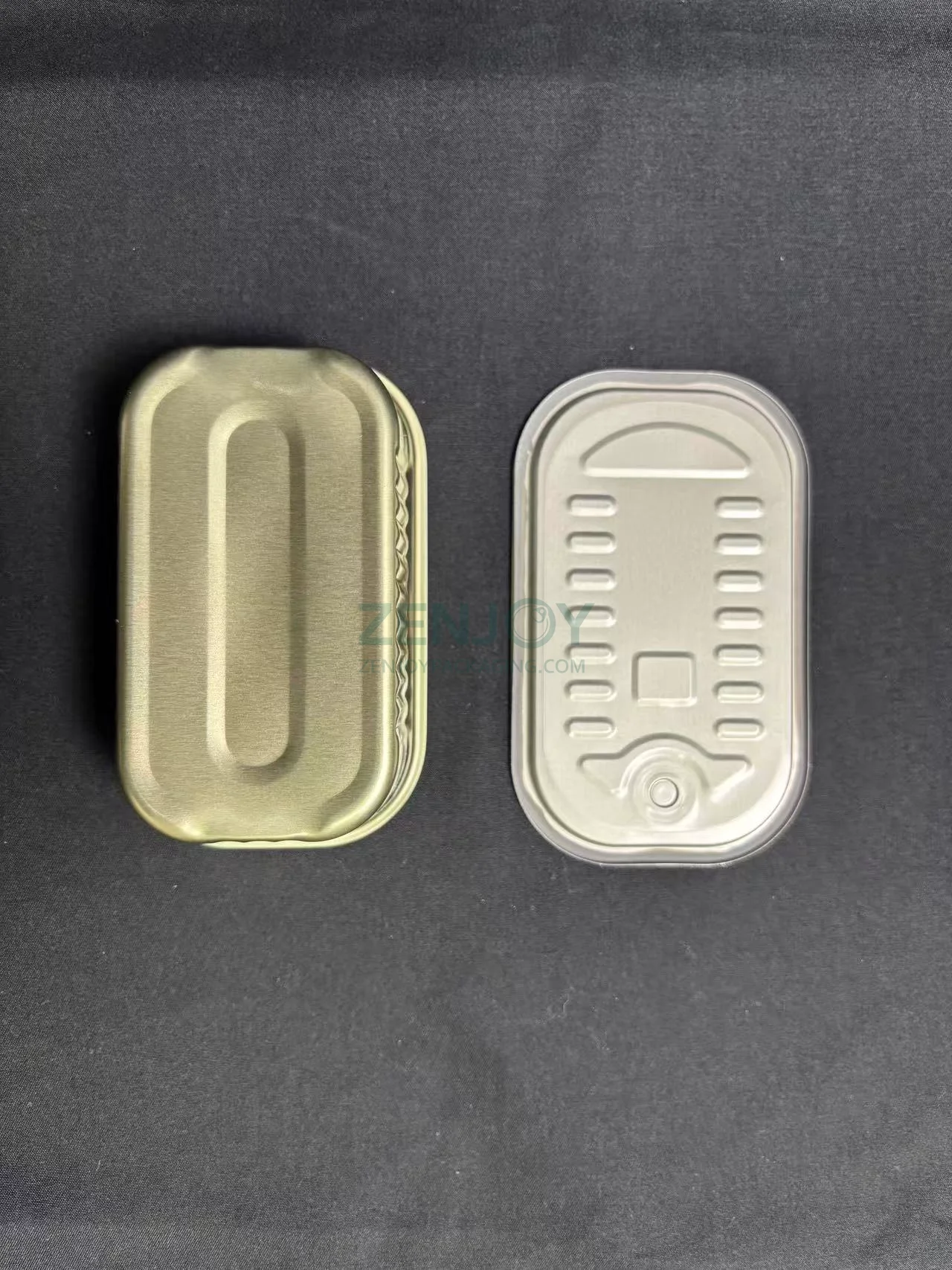
Two-Piece Tinplate
In today's competitive market, unique and efficient packaging solutions are the key to standing out. Our customizable can containers are designed for this purpose, offering comprehensive customization services from dimensions to materials, ensuring your product packaging is both aesthetically pleasing and practical, perfectly matching your brand image and product characteristics.
The Main Differences Between SR and DR Tinplate
1. Mechanical profile
SR tinplate usually offers a more balanced combination of strength and formability.
DR tinplate usually offers higher strength and stiffness, but with different forming behavior that must be matched carefully to the application.
2. Formability
SR is often preferred where more general forming flexibility is required.
DR may be selected where structural rigidity is more important, but the production process must be capable of handling its different behavior.
3. Lightweighting potential
DR tinplate is often used when buyers want to reduce thickness while maintaining certain performance requirements.
For high-volume packaging operations, this can support material efficiency goals. However, thinner material selection must be validated carefully.
4. Production fit
Not every line that performs well with SR will automatically perform well with DR.
A switch from SR to DR may require:
- line adjustment
- tooling review
- forming test
- seam or strength validation
- full qualification before mass conversion
Which One Is Better?
Neither SR nor DR is always better. The correct choice depends on what the production line and finished product actually require.
SR may be better when buyers need:
- more general forming flexibility
- a proven option for standard packaging production
- lower switching risk
- broad compatibility across multiple applications
DR may be better when buyers need:
- higher rigidity
- lightweighting opportunities
- efficient strength-to-thickness performance
- a material matched to a qualified high-volume line
The real question is not “Which one is better?”
It is “Which one is better for our exact production and supply model?”
What Buyers Should Confirm Before Choosing SR or DR
Before ordering SR or DR tinplate, buyers should review the following:
Final application
Is the material for can body, can end, lid, closure, or another structural packaging component?
Thickness target
Is the buyer trying to reduce thickness or optimize material usage?
Production line capability
Has the line already been qualified for SR or DR material?
Forming and seaming requirements
Will the material need deep shaping, bending, welding, or structural seam performance?
Risk of supplier change
If the buyer is switching from one supplier or reduction type to another, has adequate testing been planned?
This step is especially important for packaging factories with seasonal production windows, where qualification delays can affect the annual supply cycle.
Why SR vs DR Matters in Cost Control
At first glance, buyers may see DR tinplate as a way to improve cost efficiency through thinner material use. In some cases, this is valid. But material cost savings should never be separated from production risk.
If the new material causes:
- machine instability
- higher scrap rate
- seam issues
- qualification failure
- slower output
- product reliability concerns
then the apparent cost advantage may disappear quickly.
For industrial buyers, the right approach is to evaluate total process cost, not only nominal material cost.
Best Practice for Large-Volume Buyers
For large-volume procurement, the safest approach usually includes:
Reviewing the current benchmark
Understand the existing thickness, reduction type, temper, and actual line performance.
Matching the material to the end use
Do not switch only because the material looks stronger or cheaper.
Conducting production trials
Where performance matters, validation should come before full annual volume allocation.
Planning ahead before peak season
If the application is tied to seasonal packaging demand, qualification should be completed early enough to avoid procurement bottlenecks.
FAQ
What does SR mean in tinplate?
SR means single reduced tinplate.
What does DR mean in tinplate?
DR means double reduced tinplate.
Is DR stronger than SR?
In general, DR tinplate is associated with higher strength and stiffness than SR tinplate.
Is SR easier to form than DR?
In many applications, SR tinplate offers more balanced formability, while DR must be matched more carefully to the production process.
Can buyers switch from SR to DR directly?
Not always. The change should be tested against the actual line, tooling, and product requirements.
---
Looking for the right SR or DR tinplate option for your production line?
Related News
Other news you might be interested in

Tinplate Coating Peeling Risk Analysis and Avoidance Under High-Temperature Retort Sterilization
High-temperature retort sterilization is an essential process for shelf-stable food cans. However, long-term high-temperature and high-pressure environments easily cause coating blistering, delamination and peeling on the inner wall of metal cans. Many can manufacturers attribute coating failure solely to lacquer quality or baking process. In fact, **tinplate substrate performance, surface condition and material matching** are the core hidden causes of most high-temperature coating peeling problems. This article professionally analyzes the root causes of tinplate coating peeling under retort conditions, explains the difference in high-temperature resistance between ETP tinplate and TFS steel, and summarizes practical and operable avoidance solutions for mass production.
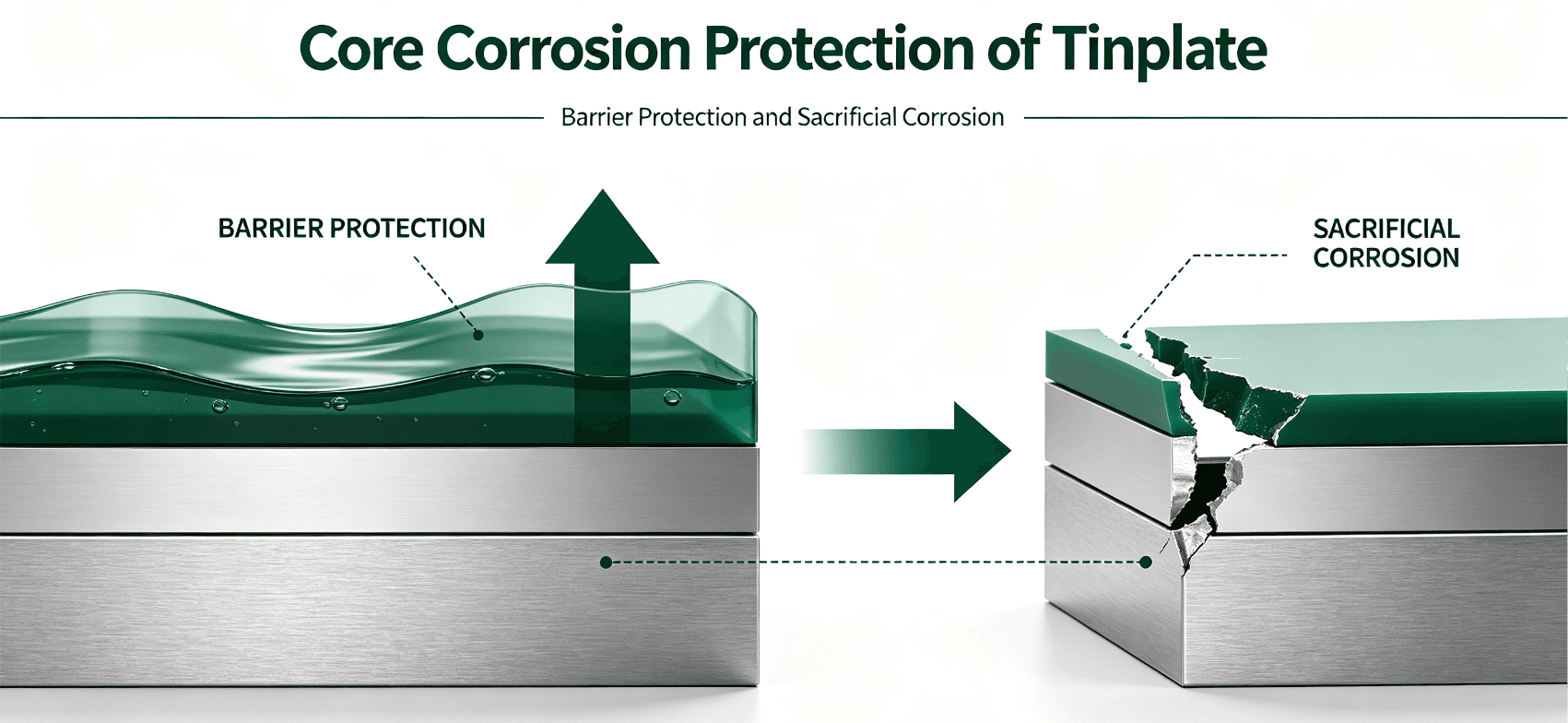
Sacrificial Corrosion & Barrier Protection: Core Anti-Corrosion Principle of Tinplate
The service life and storage safety of metal food cans largely depend on the anti-corrosion performance of packaging materials. As the most widely used substrate for food cans and general metal containers, ETP electrolytic tinplate adopts two core anti-corrosion mechanisms: barrier protection and sacrificial anode protection. These two protection systems work together to ensure stable corrosion resistance in complex food filling and high-temperature sterilization environments.
Want to know more?
Get in touch with us for more information about our services and products.