
Déformation du fond des boîtes de conserve d'aliments conditionnés à chaud après le transport : causes et guide d'inspection
Boîtes de conserve d'aliments conditionnés à chaud avec voile de fond après transport : Comment examiner les matériaux, la structure et la transformation
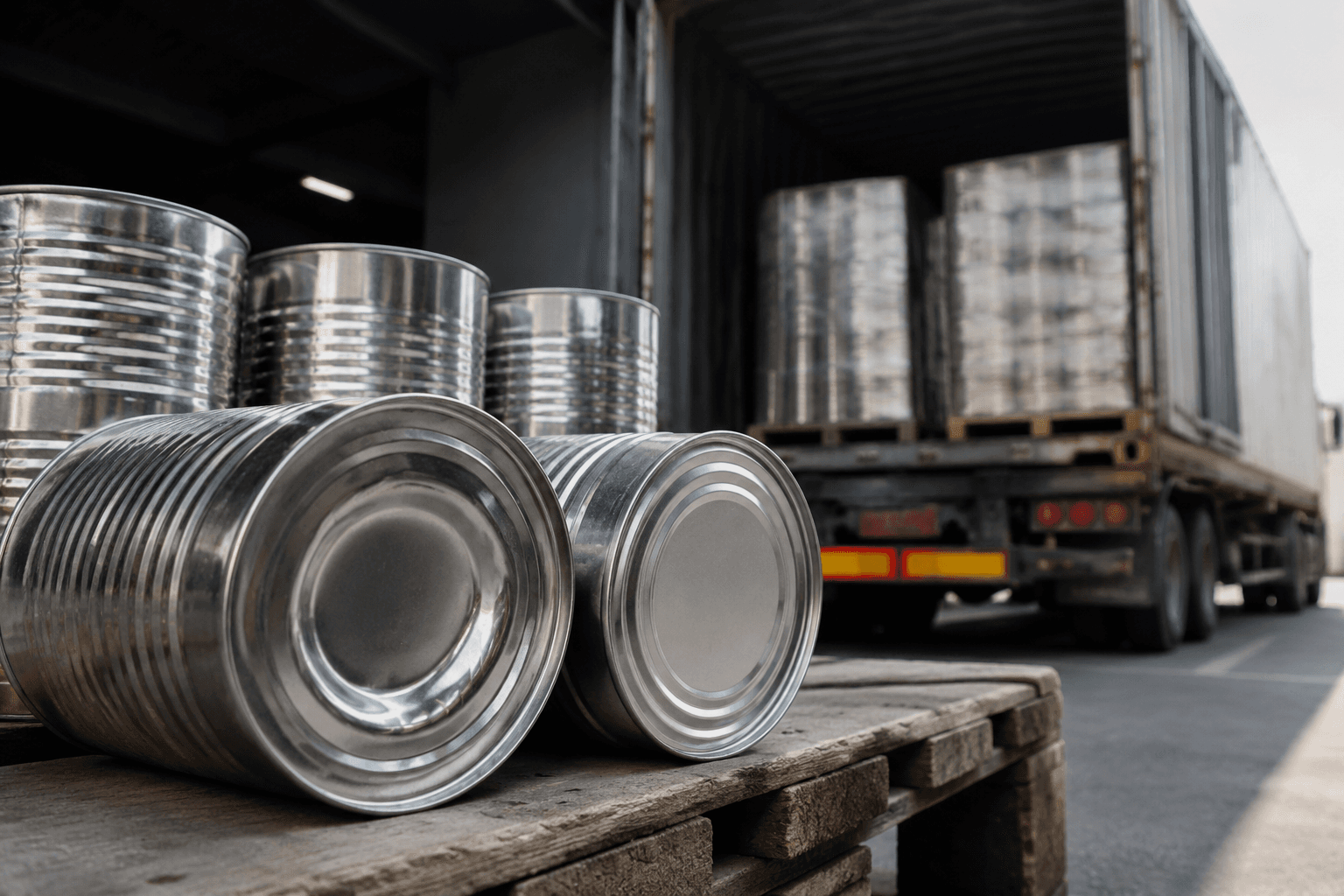
Dans les opérations de mise en conserve alimentaire, une boîte finie peut sembler normale en sortant de la ligne de production, mais présenter une déformation du fond après le remplissage à chaud, la fermeture, le refroidissement, l'emballage et le transport sur longue distance.
Les observations typiques incluent un fond de boîte concave, une déformation autour du panneau d'extrémité, une perte locale de circularité, ou une stabilité au gerbage réduite. Ces conditions peuvent devenir plus visibles après le freinage du véhicule, les routes inégales, les vibrations du conteneur, ou la manutention lors du chargement et du déchargement.
Les conditions de transport sont des variables importantes. Cependant, dans de nombreux cas, les vibrations ou les chocs soudains peuvent agir comme un déclencheur plutôt que comme la seule cause sous-jacente. La stabilité d'une boîte pendant le transport dépend également de son choix de matériau, de la structure de son extrémité, de la qualité du double sertissage, du processus de refroidissement, de la méthode d'emballage et de sa résistance globale à la déformation.
Pour cette raison, l'approche la plus efficace consiste à examiner la déformation sous plusieurs angles plutôt que d'attribuer l'ensemble du problème aux seules conditions routières.
Le corps de la boîte et les fonds ne remplissent pas la même fonction
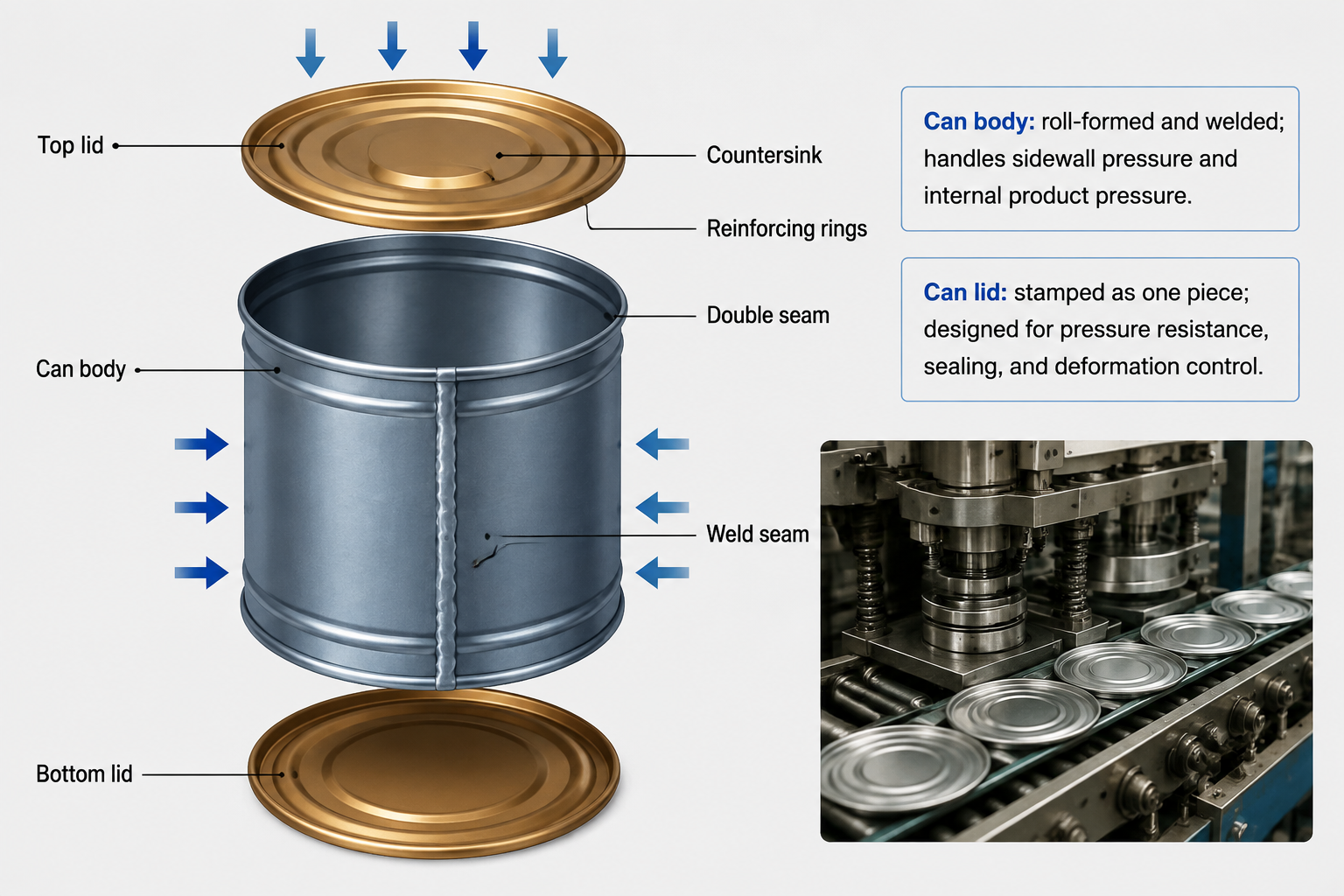
Une boîte ronde typique à trois pièces se compose d'un corps et de deux fonds. Le corps fournit principalement la paroi cylindrique, supporte les opérations de soudage et de formage, et contribue à la résistance au gerbage. Les fonds assurent la fermeture et l'étanchéité tout en résistant aux changements de pression et aux charges externes pendant la manutention et le transport.
Pour de nombreuses conceptions de boîtes alimentaires, le corps et les fonds ne sont pas sélectionnés en utilisant exactement la même logique de matériau. Les spécifications des fonds peuvent varier en fonction de :
- Diamètre et hauteur de la boîte ;
- Type de produit et température de remplissage ;
- Conditions de refroidissement et de stérilisation ;
- Vide ou pression interne après refroidissement ;
- Diamètre du fond, profondeur du fraisurage et conception du panneau ;
- Épaisseur du matériau et propriétés mécaniques ;
- Conception du double sertissage et exigences d'étanchéité ;
- Conditions de gerbage, de manutention et de transport.
Dans certaines applications, les fonds peuvent nécessiter une plus grande résistance à la déformation que le corps. Cependant, cela ne doit pas être réduit à une règle absolue selon laquelle le fond doit toujours être plus épais que le corps. La spécification correcte dépend du format de la boîte, du processus de remplissage, des caractéristiques du produit et des conditions de service attendues.
La question clé est de savoir si le corps, le fond supérieur et le fond inférieur ont été adaptés aux différentes charges qu'ils subiront tout au long du processus d'emballage complet.
Pourquoi les boîtes conditionnées à chaud peuvent développer une déformation concave du fond
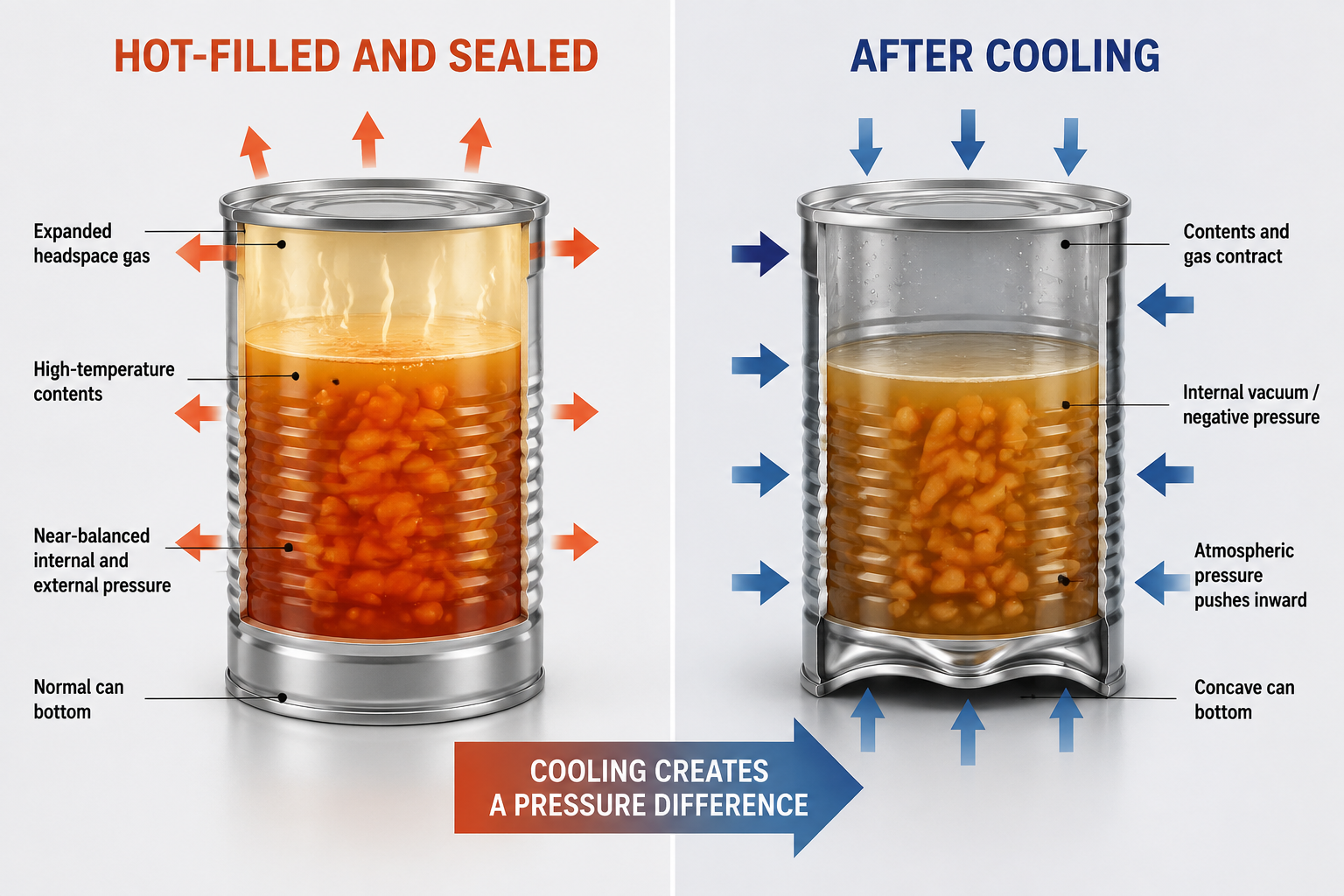
Lors du remplissage à chaud, le produit et l'espace de tête à l'intérieur de la boîte sont normalement à une température élevée. Après la fermeture, le produit et l'air dans l'espace de tête refroidissent. À mesure que le contenu et le gaz interne se contractent, la pression à l'intérieur de la boîte diminue.
Cela crée une différence de pression entre l'intérieur et l'extérieur de la boîte. La pression atmosphérique agit alors sur les fonds de la boîte. Si le matériau et la structure du fond ont une résistance suffisante, la boîte reste stable. Si le fond est proche de sa limite de déformation, il peut se déplacer progressivement vers l'intérieur.
Ce type de déformation peut présenter plusieurs caractéristiques :
- Une zone relativement grande du panneau d'extrémité se déplace vers l'intérieur ;
- Les anneaux ou nervures de renfort se déforment ;
- La déformation est plus large qu'une seule marque de choc nette ;
- Le problème apparaît après le refroidissement ou devient plus visible pendant le transport ;
- Seule une proportion de boîtes du même lot de production peut être affectée ;
- La déformation peut être plus évidente au fond qu'au sommet.
En comparaison, un impact externe direct crée souvent une bosse plus localisée, un pli visible ou une marque de contact irrégulière.
Cette distinction est utile car elle aide à séparer une déformation structurelle ou liée à la pression d'un simple impact de manutention. En pratique, les deux facteurs peuvent exister simultanément : une boîte avec une marge structurelle limitée peut rester stable dans des conditions normales mais se déformer après des vibrations ou un mouvement soudain pendant le transport.
Examen de la boîte finie à partir du motif de déformation
Lorsqu'un fond de boîte devient concave, la première étape consiste à identifier le type et le moment de la déformation.
| Observation de la boîte finie | Domaine possible à examiner | Vérification recommandée |
|---|---|---|
| Déformation vers l'intérieur apparaissant peu après le refroidissement | Pression interne, résistance du fond et formage du fond | Vérifier le vide de la boîte finie, l'épaisseur du fond, la profondeur du fraisurage et la forme du panneau |
| La déformation s'aggrave après des vibrations ou un freinage | Marge structurelle et charge de transport | Comparer les échantillons avant et après le transport ou les tests de vibration |
| Seule une partie d'un lot est affectée | Cohérence du matériau ou du formage | Comparer les échantillons par lot de matériau, équipe de production et machine |
| La déformation est concentrée autour du centre ou des anneaux de renfort | Formage du panneau d'extrémité et outillage | Examiner l'état de l'outillage, la profondeur de formage, la géométrie des nervures et le retour élastique |
| Les fonds supérieur et inférieur se comportent différemment | Spécifications de fond différentes ou conditions de formage | Examiner les deux spécifications de fond séparément |
| La déformation du fond est accompagnée d'une ovalisation du corps | Résistance du corps, zone de soudure ou charge de gerbage | Vérifier la circularité du corps, la qualité de la soudure, le support de la palette et la pression de gerbage |
| La déformation est accompagnée de fuites ou de défauts de sertissage | Cohérence du double sertissage | Vérifier les dimensions du sertissage, le recouvrement, la tension, les plis et le compound d'étanchéité |
| Le problème apparaît principalement dans les produits conditionnés à chaud | Conditions de remplissage, de fermeture et de refroidissement | Enregistrer la température de remplissage, le temps de fermeture, la courbe de refroidissement et le vide final |
Une enquête utile devrait inclure des échantillons de plusieurs étapes de production :
- La boîte vide avant le remplissage ;
- La boîte immédiatement après la fermeture ;
- La boîte après refroidissement ;
- La boîte avant le chargement ;
- La boîte après le transport ;
- Une boîte déformée du lot affecté.
La comparaison de ces échantillons peut aider à identifier si la condition se développait déjà après la fermeture, est apparue pendant le refroidissement, ou n'est devenue visible qu'après le chargement et le transport.
L'épaisseur du matériau est importante, mais ce n'est pas le seul facteur
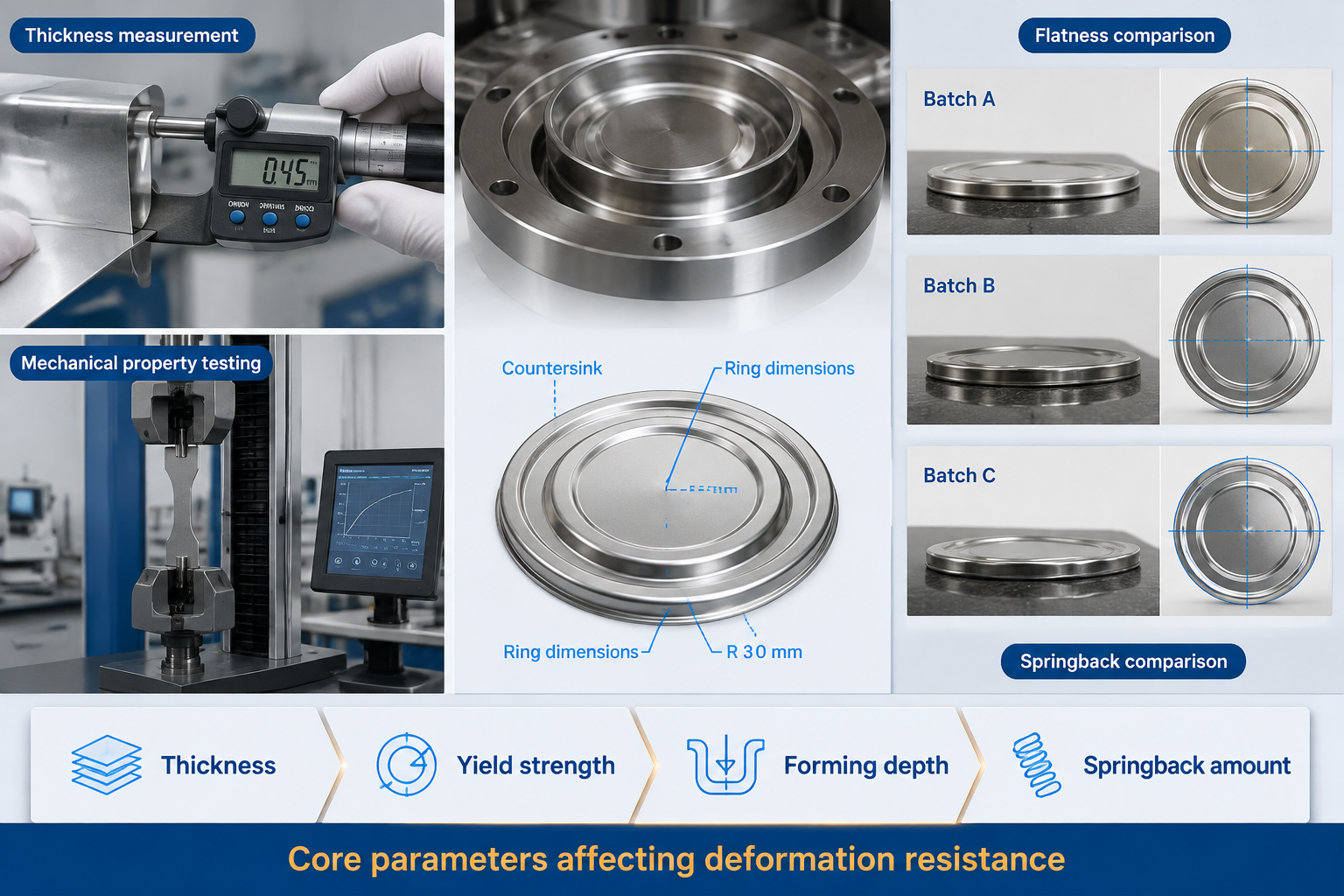
L'épaisseur du fond est une spécification importante, mais l'épaisseur seule ne détermine pas la résistance finale à la déformation d'un fond de boîte. La nuance d'acier, la limite d'élasticité, la résistance à la traction, l'allongement, la dureté, la trempe et les performances de formage peuvent tous influencer le résultat.
Lors de l'examen des matériaux pour les fonds de boîtes, il est utile de confirmer :
- L'épaisseur réelle et la tolérance d'épaisseur ;
- La nuance d'acier et les propriétés mécaniques ;
- La condition de dureté ou de trempe ;
- La profondeur de formage après emboutissage ;
- L'état des anneaux ou nervures de renfort ;
- La planéité du fond et le retour élastique ;
- L'effet du revêtement, du vernis ou du compound d'étanchéité ;
- La cohérence entre les lots de matériaux ;
- La compatibilité entre le matériau et l'outillage sélectionné.
Une spécification de matériau proche de la limite de conception inférieure peut sembler acceptable dans des conditions de boîte vide ou à température ambiante. Cependant, après le remplissage à chaud et le refroidissement, le fond est exposé à une pression externe continue. Si les vibrations du transport et la charge de la palette s'ajoutent, une petite différence dans la cohérence du matériau ou du formage peut devenir visible sous forme de voile du fond.
Dans le même temps, utiliser un matériau plus épais ou plus dur n'est pas automatiquement la meilleure solution. Une dureté excessive ou une condition de matériau inadaptée peut augmenter le risque de fissures de formage, de formation insuffisante des nervures, de retour élastique ou de problèmes d'adaptation du double sertissage.
L'approche la plus fiable consiste à adapter le matériau et la structure au diamètre de la boîte, au produit, à la température de remplissage, au processus de refroidissement, à la condition de fermeture et à l'environnement de transport.
La qualité du double sertissage peut également affecter l'état de charge de la boîte
Bien que le problème visible puisse être situé au fond, le double sertissage doit également être examiné. Le corps de la boîte, le fond, le compound d'étanchéité et le double sertissage travaillent ensemble comme un système d'emballage fermé unique.
Si les dimensions du sertissage ou la condition d'étanchéité sont incohérentes, la pression interne et les performances d'étanchéité de la boîte peuvent varier. Cela peut modifier la façon dont les fonds et le corps réagissent pendant le refroidissement et le transport.
Les vérifications importantes du sertissage peuvent inclure :
- Les dimensions du sertissage de première et de dernière opération ;
- La largeur, l'épaisseur et le fraisurage du sertissage ;
- Le recouvrement du crochet de corps et du crochet de couvercle ;
- La tension du sertissage et l'état des plis ;
- La distribution et le durcissement du compound d'étanchéité ;
- Les réglages de la mandrine et des molettes de sertissage ;
- La vitesse et la pression de sertissage ;
- Les différences entre les machines, les équipes et les lignes de production.
Une inspection visuelle seule peut ne pas être suffisante. Pour les boîtes affectées, une analyse par démontage du sertissage peut fournir des informations plus utiles sur l'état réel du système de fermeture.
Les conditions de transport doivent être examinées dans le cadre du système global
Le transport sur longue distance peut exposer les boîtes à plusieurs types de charges externes :
- Freinages et accélérations soudains ;
- Surfaces routières inégales ;
- Vibrations continues du véhicule ;
- Mouvement du conteneur en mer ;
- Impacts de chargement et de déchargement ;
- Pression de gerbage sur palette ;
- Changements de température ;
- Pression localisée due à un emballage instable.
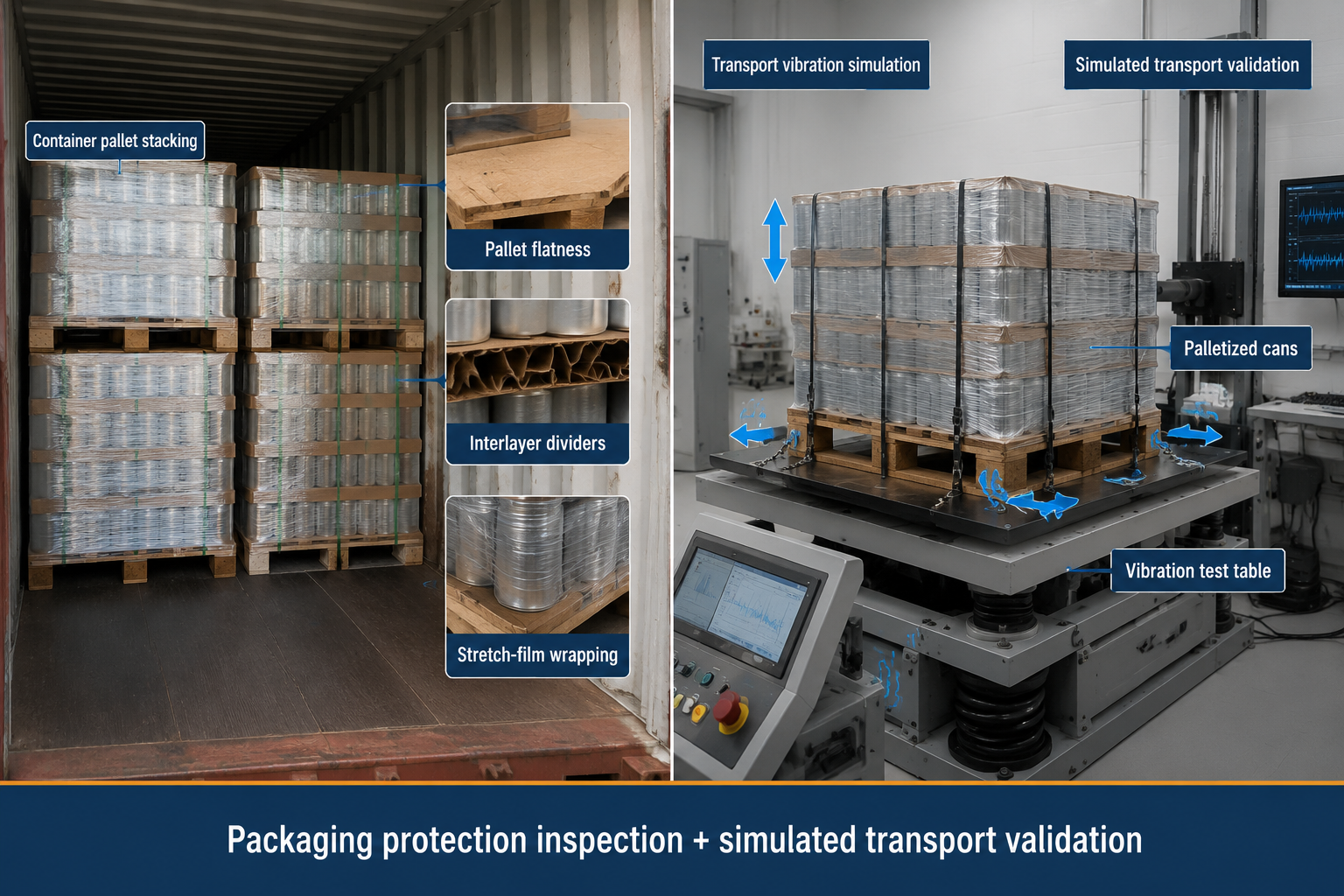
Les conditions d'emballage suivantes doivent également être vérifiées :
- Si la base de la palette est plate et suffisamment soutenue ;
- Si les boîtes sont disposées uniformément ;
- Si les séparateurs et les feuilles intercalaires fournissent un support suffisant ;
- Si le film étirable est appliqué de manière cohérente ;
- Si la hauteur de gerbage est appropriée ;
- S'il y a de grands espaces à l'intérieur du conteneur ;
- Si les boîtes ont été suffisamment refroidies avant l'emballage ;
- Si la charge a été sécurisée contre les mouvements.
Cependant, l'amélioration des conditions de transport ne doit pas remplacer un examen des performances structurelles de la boîte elle-même. Si le même type de déformation apparaît sous différents véhicules, itinéraires ou conditions d'expédition, il peut être utile d'examiner ensemble le matériau, la conception du fond, le processus de formage et les conditions de pression interne.
Une méthode de vérification pratique en trois étapes
Pour les boîtes de conserve d'aliments conditionnés à chaud qui présentent une déformation du fond, une comparaison en trois étapes peut aider à rendre l'enquête plus objective.
Première étape : Inspection après la production Vérifier l'apparence du fond, la circularité du corps de la boîte, les dimensions du double sertissage et l'état général de la fermeture immédiatement après la production.
Deuxième étape : Inspection après refroidissement Enregistrer la température du produit, le vide interne, la forme du panneau du fond et tout signe précoce de mouvement vers l'intérieur ou de déformation des nervures.
Troisième étape : Inspection avant et après le transport Comparer les échantillons avant le chargement avec les échantillons après le transport réel ou le gerbage et les vibrations simulés. La comparaison doit inclure à la fois les boîtes normales et les boîtes affectées de la même période de production.
Cette approche aide à séparer les conditions qui prennent naissance pendant la production de celles qui deviennent visibles pendant le refroidissement, l'emballage ou le transport.
Améliorer la communication entre les équipes matériaux et fabricants de boîtes
De nombreux problèmes de déformation de boîtes sont plus faciles à prévenir lorsque le fournisseur de matériaux, le fabricant de boîtes et le fabricant de produits alimentaires confirment les principales conditions de fonctionnement à un stade précoce.
Les informations suivantes sont particulièrement utiles :
- Diamètre et hauteur de la boîte ;
- Spécifications du matériau du corps et du fond ;
- Type de produit et température de remplissage ;
- Espace de tête et vide attendu ;
- Conditions de fermeture et de refroidissement ;
- Exigences du double sertissage ;
- Motif de palettisation et hauteur de gerbage ;
- Distance et itinéraire de transport ;
- Méthode de chargement du conteneur ;
- Toute observation antérieure de déformation ou de fuite.
Ces informations ne nécessitent pas nécessairement un changement majeur du processus de production. Dans de nombreux cas, elles permettent simplement d'examiner chaque spécification dans le contexte correct et aident à éviter d'utiliser un arrangement de matériau général pour différents formats de boîtes ou conditions de remplissage.
Conclusion
Le voile du fond après le transport de boîtes de conserve d'aliments conditionnés à chaud peut être lié au freinage, aux vibrations de la route, au gerbage ou à la manutention. Cependant, la probabilité de déformation est également influencée par la marge structurelle de la boîte, la pression interne après refroidissement, le matériau du fond, la condition de formage, la qualité du double sertissage et la méthode d'emballage.
Le corps, le fond supérieur et le fond inférieur d'une boîte à trois pièces ne subissent pas nécessairement les mêmes charges. Leur épaisseur de matériau, leur nuance d'acier, leur dureté, leur structure de formage et leurs conditions d'étanchéité doivent donc être évalués en fonction du format réel de la boîte et du processus de remplissage.
Une boîte qui semble normale avant le remplissage ou immédiatement après la production peut encore subir une déformation plus tard lorsqu'elle est exposée aux changements de pression liés au refroidissement, aux charges de la palette, aux vibrations et au transport sur longue distance.
Pour cette raison, l'examen du motif de déformation et du moment où elle apparaît pour la première fois peut souvent fournir des informations plus utiles que de se concentrer sur un seul événement de transport. Une évaluation complète des matériaux, de la structure de la boîte, des conditions de transformation, de la qualité de la fermeture, du refroidissement et de la logistique peut aider à identifier les facteurs contributifs réels et à améliorer la stabilité de la production future.
Pour les boîtes de conserve alimentaires, les canettes de boisson et autres applications d'emballage métallique, une communication précoce entre le fournisseur de matériaux, le fabricant de boîtes et le fabricant du produit final peut aider à confirmer le matériau et la structure les plus appropriés avant la production en série. Cela favorise des performances plus cohérentes, du remplissage jusqu'à la livraison finale.
Related News
Other news you might be interested in

Simplification de l'approvisionnement en emballages métalliques : choisir le fer-blanc, le TFS et les couvercles à ouverture facile pour votre gamme de produits
Découvrez comment un approvisionnement stratégique en fer-blanc, TFS et couvercles à ouverture facile réduit les risques, stabilise les délais de livraison et soutient une production flexible de boîtes pour les acheteurs d'emballages alimentaires et industriels.
Sécurisez votre approvisionnement en emballages métalliques avec du fer-blanc, du TFS et des couvercles à ouverture facile de première qualité
Sécurisez votre approvisionnement en emballages métalliques avec du fer-blanc et du TFS de première qualité. Découvrez comment un approvisionnement intégré réduit les temps d'arrêt, diminue les coûts et garantit une livraison fiable pour les boîtes deux pièces et trois pièces.
Want to know more?
Get in touch with us for more information about our services and products.