
BA vs CA Tinplate: Differences, Properties, and Applications
BA vs CA Tinplate: Why the Difference Matters
When buyers source tinplate for packaging and industrial use, they usually focus first on thickness, temper, and coating weight. However, the production route of the base steel also matters. One of the most important distinctions is whether the material is BA tinplate or CA tinplate.
- BA means batch annealed
- CA means continuously annealed
Both types are used in the market, but they do not behave exactly the same in production. For can makers, end manufacturers, processors, and large-volume buyers, understanding the difference helps reduce trial-and-error, improve line compatibility, and support more stable procurement decisions.
What Is BA Tinplate?
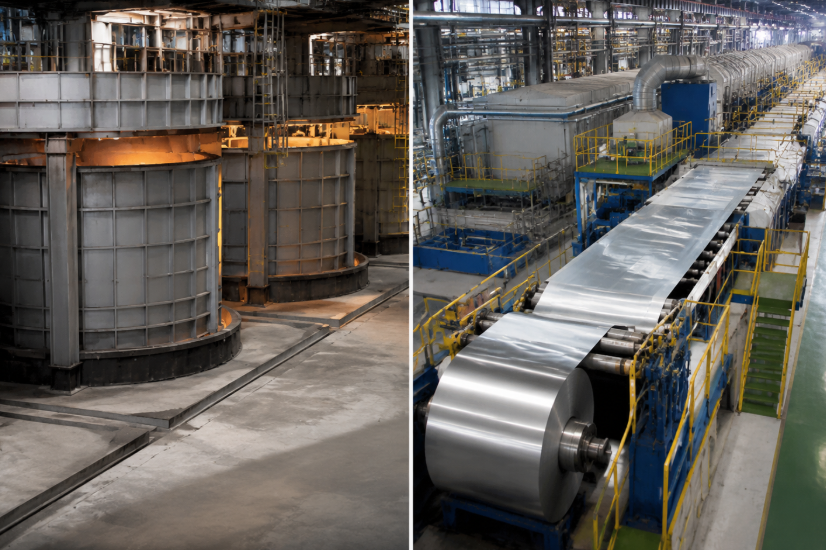
BA tinplate is made from steel that has been batch annealed. In this process, cold-rolled steel coils are annealed in batches over a longer heating and cooling cycle.
This production route can give the material characteristics that are often associated with:
- good formability
- a softer and more ductile response in certain applications
- suitability for some drawing and shaping operations
Because of these characteristics, BA tinplate is often considered when buyers place high value on forming performance.
What Is CA Tinplate?
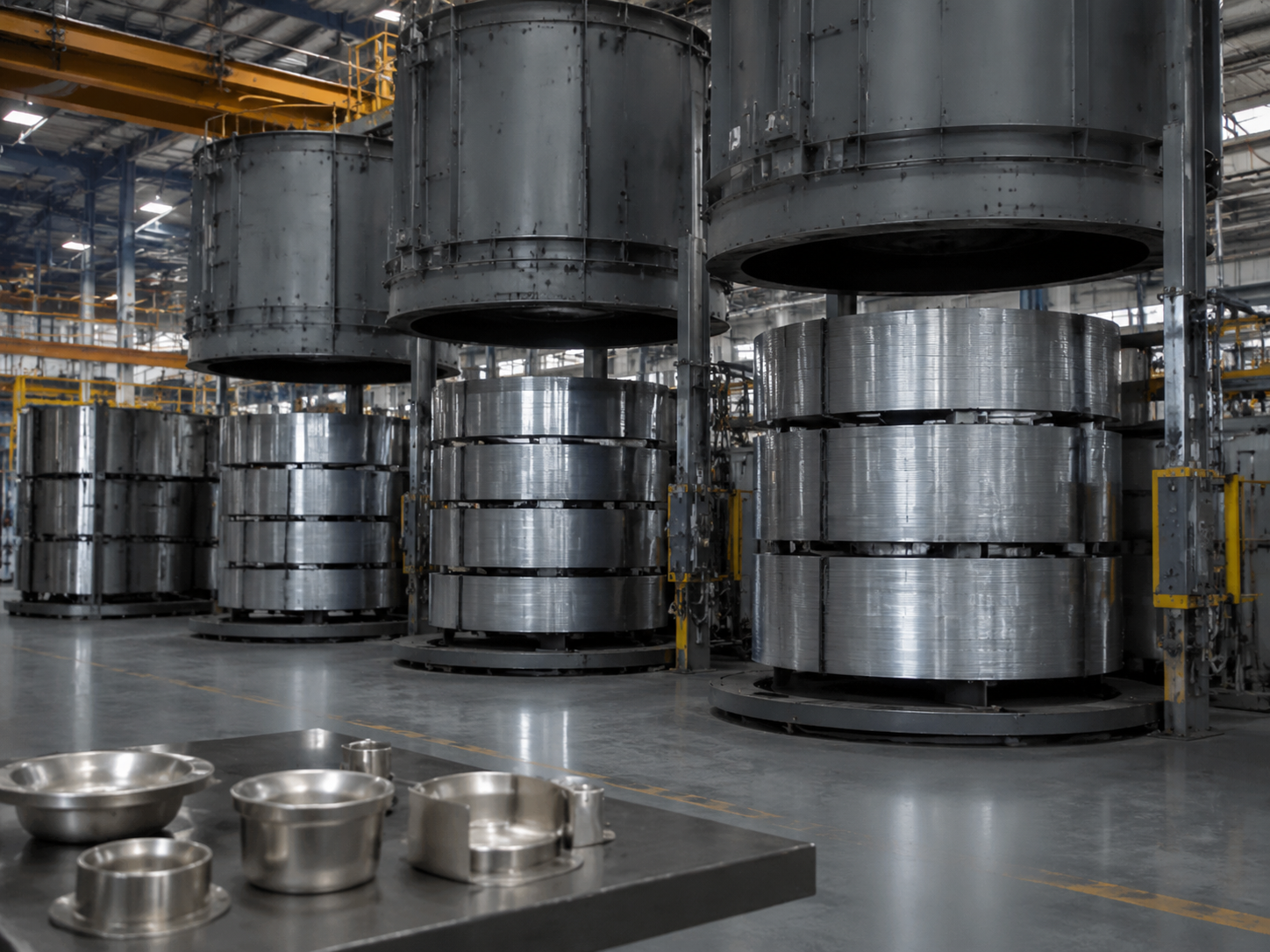
CA tinplate is made from steel that has been continuously annealed. In this process, the steel strip passes through a continuous annealing line at high speed.
CA tinplate is often associated with:
- more uniform mechanical properties
- smoother large-scale production consistency
- suitability for modern high-volume manufacturing
- stable performance in many standard packaging applications
For industrial buyers, CA tinplate is widely used where consistency and supply efficiency are important.
The Main Differences Between BA and CA Tinplate
1. Annealing process
The most basic difference is the annealing method:
- BA uses batch annealing
- CA uses continuous annealing
This affects the mechanical profile and production consistency of the finished material.
2. Formability characteristics
BA tinplate is often selected when stronger forming ability is required in specific applications.
CA tinplate also performs well in many packaging processes, but in some use cases buyers may find BA more suitable when the operation requires more demanding shaping or forming behavior.
3. Mechanical consistency
CA tinplate is often preferred for its consistency in large-scale continuous production.
For buyers running stable, high-speed lines, this can be an important advantage.
4. Application preference
Some buyers and factories have established preferences based on equipment setup, finished product structure, or historical production experience.
In practice, the “better” choice is usually the one that fits the production line and end-use requirement more reliably, not the one that sounds more advanced on paper.
Which One Is Better for Can Making?
There is no single answer for every factory.
For some can-making applications, BA tinplate may be preferred because of its forming behavior. For others, CA tinplate may be the better choice because of its consistency, availability, and suitability for high-volume processing.
The right material depends on:
- the type of can or packaging component
- the production line setup
- the forming method
- the required temper and thickness combination
- the buyer’s need for stability across repeat orders
For large industrial buyers, it is usually more useful to ask which one fits our line and product better, rather than which one is universally better.
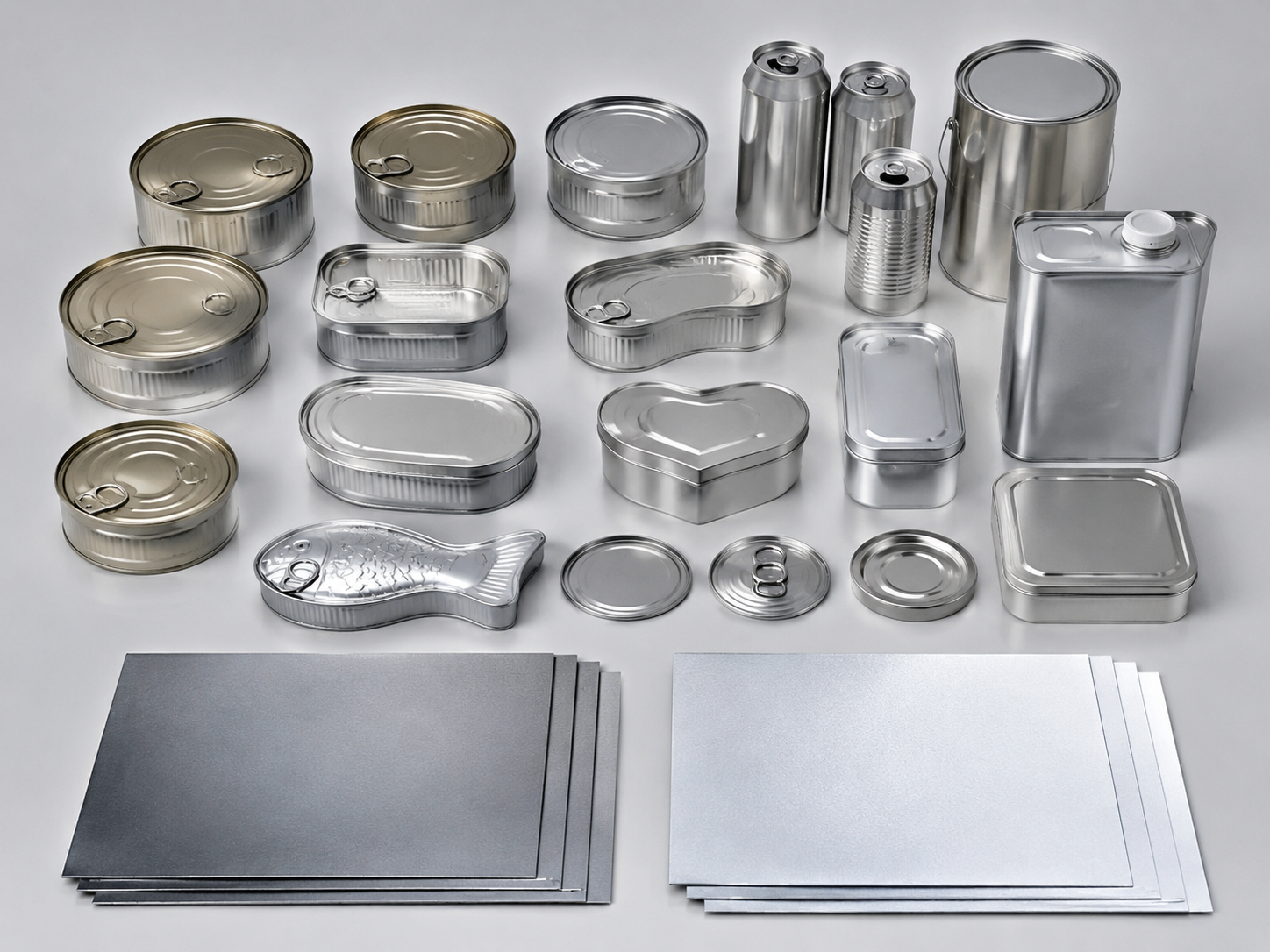
What Buyers Should Review Before Choosing BA or CA
Before confirming an order, buyers should review these points:
Application type
Is the tinplate for can bodies, ends, lids, closures, or other packaging components?
Forming difficulty
Does the part require more demanding drawing, bending, or shaping?
Line speed and consistency requirements
Does the buyer operate a high-speed line where batch-to-batch stability is especially important?
Existing production standard
Is the factory already qualified on BA or CA material from another supplier?
Switching risk
Will changing from BA to CA, or CA to BA, require new validation or line adjustment?
For customers with large annual demand, changing base material type without testing can introduce unnecessary production risk.
Why This Decision Matters in Large-Volume Procurement
For smaller orders, buyers sometimes focus mainly on quotation and delivery. But for larger industrial procurement, the cost of a poor material match is much higher.
A wrong BA/CA choice may cause:
- forming instability
- line adjustments
- lower output efficiency
- more scrap
- qualification delays when switching supplier
- higher overall procurement risk
This is why experienced buyers usually want suppliers to discuss application details, not only send a price sheet.
When to Request Technical Confirmation
Buyers should request technical confirmation or trial support when:
- changing supplier
- launching a new can format
- reducing thickness for cost control
- changing temper range
- moving from one annealing route to another
- planning for high-volume seasonal production
In these cases, early alignment is far better than solving problems after material arrives.
FAQ
What does BA mean in tinplate?
BA means batch annealed. The steel is annealed in batches rather than in a continuous line.
What does CA mean in tinplate?
CA means continuously annealed. The steel passes through a continuous annealing process.
Is BA tinplate more formable than CA tinplate?
In some applications, BA tinplate is often considered more suitable for stronger forming requirements. However, the right choice depends on the actual production process.
Is CA tinplate better for high-volume production?
CA tinplate is often valued for consistency and suitability in continuous, high-volume manufacturing environments.
Can buyers switch from BA to CA directly?
Not always. The change should be reviewed based on production line compatibility and application requirements.
---
Need help choosing between BA and CA tinplate for your packaging application?
Send us your thickness, temper, and production-use details for a more suitable recommendation.
Related News
Other news you might be interested in

Tinplate Coating Peeling Risk Analysis and Avoidance Under High-Temperature Retort Sterilization
High-temperature retort sterilization is an essential process for shelf-stable food cans. However, long-term high-temperature and high-pressure environments easily cause coating blistering, delamination and peeling on the inner wall of metal cans. Many can manufacturers attribute coating failure solely to lacquer quality or baking process. In fact, **tinplate substrate performance, surface condition and material matching** are the core hidden causes of most high-temperature coating peeling problems. This article professionally analyzes the root causes of tinplate coating peeling under retort conditions, explains the difference in high-temperature resistance between ETP tinplate and TFS steel, and summarizes practical and operable avoidance solutions for mass production.
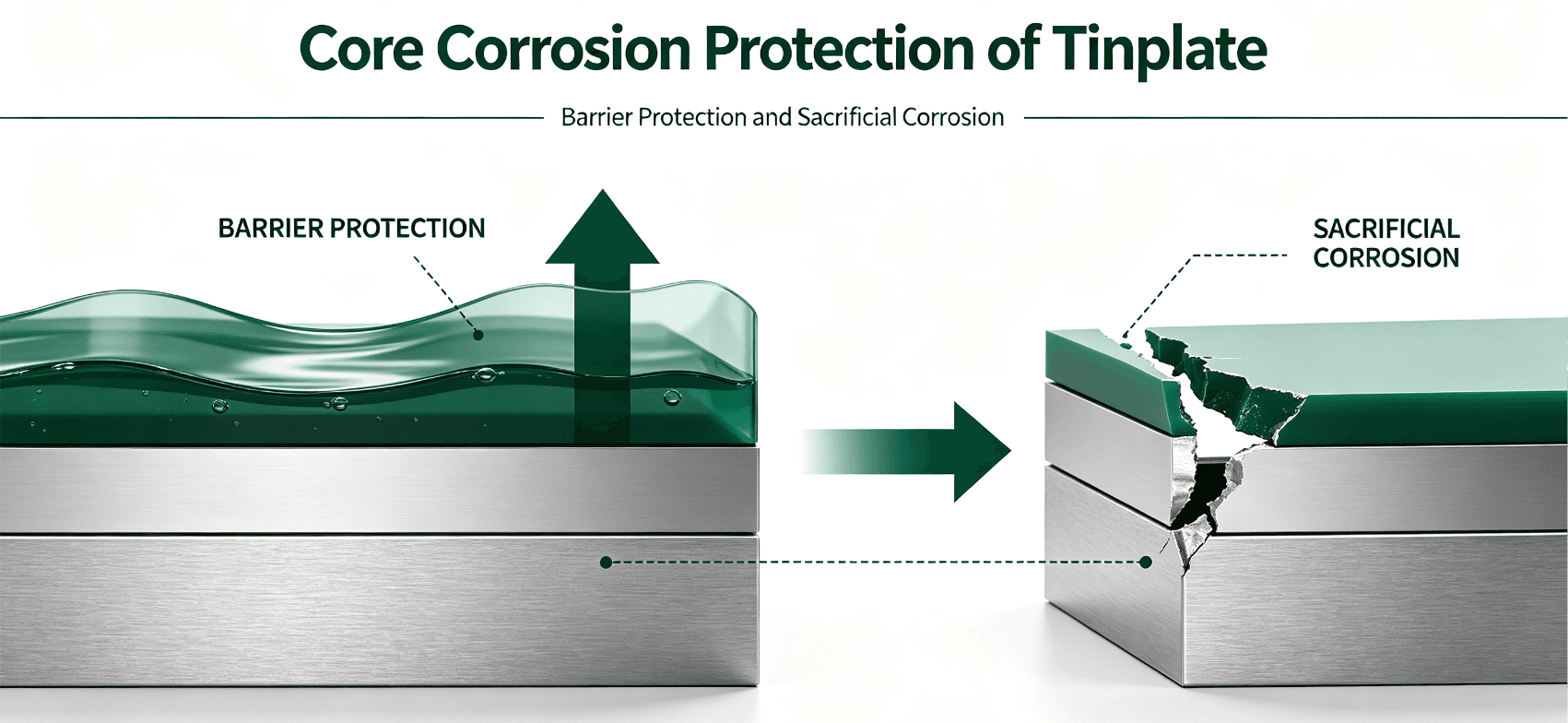
Sacrificial Corrosion & Barrier Protection: Core Anti-Corrosion Principle of Tinplate
The service life and storage safety of metal food cans largely depend on the anti-corrosion performance of packaging materials. As the most widely used substrate for food cans and general metal containers, ETP electrolytic tinplate adopts two core anti-corrosion mechanisms: barrier protection and sacrificial anode protection. These two protection systems work together to ensure stable corrosion resistance in complex food filling and high-temperature sterilization environments.
Want to know more?
Get in touch with us for more information about our services and products.