

How Precision-Engineered Metal Packaging Components Reduce Costs and Improve Food Safety
Introduction: The Hidden Costs of Inefficient Metal Packaging Sourcing
Every added hour of downtime, every rejected batch of tinplate, and every compatibility failure between can bodies and ends chips away at your margin. Disjointed sourcing of tinplate, TFS, easy open ends, and can lids forces manufacturers into a cycle of delays, quality inconsistencies, and inflated operational costs. In a market where reliability is the price of entry, even minor material shortfalls from a fragmented base of suppliers—one tinplate coil supplier here, a separate steel can lid manufacturer there—can halt production and erode customer trust.
If you’re a food or industrial can maker wrestling with variable raw material quality, unpredictable lead times, or assembly line stoppages caused by incompatible components, you know the frustration. Making the wrong sourcing decision based solely on price is a common pitfall—understanding how to evaluate tinplate costs correctly prevents downstream chaos. The solution is an integrated supply of metal packaging materials and components—from tinplate coils and electrolytic tinplate sheet supplier output to custom easy open lids and three-piece tin can bodies. Consolidating these into a single, precision-orchestrated stream transforms your supply chain from a liability into a competitive weapon.
The Real Cost of ‘Penny-Wise’ Sourcing: Why Cheaper Isn’t Better
Opting for the lowest bid on tinplate scrap or low-grade coils may look like a win on a spreadsheet, but the real price shows up in the reject bin, rework stations, and brand-damaging field failures. Packaging producers like Trivium Packaging and Sonoco Products Company have demonstrated through market experience that material quality directly dictates line efficiency and product integrity. A single pallet of substandard tin free steel sheet or off-spec easy open ends can trigger whole-shift stoppages, costly material waste, and customer quality claims that bleed revenue long after the invoice is paid.
These hidden expenses—production downtime, wasted labor, emergency orders from backup metal packaging containers suppliers—quickly erase any initial savings. Worse, inconsistent coatings or dimensional drift on three-piece can components can compromise food safety, inviting regulatory scrutiny and consumer complaints. The cost preventer is simple: invest in certified tinplate sheet suppliers and chromium coated steel coil mills that deliver predictable, batch-to-batch uniformity. These hidden delays often stem from supply chain bottlenecks; learn what really causes lead time delays so you can build a network that eliminates them.
Industry Trends Shaping the Future of Metal Packaging
- Sustainability and recyclability: Tinplate and TFS are infinitely recyclable, and forward-thinking metal packaging materials suppliers are embedding closed-loop processes that lower carbon footprint while meeting brand sustainability targets.
- Lightweighting and material efficiency: Advanced electrolytic tinplate sheet and tin free steel sheet grades now enable thinner gauges without sacrificing strength, reducing raw material input costs and shipping weight.
- Customization and digital printing: Brands are demanding custom printed tin cans and decorative easy open ends to command shelf presence; suppliers offering in-line lacquering and printing add direct value.
- Integrated supply chains: Leaders like CANPACK and Zenjoy Packaging prove that managing tinplate coil, scroll-cut sheets, and easy open ends as a single program slashes complexity and accelerates time-to-market.
- Convenience drives demand: The market for easy open ends, particularly full-aperture formats for large-format meat and tuna can producers, continues to expand as consumers prioritize ease of use.
Component Spotlight: Building Blocks for a Reliable Packaging System
- Lacquered & Printed ETP/TFS Sheets: Our 9-step process embeds corrosion resistance and vivid branding into every sheet—ideal for premium food cans, luxury gift boxes, and industrial components where appearance and safety are non-negotiable.
- TFS Scroll Cutting Sheet (Chrome-Plated Steel Coil Cut-to-Length): Precision-dimensioned for stamping can bodies and easy-open lids, delivering micron-level consistency that high-speed lines demand.
- Tinplate Scroll Cutting Sheet: The workhorse of can manufacturing, slit and leveled to your exact specifications for seamless stamping and welding, ensuring zero-guesswork forming from a reliable tinplate coil for manufacturing supply.
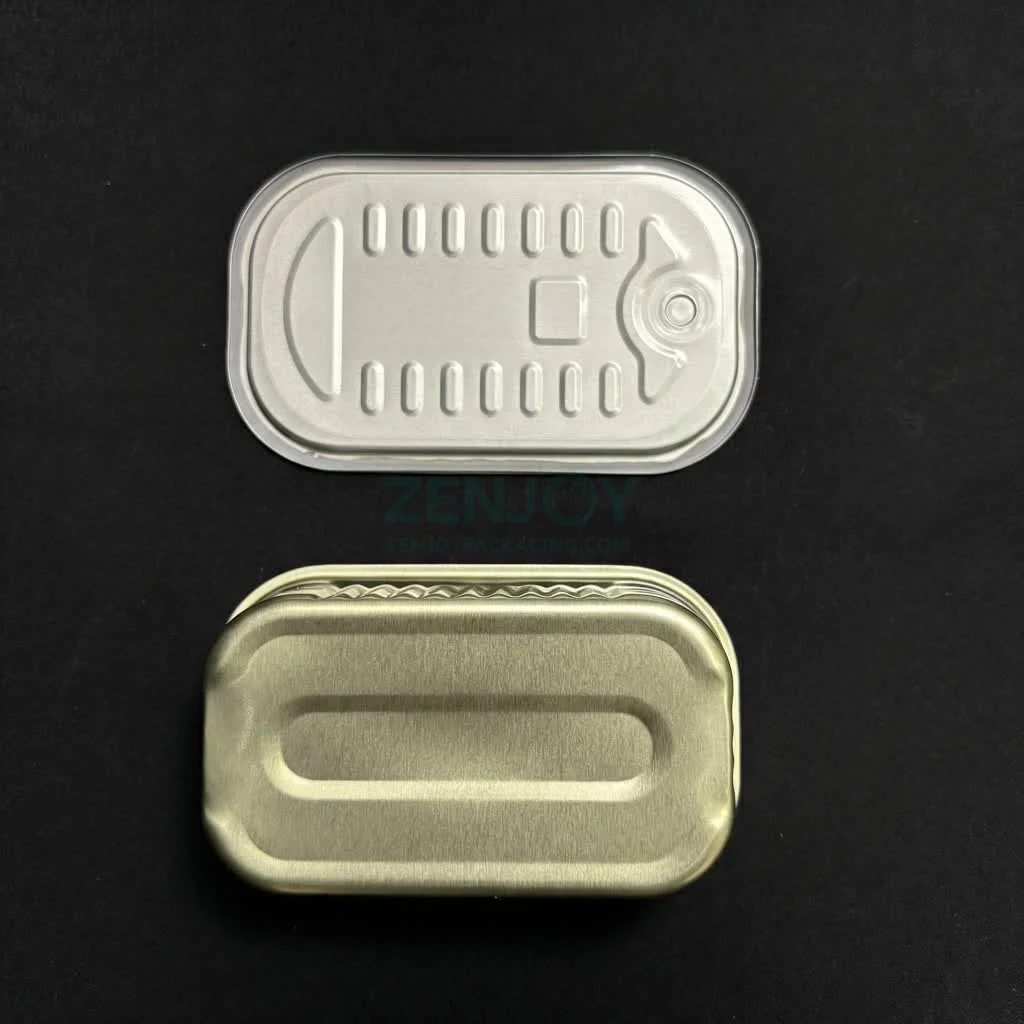
- Full Aperture Rectangle Easy Open End: Engineered for dependable food safety, compatible with standard can dimensions, and designed to open smoothly without sharp edges—tested to perform in high-volume filling environments.
- Full Aperture Oval Easy Open End: Sized at 159.8×106.8 mm for large-capacity cans, meeting the growing need for convenient, family-size packaging with consistent sealing integrity.
- Tinplate Claw-Type Twist-Off Lid: A secure, user-friendly closure for food jars and condiment containers, combining high-grade tinplate with reliable lug geometry for vacuum retention and ease of twist-off.
Real-World Success: How Manufacturers Cut Costs and Boosted ROI

- A major food can producer switched from scattered tinplate sheet supplier relationships to a single integrated source for coils and easy open ends, cutting material waste by 15% and eliminating line stoppages caused by end-body mismatch.
- A meat can supplier and tuna can producer adopted just-in-time delivery of scroll-cut TFS sheets, slashing on-site inventory and warehouse costs by 20% while maintaining uninterrupted output. One of our clients, a production manager at a meat can facility, shared how this shift transformed his line’s predictability—read his experience.
- A specialty round metal can supplier compressed lead times from 8 weeks to 3 weeks by consolidating its entire bill of materials, from coil to custom easy open lids, with a single metal packaging components supplier—and gaining the ability to launch new designs in half the time.
These outcomes aren’t anomalies. They are the direct result of partnering with a supplier that coordinates tinplate coil supply, scroll cutting, and lid manufacturing under one program.
Choosing the Right Partner: What to Look for in a Metal Packaging Supplier
- Full-range capability: Your supplier should function as a one-stop metal packaging materials supplier, offering tinplate and TFS sheets, easy open ends, and can body components without subcontracting chaos. Not all sources are equal—compare mill, trader, and processing supplier models to see why consolidation matters.
- Food safety certifications: Direct-contact materials must meet FDA, EU, or other relevant standards. Demand full documentation, not verbal promises.
- Technical depth: Look for a partner that can engineer custom size easy open lids, advise on custom printed tin cans, and optimize steel can lid selection for your specific filling conditions.
- Supply chain resilience: A proven track record of maintaining tinplate coil and chromium coated steel coil availability—even during raw material shortages—is what separates a strategic ally from a transactional vendor.
- On-time delivery: A missed shipment of can lids halts everything. Your supplier must treat lead times as absolute commitments.
Next Steps: Secure Your Metal Packaging Competitive Edge
Start by mapping the gaps in your current sourcing model—where do material variability, logistics, or quality inconsistencies eat into your profitability? Then, let us perform a free supply chain audit. We’ll benchmark your current costs against the integrated tinplate/TFS and easy open end solution we design for you. When you’re ready to validate the difference, we’ll supply samples of lacquered & printed sheets, scroll-cut stock, and easy open lids for your own line trials—following a streamlined quotation process that respects your time. Partnering with a dedicated metal packaging components supplier lowers total cost of ownership while hardening your product safety and shelf appeal. Contact us today to discuss your specific component requirements.
Related News
Other news you might be interested in
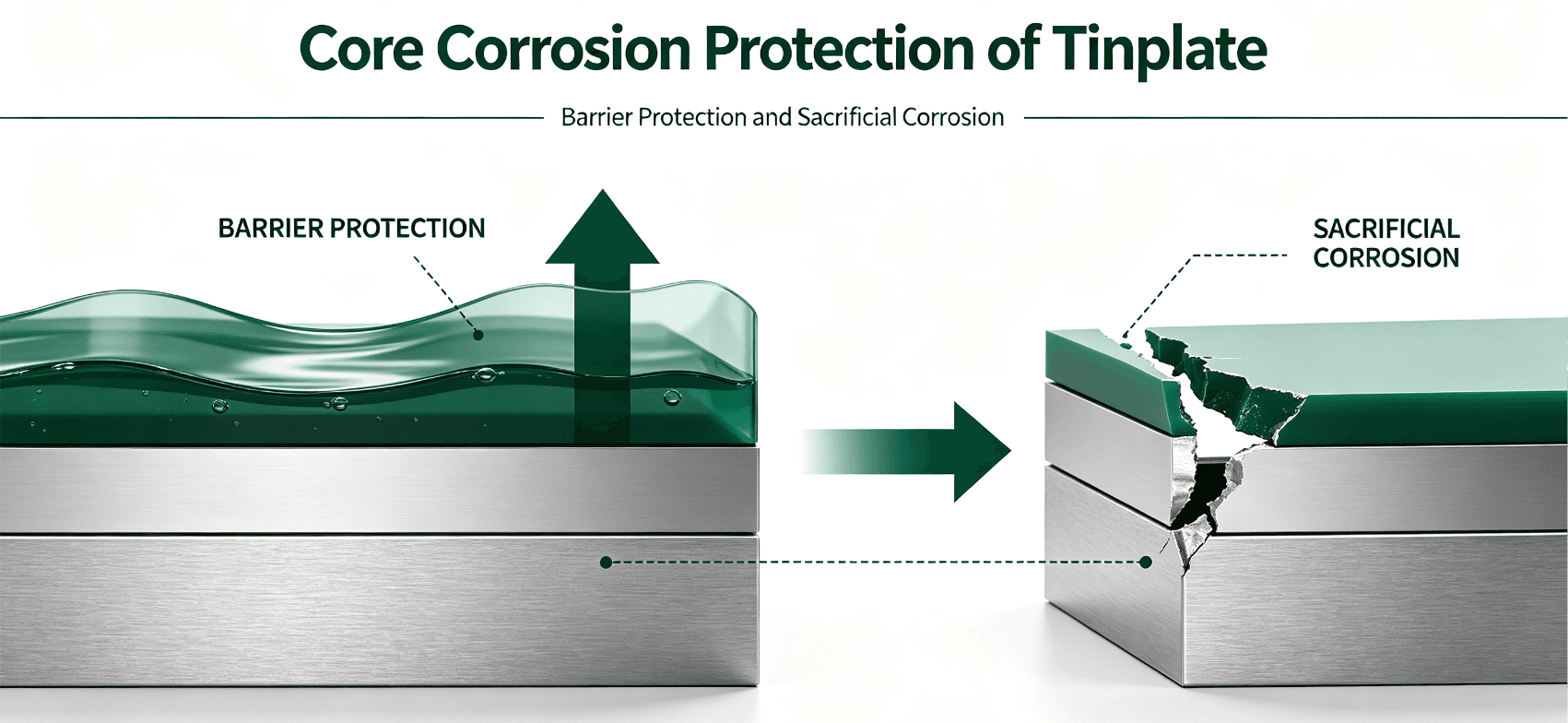
Sacrificial Corrosion & Barrier Protection: Core Anti-Corrosion Principle of Tinplate
The service life and storage safety of metal food cans largely depend on the anti-corrosion performance of packaging materials. As the most widely used substrate for food cans and general metal containers, ETP electrolytic tinplate adopts two core anti-corrosion mechanisms: barrier protection and sacrificial anode protection. These two protection systems work together to ensure stable corrosion resistance in complex food filling and high-temperature sterilization environments.

Sulfuration Black Spot Analysis: Material Causes and Solutions for Food Cans
Sulfuration black spots inside food cans are one of the most common quality puzzles for can manufacturers. Many factories mistakenly attribute the problem to coating or sterilization process issues. In fact, most recurring sulfuration discoloration stems from **incorrect metal substrate selection and surface passivation defects. This article professionally analyzes the essential material causes of can sulfuration black spots, clarifies the performance differences between ETP tinplate and TFS tin-free steel in anti-sulfur scenarios, and provides targeted, actionable solutions for mass can production.
Want to know more?
Get in touch with us for more information about our services and products.