
Optimizing Metal Packaging: From Tinplate Coils to Custom Easy Open Ends
The Critical Role of Metal Packaging in Food & Industry
For food, beverage, and industrial brands, metal packaging remains the non-negotiable standard—infinitely recyclable, structurally durable, and trusted by consumers worldwide. The real difference between a product that arrives intact and one that fails on the shelf often comes down to two things: the quality of your tinplate coil for manufacturing and the precision of your easy open ends. When production lines depend on just-in-time supply, partnering with a comprehensive metal packaging materials supplier becomes your first line of defense against downtime and brand damage. Our three-piece tin can manufacturer and two-piece metal can supplier capabilities ensure you receive components engineered to meet stringent safety and performance standards, from welded side seams to seamless shallow-draw bodies.
Addressing Your Key Packaging Challenges
Corrosion resistance, structural integrity, and regulatory compliance aren’t just checkboxes—they’re daily battles in your facility. Whether you’re sourcing from an electrolytic tinplate sheet supplier to protect acidic foods or a tin free steel sheet supplier for cost-efficient can ends, material inconsistency creates risk that ripples through your entire operation. Our specifications eliminate guesswork: every coil and sheet meets international norms for tin coating weight, hardness, and passivation, so you never trade off formability for protection. As a tinplate can lid manufacturer, we engineer precise scoring and secure sealing on every lid, preventing leaks, contamination, and returns. And when every procurement decision impacts your margins, you need to compare tinplate prices without making a bad procurement decision—because the lowest sticker price rarely delivers the lowest total cost of ownership.
Choosing the Right Raw Materials: Tinplate and TFS
Your product’s lifespan hinges on the substrate. Electrolytic Tinplate (ETP) delivers superior corrosion resistance and deep-draw formability, making it the default choice for food cans, general line packaging, and any application where product contact demands purity. Our tinplate coil supplier solution ensures that every Tinplate Steel Sheet in Coil arrives with uniform flatness, surface cleanliness, and precisely controlled temper—critical for high-speed welding and flanging lines. Tin Free Steel (TFS), with its chromium-coated surface and exceptional enamel adhesion, excels in ends, lids, and components where a superb print finish matters as much as mechanical strength. We supply both standard and chromium coated steel coil options as a cost-effective alternative, produced under the same rigorous quality management. But not all material sources perform alike—learn how to compare mill source, trader, and processing supplier for tinplate orders so you secure material that consistently meets your manufacturing tolerances without hidden variability.
Easy Open Ends and Can Lids: Precision Engineering for Consumer Convenience
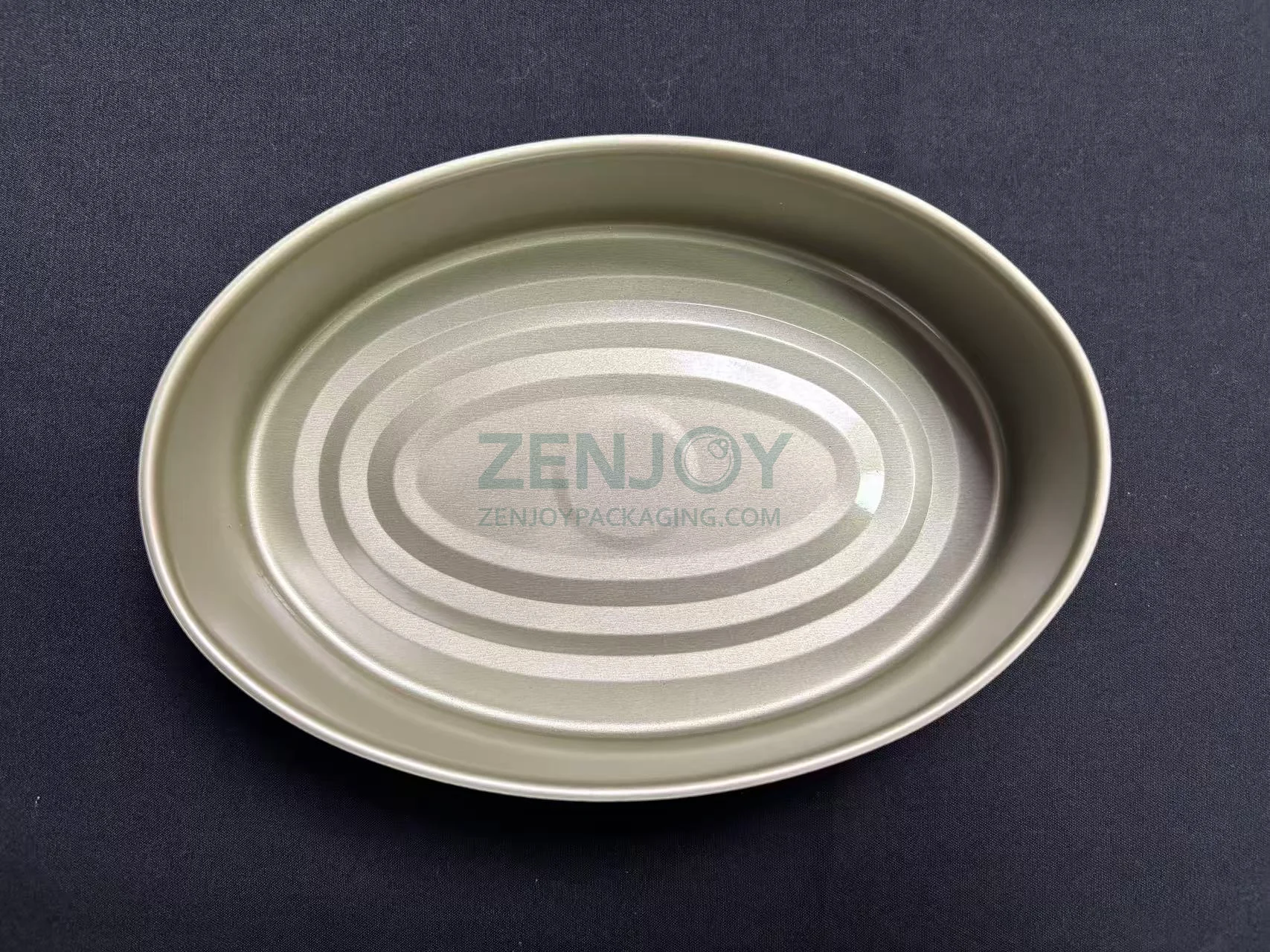
The opening experience defines product satisfaction and safety. As an easy open end supplier and EOE lid supplier, we engineer Full Aperture Easy Open Ends—Rectangle, Oval, and custom geometries—that perform flawlessly across the entire supply chain, from filling to consumer use. When you’re a tuna can supplier or meat can supplier, an airtight seal isn’t optional; it’s a legal and reputational imperative. Our can lid manufacturer team provides custom size easy open lid options to match your exact can dimensions, eliminating retrofitting headaches and reducing end-spoilage. Every lid undergoes rigorous scoring checks, tab adhesion testing, and burst-strength evaluations to ensure effortless opening without compromising container integrity—even in retorted or pressurized packs.
Customization and Branding: Stand Out with Printed and Shaped Cans
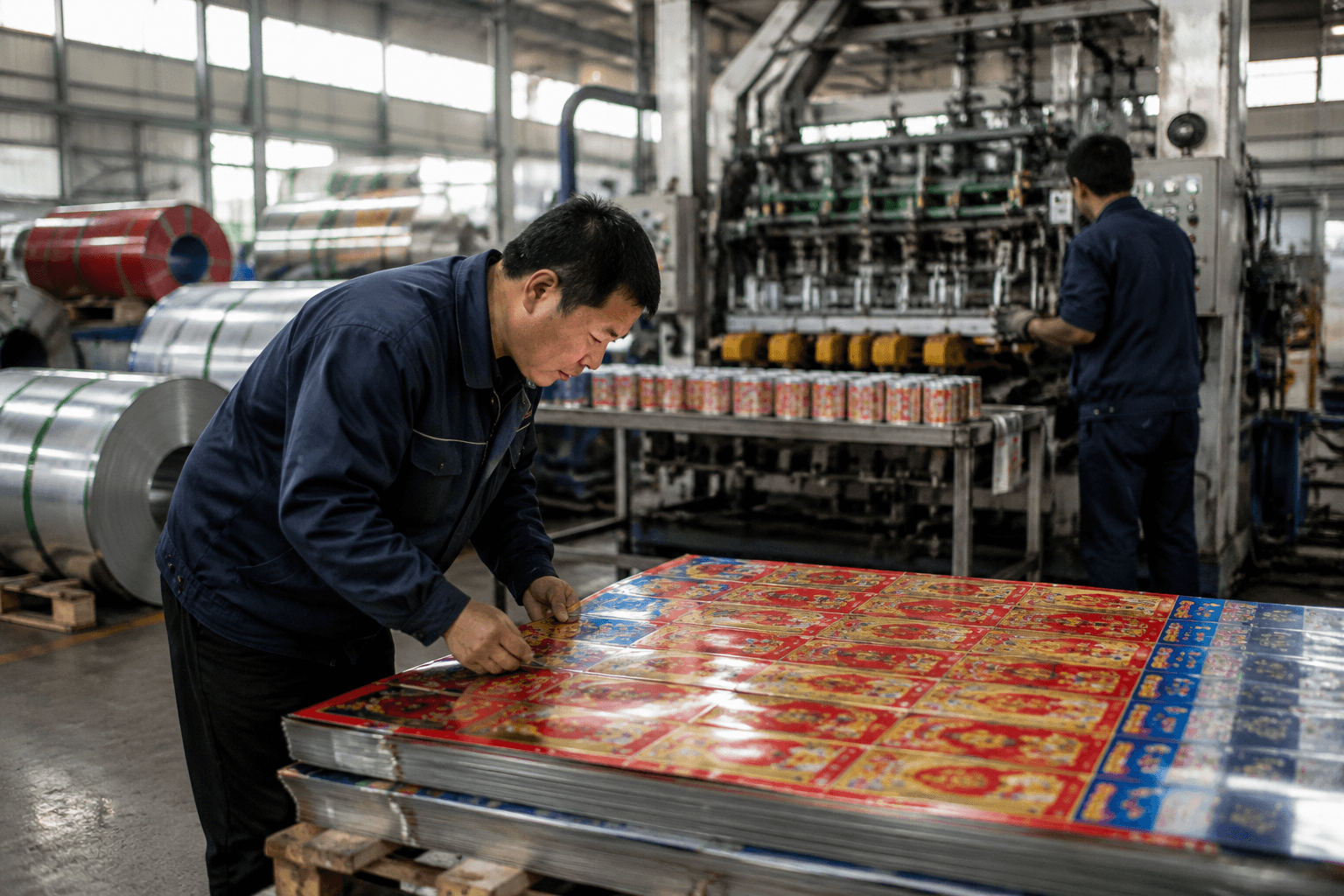
Commodity packaging kills margin. Differentiate at the point of decision with fully customized metal cans—from standard round metal can supplier options to irregular, die-cut profiles that signal premium quality. As a dedicated metal packaging components supplier, we pair structural customization with stunning decoration. Our Lacquered & Printed ETP/TFS Sheets follow a precise 9-step sequence: deep cleaning, internal lacquering, baking, base coating, multi-color offset printing, over-varnishing, final baking, and precision shearing. The result is custom printed tin cans that resist abrasion, maintain colorfastness, and withstand retort cycles without fading. Whether you need a milk can supplier for dairy products, a three-piece tin can manufacturer for dry foods, or a two-piece can supplier for aerosol and beverage containers, our end-to-end process transforms your brand vision into shelf-ready reality with zero compromise on functional performance.
Building a Resilient Supply Chain: Sourcing and Logistics
Production continuity hinges on more than product quality; it relies on a supply chain that absorbs shocks. Understanding what causes tinplate lead time delays helps you anticipate and neutralize bottlenecks before they impact your fill dates. We partner with manufacturers to deliver tinplate coil, TFS sheets, and easy open ends on schedule—mitigating risk through strategic stock holding, multi-modal logistics, and direct factory alliances. See how this works in practice: Ahmed Hassan’s experience demonstrates that the right partner turns supply uncertainty into a competitive advantage. And when you need a transparent, fast start, our streamlined quotation process eliminates delays, giving you clear commercial terms so you can make decisions with confidence.
Ready to eliminate packaging supply disruptions? Contact our specialists today for a custom quote and secure your tailored metal packaging solution—from tinplate coils to easy open ends—within 24 hours.
Related News
Other news you might be interested in

Tinplate Coating Peeling Risk Analysis and Avoidance Under High-Temperature Retort Sterilization
High-temperature retort sterilization is an essential process for shelf-stable food cans. However, long-term high-temperature and high-pressure environments easily cause coating blistering, delamination and peeling on the inner wall of metal cans. Many can manufacturers attribute coating failure solely to lacquer quality or baking process. In fact, **tinplate substrate performance, surface condition and material matching** are the core hidden causes of most high-temperature coating peeling problems. This article professionally analyzes the root causes of tinplate coating peeling under retort conditions, explains the difference in high-temperature resistance between ETP tinplate and TFS steel, and summarizes practical and operable avoidance solutions for mass production.
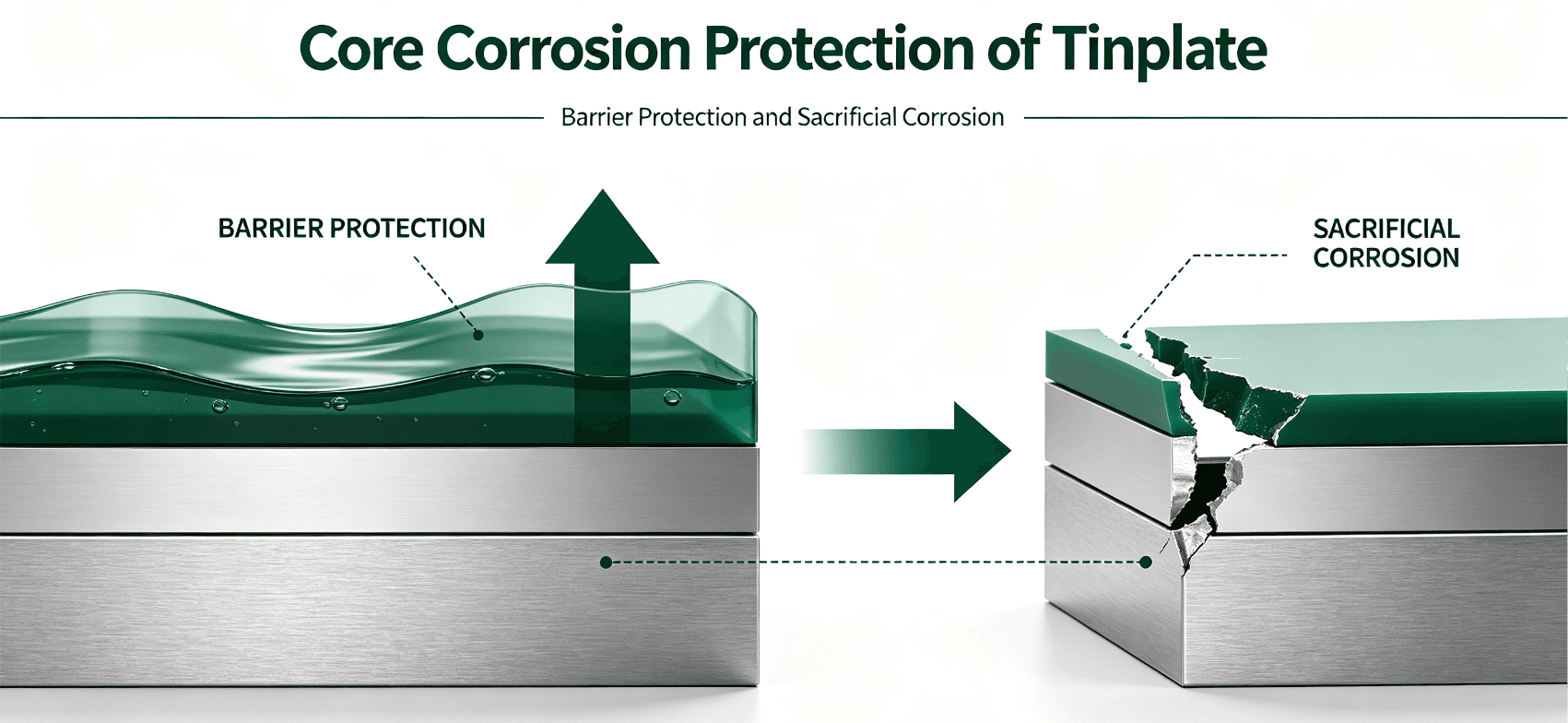
Sacrificial Corrosion & Barrier Protection: Core Anti-Corrosion Principle of Tinplate
The service life and storage safety of metal food cans largely depend on the anti-corrosion performance of packaging materials. As the most widely used substrate for food cans and general metal containers, ETP electrolytic tinplate adopts two core anti-corrosion mechanisms: barrier protection and sacrificial anode protection. These two protection systems work together to ensure stable corrosion resistance in complex food filling and high-temperature sterilization environments.
Want to know more?
Get in touch with us for more information about our services and products.