
Tin Coating Weight Guide: How Packaging Buyers Choose the Right Option
Why Tin Coating Weight Matters
When industrial buyers source tinplate, they often compare thickness, temper, and delivery first. But one more factor plays a major role in material performance and cost: tin coating weight.
Tin coating weight affects:
- corrosion behavior
- application suitability
- total material cost
- compatibility with filling conditions
- long-term packaging reliability
For packaging manufacturers, traders, and processors buying in large volume, choosing the right coating weight is an important procurement decision. A coating that is too low may create risk in service conditions. A coating that is too high may increase cost unnecessarily if the application does not require it.
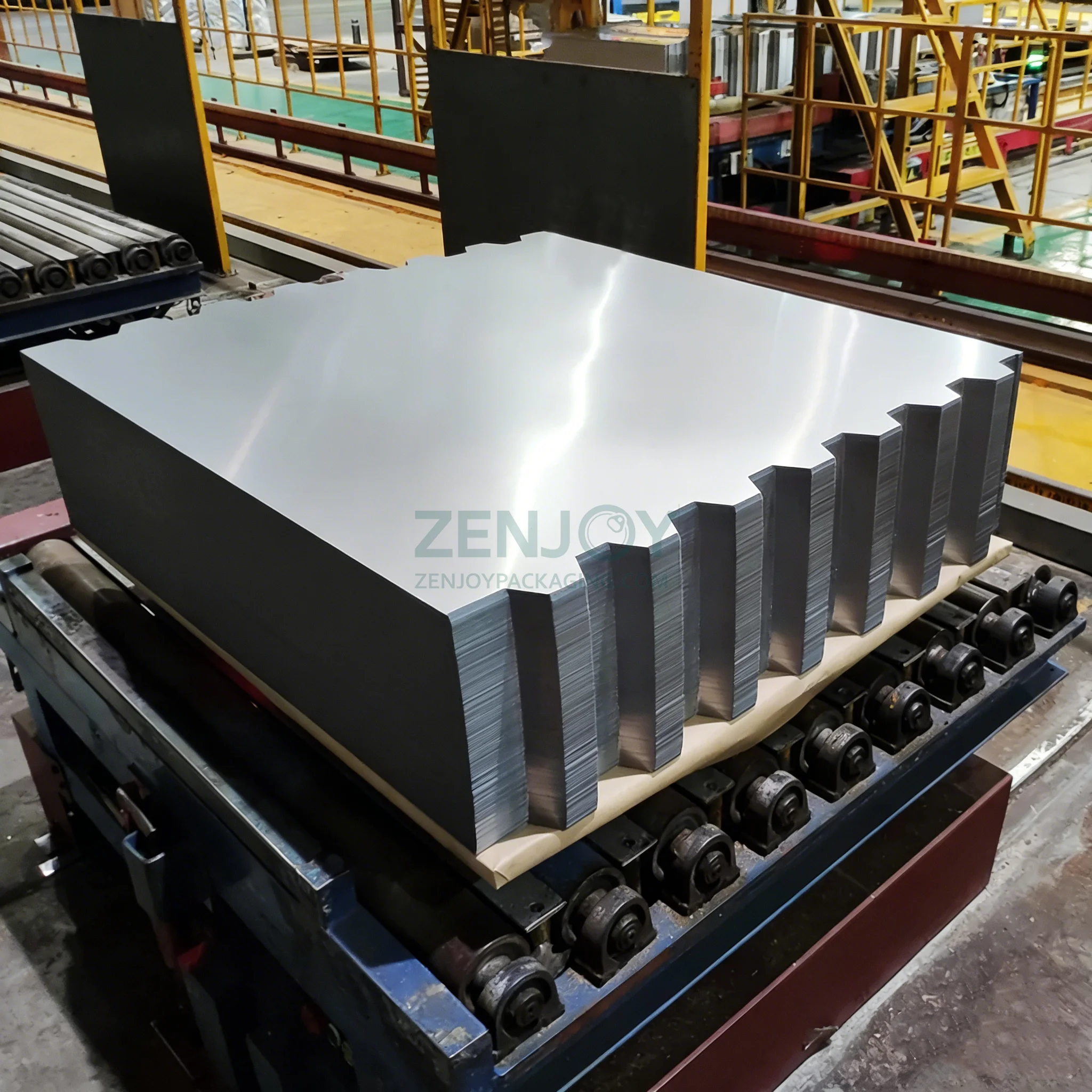
Tinplate scroll cutting sheet
马口铁卷材分切板/镀锡薄钢板卷剪平板 指将大卷的马口铁(镀锡钢板)通过分切、开平工艺,裁切成指定尺寸的平板状马口铁,是罐头、五金、包装等行业的常用原料。 这类板材是马口铁深加工的基础形态,可根据需求分切成不同规格(尺寸按客户订单),后续可冲压、折弯成罐头罐身/易开盖、金属包装盒、五金配件等。
What Is Tin Coating Weight?
Tin coating weight refers to the amount of tin applied to the steel surface of electrolytic tinplate.
In practical sourcing terms, coating weight helps buyers understand how much tin protection is provided on the surface. It is an important part of defining the material, especially for packaging applications where corrosion resistance and product compatibility matter.
Tinplate can be produced with different coating weights depending on the intended use, cost target, and packaging environment.
Why Buyers Should Not Ignore Coating Weight
Two tinplate materials may have the same thickness and temper, but if their coating weights are different, they may not perform the same in actual use.
Coating weight selection can influence:
Corrosion protection
A more suitable coating weight can help support better packaging performance under the intended conditions.
Cost structure
Tin is a value-bearing part of the material. Higher coating weight usually means higher material cost.
Application fit
Different packaging uses may require different coating strategies.
Supply consistency
Large-volume buyers need stable coating control across repeated orders.
For this reason, coating weight should always be reviewed together with end use, not treated as a minor line item in the specification.
Does Higher Tin Coating Always Mean Better Performance?
Not necessarily.
This is a common misunderstanding in procurement. Some buyers assume that a higher tin coating is always the safest choice. In reality, the most suitable coating weight depends on the full packaging system, including:
- product type
- internal lacquer system
- filling environment
- storage and transport conditions
- processing method
- cost target
In some applications, a higher coating weight may be justified. In others, it may only add cost without meaningful benefit.
The right question is not “What is the highest coating weight available?”
It is “What coating weight is appropriate for this application?”
What Factors Influence Coating Weight Selection?
1.Product filling environment
Packaging for different products creates different exposure conditions. Moisture, acidity, oil content, and storage expectations can all influence coating requirements.
2.Internal coating and lacquer system
Tinplate performance is usually part of a total packaging solution, not a stand-alone surface issue. The lacquer or coating system used by the packaging producer also matters.
3.Forming process
Some production conditions may affect how buyers balance protection, processing performance, and total cost.
4.Buyer cost strategy
For high-volume procurement, even a small specification change can influence the annual purchasing budget. That is why coating weight selection often involves both technical and commercial review.
5.Export and storage conditions
If the material or finished package must move through longer logistics routes or varied storage conditions, buyers may need to consider the total packaging environment more carefully.
Coating Weight and Cost Control in Large Procurement
For large industrial buyers, tin coating weight has a direct impact on budget planning.
- A specification that is unnecessarily high can increase annual procurement cost.
- A specification that is too low can increase quality risk, complaint risk, or line losses.
The best balance is achieved when buyers define coating weight based on:
- actual application needs
- qualified process conditions
- realistic storage expectations
- stable supplier capability
This is especially important for customers buying in bulk for food packaging, wet can applications, or continuous can-making production.
What Buyers Should Ask Suppliers About Coating Weight
Before placing an order, buyers should confirm:
What coating weight range is available?
The supplier should be able to explain the available options clearly.
Is the material matched to the final application?
A suitable recommendation should be based on actual packaging use, not only on generic product description.
Can the supplier maintain coating consistency?
Batch stability matters for large-volume repeat procurement.
Has the application already been validated?
If the buyer is changing specification or supplier, validation is recommended before full conversion.
Is the proposed coating weight commercially efficient?
The correct choice should support both performance and cost control.
Why Coating Weight Should Be Discussed Early
Some buyers wait until the quotation stage to review coating weight in detail. That can slow down sourcing later, especially if the application is seasonal or technically sensitive.
Early confirmation helps buyers:
- compare like-for-like quotes
- avoid over-specifying
- reduce under-specification risk
- shorten technical review
- improve qualification efficiency
For packaging customers with a narrow seasonal purchase window, this early alignment is especially valuable.
Common Procurement Mistakes
Industrial buyers can avoid several common coating-weight mistakes:
Choosing by price only
A cheaper quote may reflect a lower specification that does not match the real application.
Copying old specs without review
Existing specifications may not always be the most cost-effective or suitable for current production.
Switching suppliers without full comparison
Even if the nominal spec looks similar, performance consistency still needs review.
Ignoring downstream conditions
The filling product, lacquer, and transport environment all affect what coating weight is appropriate.
FAQ
What is tin coating weight in tinplate?
It refers to the amount of tin applied to the steel surface of electrolytic tinplate.
Does higher tin coating always mean better quality?
No. The right coating weight depends on the application, packaging environment, and cost-performance balance.
Why does coating weight affect price?
Because tin contributes directly to the value of the material, and higher coating weight usually increases cost.
Should buyers review coating weight before quotation comparison?
Yes. Otherwise, buyers may compare offers that do not reflect the same material specification.
Is coating weight important for large-volume packaging buyers?
Yes. It affects performance, consistency, and total annual procurement cost.
---
Need support selecting a suitable tin coating weight for your packaging application?
Related News
Other news you might be interested in

Tinplate Coating Peeling Risk Analysis and Avoidance Under High-Temperature Retort Sterilization
High-temperature retort sterilization is an essential process for shelf-stable food cans. However, long-term high-temperature and high-pressure environments easily cause coating blistering, delamination and peeling on the inner wall of metal cans. Many can manufacturers attribute coating failure solely to lacquer quality or baking process. In fact, **tinplate substrate performance, surface condition and material matching** are the core hidden causes of most high-temperature coating peeling problems. This article professionally analyzes the root causes of tinplate coating peeling under retort conditions, explains the difference in high-temperature resistance between ETP tinplate and TFS steel, and summarizes practical and operable avoidance solutions for mass production.
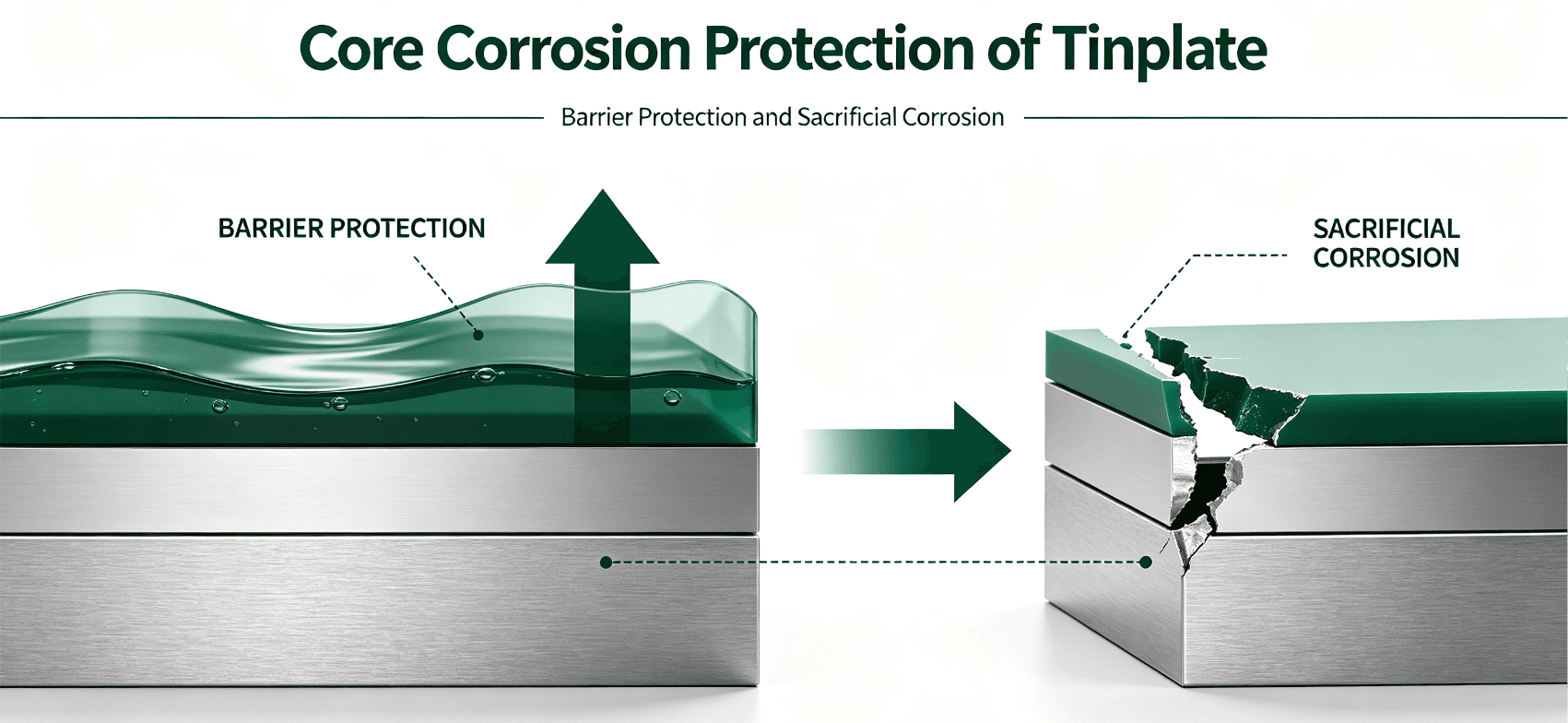
Sacrificial Corrosion & Barrier Protection: Core Anti-Corrosion Principle of Tinplate
The service life and storage safety of metal food cans largely depend on the anti-corrosion performance of packaging materials. As the most widely used substrate for food cans and general metal containers, ETP electrolytic tinplate adopts two core anti-corrosion mechanisms: barrier protection and sacrificial anode protection. These two protection systems work together to ensure stable corrosion resistance in complex food filling and high-temperature sterilization environments.
Want to know more?
Get in touch with us for more information about our services and products.