
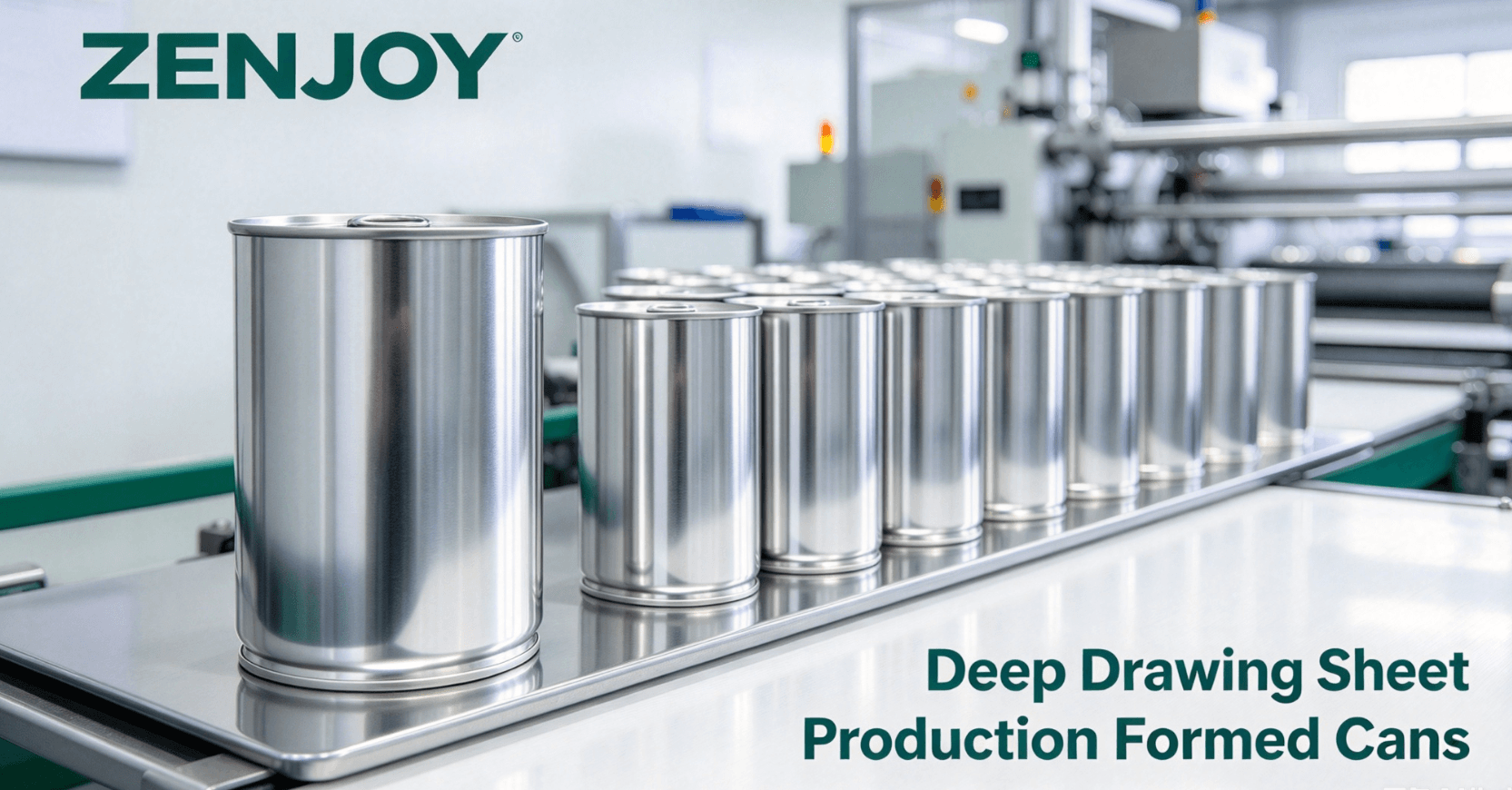
Deep Drawing Cracking Dilemma: How Tinplate Hardness and Elongation Affect Can Forming
This article clearly explains how hardness and elongation determine tinplate deep drawability, sorts out applicable temper grades for different can types, and shares practical solutions to solve deep drawing cracking from the material perspective.
1. Core Mechanism: How Hardness and Elongation Control Forming Quality
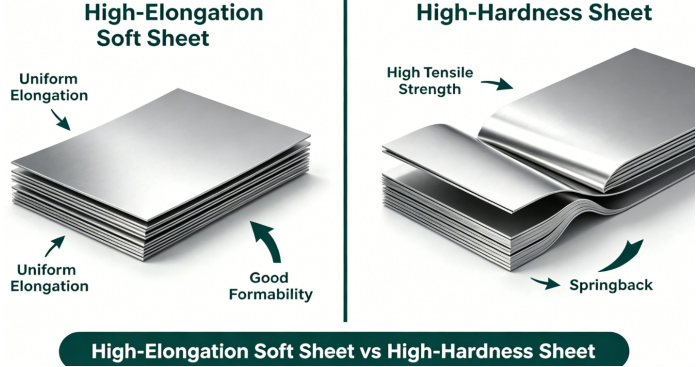
Tinplate deep drawing relies on the material’s plastic deformation ability. Hardness represents the material’s rigidity and deformation resistance, while elongation reflects its ductility and stretch tolerance.
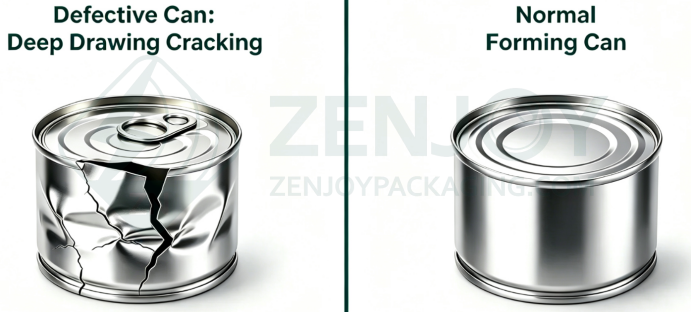
Excessively high hardness & low elongation: The material is stiff and brittle. During one-time deep stretching, the metal cannot flow evenly. Local stress concentration directly causes edge cracking and body tearing, especially for tall DRD cans and irregular shaped containers.
Appropriate low hardness & high elongation: Soft-temper tinplate has uniform grain structure and excellent plastic flow performance. It can withstand multi-stage stretching and complex stamping without cracking, ensuring stable forming consistency in mass production.
2. Temper Grade Matching Rule for Deep Drawing Production
Different temper grades have fixed mechanical property boundaries, which directly define their applicable drawing depth:
T2 / T3 Soft Temper: High elongation, low tensile stress fluctuation. Best suited for deep-drawn two-piece cans, irregular shaped cans and repeatedly stretched containers, effectively eliminating cracking risks.
T4 Medium Temper: Balanced hardness and ductility. Suitable for standard shallow-drawing ordinary food cans with stable yield.
T5 High Temper: High rigidity but low elongation. Not applicable for deep drawing processes; only for rigid packaging requiring stacking resistance.
3. Practical Material Solutions to Avoid Deep Drawing Cracking
To reduce stamping defects fundamentally, can manufacturers must match materials according to drawing depth and mold complexity instead of using universal-grade tinplate blindly.
Professional deep-drawing grade tinplate requires strictly controlled HR30T hardness tolerance and guaranteed high elongation rate, ensuring uniform metal flow during extreme deformation. Stable batch consistency is critical to avoid intermittent cracking in long-term production.
As a reliable global supplier of forming-stable tinplate, ZENJOY specializes in customized hardness and elongation grading for deep drawing can production.
ZENJOY deep-drawing series ETP tinplate and TFS steel feature precise temper control, consistent batch ductility and optimized grain structure. The material maintains excellent plastic flow performance under high-speed stamping and deep stretching, effectively solving edge cracking and body tearing problems.
Compared with ordinary market materials with large performance fluctuation, ZENJOY strictly controls mechanical tolerance batch by batch, providing stable and reliable material support for DRD cans, shaped cans and high-precision metal packaging. Professional material matching and technical guidance help clients reduce defective rates and improve production efficiency.
4. Conclusion
Deep drawing cracking is essentially a material mechanical property matching problem. Hardness determines deformation resistance, while elongation determines forming tolerance. Only by selecting targeted soft-temper, high-elongation tinplate can factories achieve stable deep drawing production.
With stable mechanical performance and professional material customization capability, ZENJOY provides one-stop material solutions for various complex can-making forming processes, helping global customers maximize production stability and economic benefits.
Related News
Other news you might be interested in

Tinplate Coating Peeling Risk Analysis and Avoidance Under High-Temperature Retort Sterilization
High-temperature retort sterilization is an essential process for shelf-stable food cans. However, long-term high-temperature and high-pressure environments easily cause coating blistering, delamination and peeling on the inner wall of metal cans. Many can manufacturers attribute coating failure solely to lacquer quality or baking process. In fact, **tinplate substrate performance, surface condition and material matching** are the core hidden causes of most high-temperature coating peeling problems. This article professionally analyzes the root causes of tinplate coating peeling under retort conditions, explains the difference in high-temperature resistance between ETP tinplate and TFS steel, and summarizes practical and operable avoidance solutions for mass production.
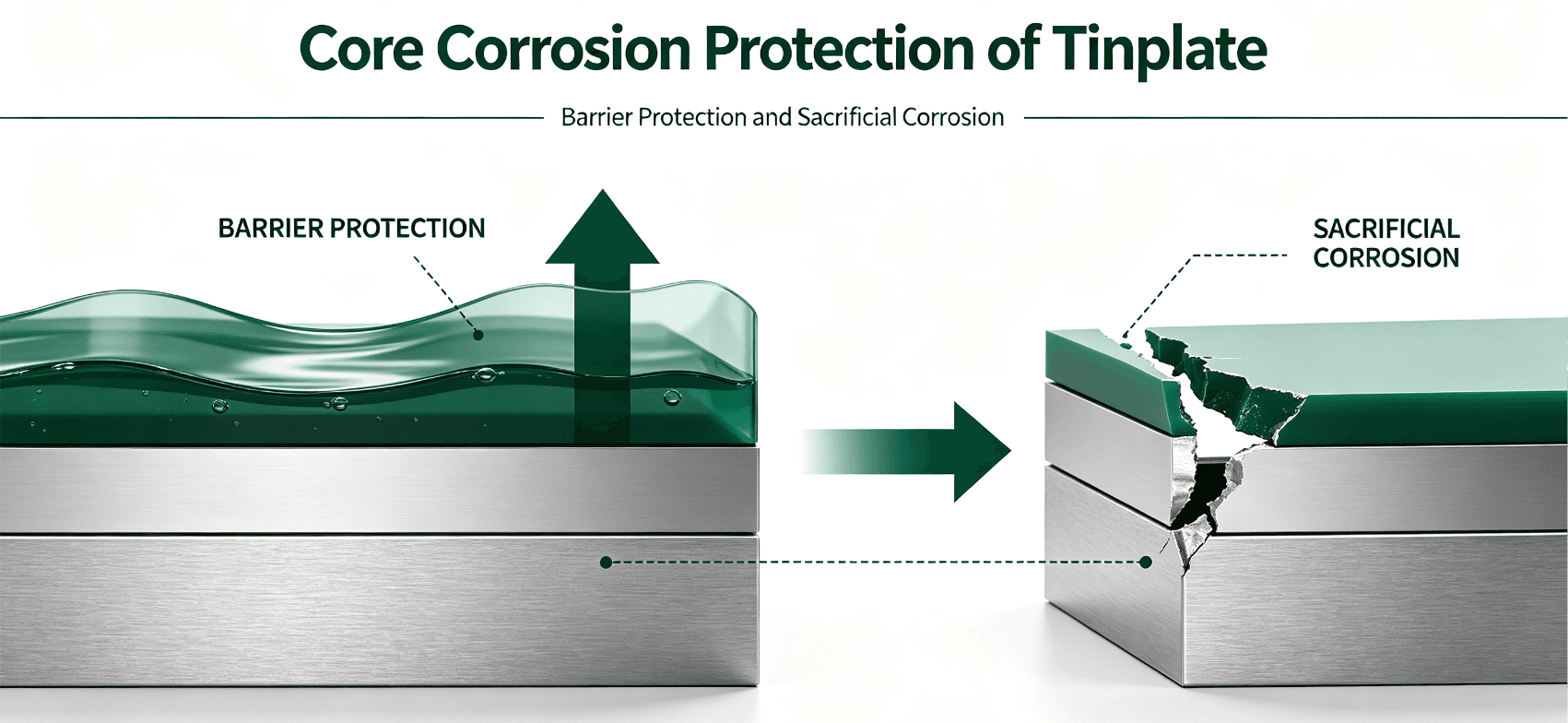
Sacrificial Corrosion & Barrier Protection: Core Anti-Corrosion Principle of Tinplate
The service life and storage safety of metal food cans largely depend on the anti-corrosion performance of packaging materials. As the most widely used substrate for food cans and general metal containers, ETP electrolytic tinplate adopts two core anti-corrosion mechanisms: barrier protection and sacrificial anode protection. These two protection systems work together to ensure stable corrosion resistance in complex food filling and high-temperature sterilization environments.
Want to know more?
Get in touch with us for more information about our services and products.