
How Tariffs and Trade Policy Affect Tinplate Procurement Costs
Why Trade Policy Matters in Tinplate Procurement
For industrial buyers, tinplate cost is never shaped by metal price alone.
Trade policy also matters. Changes in tariffs, import rules, customs treatment, and policy uncertainty can affect:
- quotation stability
- supplier pricing behavior
- delivery timing
- sourcing flexibility
- total landed cost
This matters even more in steel-related procurement, where trade tension and excess capacity continue to influence market behavior. OECD has warned that global steelmaking capacity is still expanding faster than demand, while the WTO has noted that tariffs and tariff uncertainty have already shaped trade patterns and procurement timing in 2025 and into 2026.

Tariffs Affect More Than the Invoice Line
Many buyers think tariffs affect only the final duty cost.
In reality, their influence is wider. Tariffs and policy changes can affect:
- whether suppliers adjust quotes more frequently
- whether buyers accelerate orders before a change takes effect
- whether some origins become less competitive
- whether inventory is built earlier than usual
- whether customs and documentation review become stricter
The WTO has specifically pointed to tariff effects and uncertainty as factors that changed the timing profile of world trade, including frontloading before higher trade barriers took effect.
The First Cost Effect: Quotation Volatility
When trade policy becomes less predictable, quotation stability often becomes weaker.
Suppliers may shorten quote validity because:
- tariff treatment may change
- customs cost may shift
- freight conditions may react to frontloaded demand
- order timing may become more uncertain
For buyers, this means that a quote received today may not carry the same commercial meaning a few weeks later if the policy environment changes.
That is why procurement teams should treat tariff-sensitive quotations differently from normal market offers. In a more uncertain trade environment, the cost risk often sits not only in the price itself, but in how long that price can realistically hold.
The Second Cost Effect: Higher Total Landed Cost
Tariffs may raise the direct import cost, but the bigger issue is often total landed cost.
A buyer may face:
- direct duty impact
- extra customs compliance work
- re-evaluation of origin strategy
- greater pressure on shipment timing
- more frequent need to compare alternate suppliers
This means the real procurement question is not only:
What is the material price?
It is:
What will this order actually cost after policy-related friction is added?
For industrial buyers, especially those importing in bulk, this broader landed-cost review is more useful than looking at ex-works or FOB price alone.
The Third Cost Effect: Faster Buying Windows and Frontloading
When buyers expect tariff changes or policy tightening, they often try to place orders earlier.
This can create:
- temporary demand surges
- earlier inventory building
- tighter booking conditions
- pressure on supplier schedules
- shorter decision windows
The WTO has already linked higher tariffs and policy uncertainty to frontloading behavior and less optimistic trade conditions afterward. For procurement teams, that means policy risk can distort the buying calendar itself.
The Fourth Cost Effect: Less Flexible Sourcing
Trade policy can also reduce sourcing flexibility.
A buyer that normally compares several supply options may find that:
- some origins become less competitive
- some routes become slower
- some suppliers become harder to evaluate commercially
- some quotations become less comparable because landed cost changes unevenly
In steel-related sectors, this issue becomes more important because the market is already dealing with structural pressure from excess capacity and trade tension. OECD’s 2025 outlook highlights that trade and adjustment challenges in steel are intensifying under these conditions.
What Buyers Should Review Before Making a Decision
When trade policy risk is elevated, buyers should review more than the base material price.
A stronger review process includes:
- quote validity period
- tariff exposure by destination market
- landed-cost impact
- specification flexibility
- origin options
- shipment timing
- inventory implications
- supplier response speed if policy changes
This kind of review helps procurement teams avoid decisions that look cheaper at quotation stage but become less efficient after import-related cost and timing are added.
How Buyers Can Reduce Tariff-Related Procurement Risk
A more practical procurement strategy usually includes several actions.
1. Confirm the real cost basis
Make sure the quote is reviewed on a landed-cost basis, not only a material-price basis.
2. Shorten internal approval delay
In a changing policy environment, slow internal approval can turn a usable quote into an outdated one.
3. Build more than one sourcing path
Where possible, buyers benefit from comparing more than one workable supply route or supplier model.
4. Plan earlier for repeat demand
If the buyer already knows the likely production window, earlier coordination reduces the risk of rushed decisions later.
5. Keep documentation and customs planning aligned
Trade-policy risk often creates friction in execution, not only in pricing.
These steps do not remove every external risk, but they usually improve procurement control.
Why This Matters for Large Packaging Buyers
For large buyers serving food cans, wet food packaging, and industrial packaging, tariff-related cost changes can affect more than margin.
They may also affect:
- purchase timing
- supplier selection
- inventory pressure
- seasonal supply security
- budget forecasting
That is why policy awareness is part of procurement planning, not just something for finance or customs teams to review later.
For high-volume users, better policy awareness often leads to better buying discipline.
FAQ
Do tariffs only affect import duty cost?
No. They can also affect quote stability, sourcing flexibility, shipment timing, and total landed cost.
Why does trade policy uncertainty affect procurement timing?
Because buyers and suppliers may move orders earlier, shorten quote validity, or change sourcing behavior when policy risk increases.
Why is this especially relevant in steel-related procurement?
Because the steel market is already under pressure from excess capacity and trade tension, which makes policy changes more commercially sensitive.
What should buyers compare besides price?
They should review tariff exposure, landed cost, quote validity, supply timing, and alternative sourcing options.
Can better planning reduce tariff-related risk?
Yes. Earlier planning, faster internal approval, and clearer landed-cost review usually improve control.
---
Need a more practical tinplate sourcing plan in a changing trade-policy environment?
Related News
Other news you might be interested in
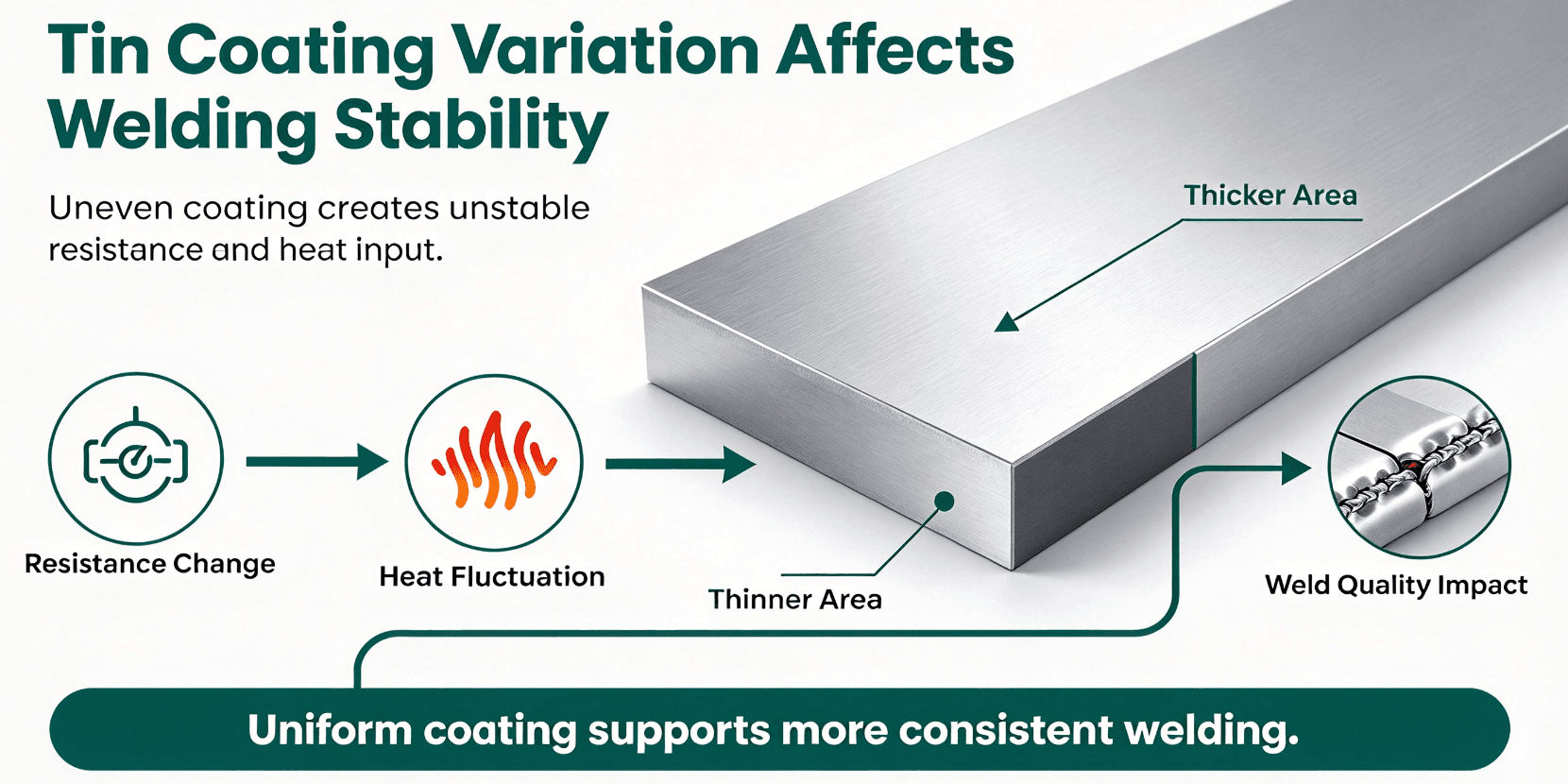
Weld Spatter & Leakage Defects: The Decisive Role of Tin Coating Uniformity in Can Welding Quality
High-speed resistance seam welding is the core forming process for three-piece metal cans. In actual mass production, persistent weld spatter, granular slag residue and hidden seam micro-leakage severely compromise sealing consistency, sterilization resistance and finished product yield. Most manufacturers tend to attribute these defects to unstable current, improper pressure or worn welding wheels. However, industrial verification proves that uneven tin coating distribution on tinplate is the fundamental material-induced root cause of recurring welding spatter and leakage issues.
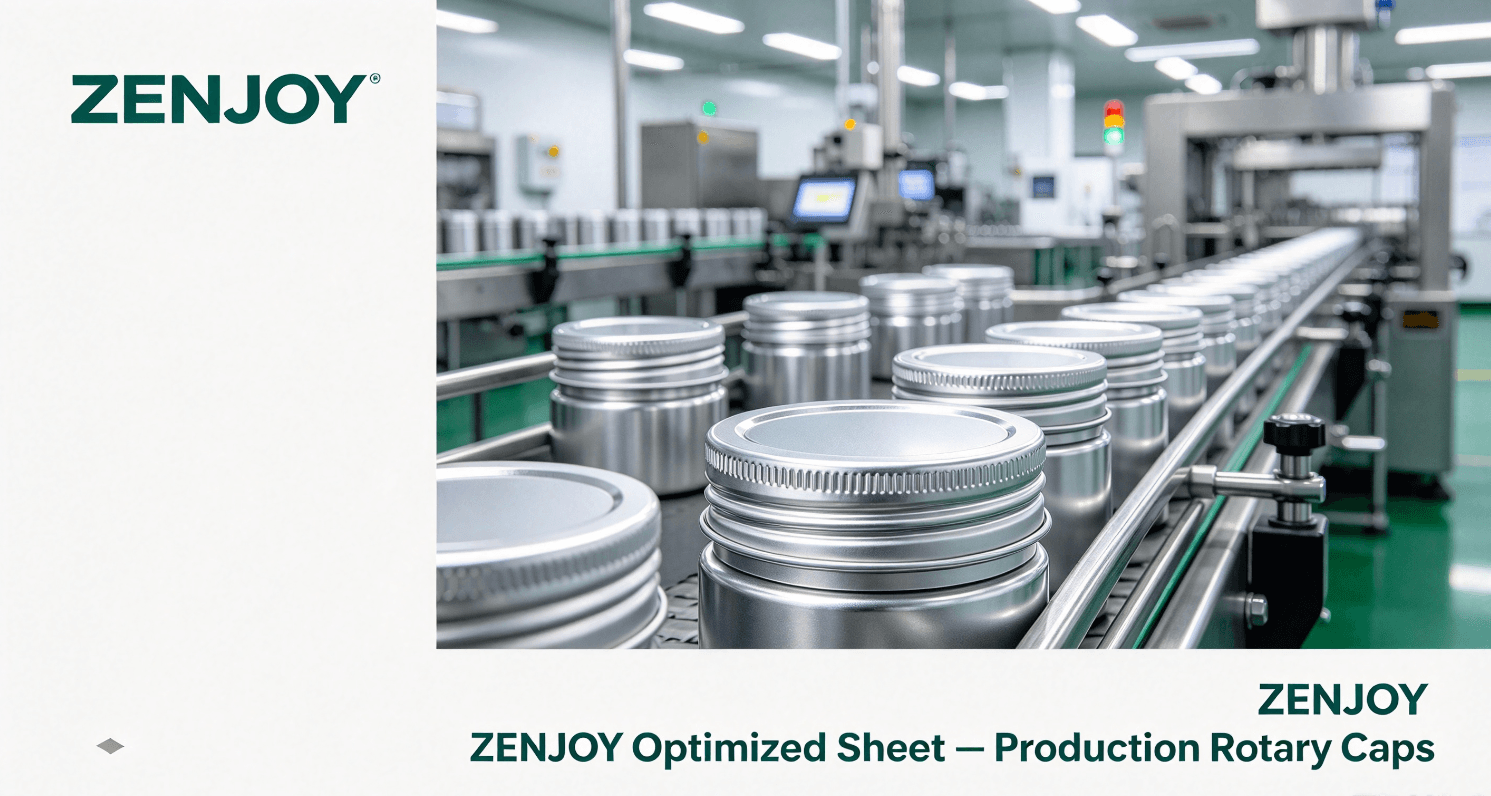
Low-Earing CA Annealed Tinplate: The Optimal Material for Stable Twist-Off Lid Deep Drawing & High Yield Rate
Twist-off lid manufacturing has extremely strict requirements on material anisotropy and ductility. Different from regular can bodies, twist-off lids undergo complex deep drawing, edge trimming and crimping processes, making them highly sensitive to uneven steel performance. According to actual mass production verification, no alternative tinplate grades can achieve stable forming results for twist-off lid production. Low-earning CA continuous annealed tinplate remains the most suitable and high-performance material dedicated for twist-off lid stamping.
Want to know more?
Get in touch with us for more information about our services and products.