
How to Choose a Tinplate Supplier in China
Why Supplier Selection Matters
For industrial buyers, choosing a tinplate supplier is not only a purchasing task. It is a production-risk decision.
A supplier may offer an attractive price, but if the material is inconsistent, the lead time slips during peak season, or the export support is weak, the real cost can become much higher than expected.
This is especially important for customers buying large volumes for:
- food can manufacturing
- wet can packaging
- can ends and closures
- industrial packaging
- metal processing operations
In these industries, supply interruption is not a minor inconvenience. It can affect an entire production cycle.
That is why serious buyers do not choose a supplier based on quotation alone. They evaluate whether the supplier can support long-term, stable, large-volume procurement.
Two-Piece Tinplate
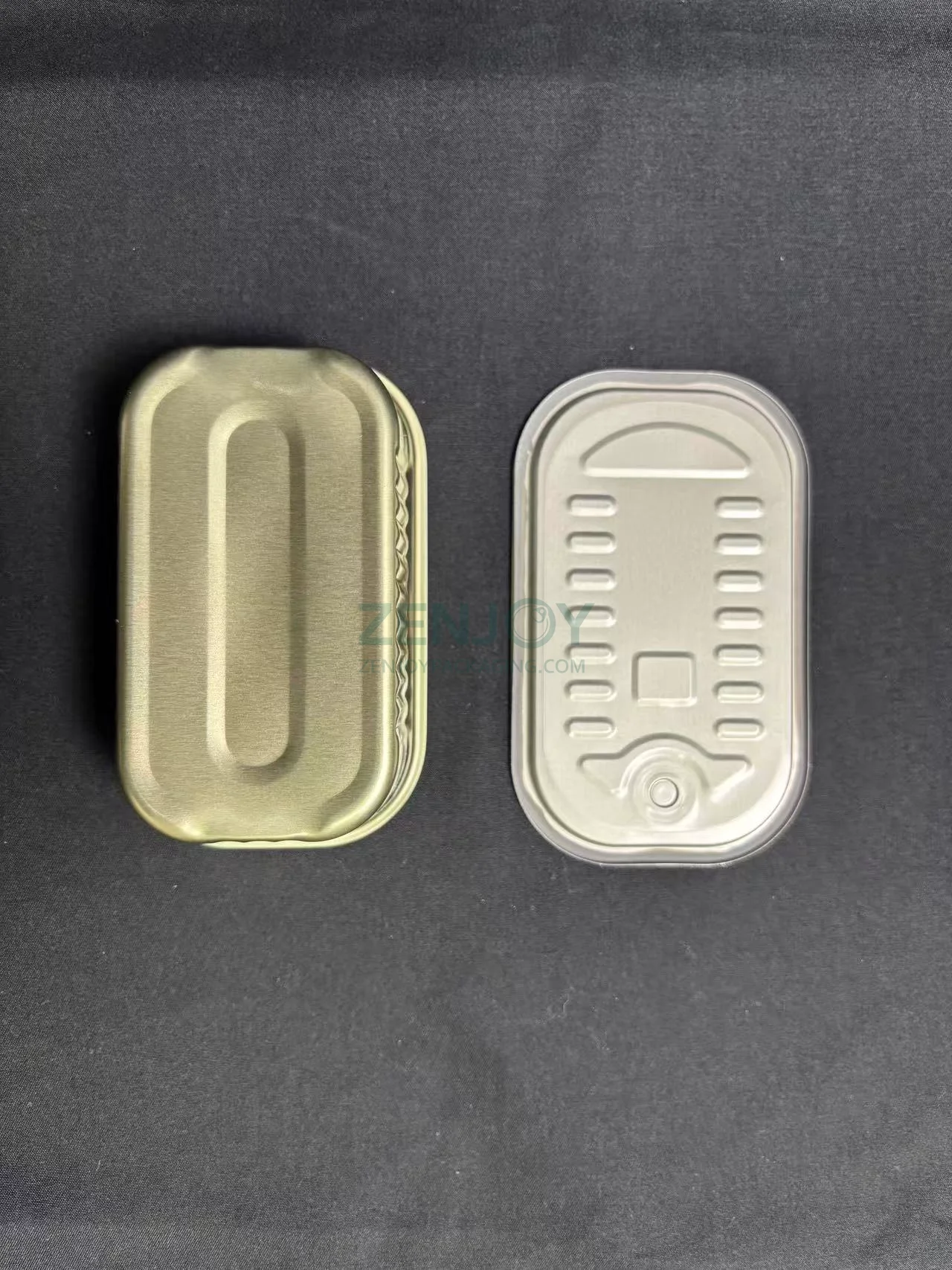
In today's competitive market, unique and efficient packaging solutions are the key to standing out. Our customizable can containers are designed for this purpose, offering comprehensive customization services from dimensions to materials, ensuring your product packaging is both aesthetically pleasing and practical, perfectly matching your brand image and product characteristics.
Step 1: Confirm Whether the Supplier Matches Your Buyer Type
Not every supplier is suitable for every buyer.
Some suppliers are better for:
- standard bulk material supply
- recurring coil or sheet orders
- application-specific sizing
- cut-to-length processing
- export-oriented packaging steel orders
Before comparing suppliers, buyers should first be clear about their own requirements:
- Are you a steel trader or distributor?
- Are you a can-making factory?
- Are you a packaging component producer?
- Are you a metal processor with your own conversion capability?
- Do you need standard material or custom dimensions?
A supplier that works well for a small order or trading inquiry may not be the right partner for a large industrial program.
Step 2: Review Product Range and Specification Coverage
A reliable tinplate supplier should be able to support not just one specification, but a workable range of supply options relevant to your business.
Buyers should confirm whether the supplier can support:
- different thickness ranges
- different widths
- temper options
- coating weight options
- coil and sheet supply
- custom cutting or related processing
- application-specific recommendations
This is important because large-volume buyers often need more than one recurring specification, especially when serving different product lines or seasonal orders.
A supplier with narrow specification coverage may look acceptable at first but become a limitation later.
Step 3: Check Quality Consistency, Not Just Product Availability
Many suppliers can offer tinplate. Fewer can maintain stable quality across repeated shipments.
For industrial buyers, quality consistency matters more than a one-time good sample.
The real question is whether the supplier can repeatedly deliver material that performs reliably on the production line. Buyers should review:
- batch consistency
- surface quality stability
- mechanical property consistency
- inspection process
- test documentation
- responsiveness when quality questions arise
A supplier should not only promise quality. They should be prepared to explain how it is controlled.
Step 4: Evaluate Lead Time and Peak-Season Reliability
For many packaging customers, especially those serving food-related demand cycles, timing is critical.
A shipment that arrives too late may not simply delay one order. It may affect a seasonal production window that cannot easily be recovered.
That is why buyers should ask:
- What is the normal lead time?
- What happens during peak season?
- Is there regular stock or faster replenishment support?
- Can urgent or repeat orders be handled?
- How is delivery scheduled for large-volume programs?
A supplier that performs well in normal periods but becomes unreliable during busy months may still be the wrong choice for a serious buyer.
Step 5: Review Processing and Customization Support
For many industrial customers, supply is not only about selling raw coil. The supplier’s ability to support the required format is also important.
Depending on your operation, you may need:
- coil supply
- sheet supply
- cut-to-length service
- custom dimensions
- slitting support
- supply matched to downstream equipment
This is especially relevant for processors, can factories, and packaging component manufacturers that need material closer to production-ready condition.
A supplier with stronger processing support may help reduce your own internal workload and improve supply efficiency.
Step 6: Check Export and Communication Capability
For overseas buyers, a good supplier must also be a workable export partner.
This includes:
- clear communication
- timely quotation follow-up
- document support
- shipment coordination
- packaging suitable for export handling
- response speed when problems arise
Many sourcing problems are not caused by material alone. They come from weak coordination, incomplete shipping support, or poor follow-through after the order is confirmed.
For repeat international business, operational reliability matters as much as product quality.
Step 7: Assess Whether the Supplier Can Grow With Your Demand
A supplier may be able to support your first order but not your long-term program.
Large buyers should consider:
- whether the supplier can support growing volume
- whether multiple specifications can be handled over time
- whether supply planning is possible before peak season
- whether the supplier can support stable repeat cooperation instead of one-off transactions
This matters even more for buyers who want to reduce supply risk by building a longer-term procurement relationship.
Common Mistakes Buyers Should Avoid
When selecting a tinplate supplier in China, buyers should avoid a few common mistakes:
Choosing only by the lowest price
The cheapest option may not deliver the best total result if quality, timing, or service fails later.
Overvaluing one good sample
A successful sample is useful, but repeated consistency matters more in real procurement.
Ignoring processing fit
A supplier may offer the material, but not in the form your factory uses most efficiently.
Not checking export support
A weak export process can create delays even if the material itself is acceptable.
Waiting too late before peak season
Strong suppliers often need earlier planning when demand rises.
What a Better Supplier Evaluation Looks Like
A better evaluation method combines technical fit, operational reliability, and long-term supply logic.
Industrial buyers should compare suppliers based on:
- product range
- quality stability
- lead time reliability
- processing capability
- export coordination
- communication efficiency
- ability to support repeat bulk orders
In most cases, the best supplier is not simply the one with the lowest quote. It is the one that reduces procurement risk while supporting stable production.
FAQ
What should buyers check first when choosing a tinplate supplier?
Buyers should first confirm whether the supplier matches their application, order size, and required supply model.
Is low price enough to select a supplier?
No. Buyers should also review consistency, lead time, processing support, and export capability.
Why is peak-season reliability important?
Because delayed supply during a critical season may affect the buyer’s annual production schedule.
Should buyers review processing capability?
Yes. Coil, sheet, cut-to-length, and custom sizing support can all influence production efficiency.
What makes a supplier suitable for long-term cooperation?
Stable quality, reliable delivery, clear communication, and the ability to support repeat bulk demand.
---
Looking for a more reliable tinplate supplier in China for large-volume industrial use?
Related News
Other news you might be interested in
Weld Spatter & Leakage Defects: The Decisive Role of Tin Coating Uniformity in Can Welding Quality
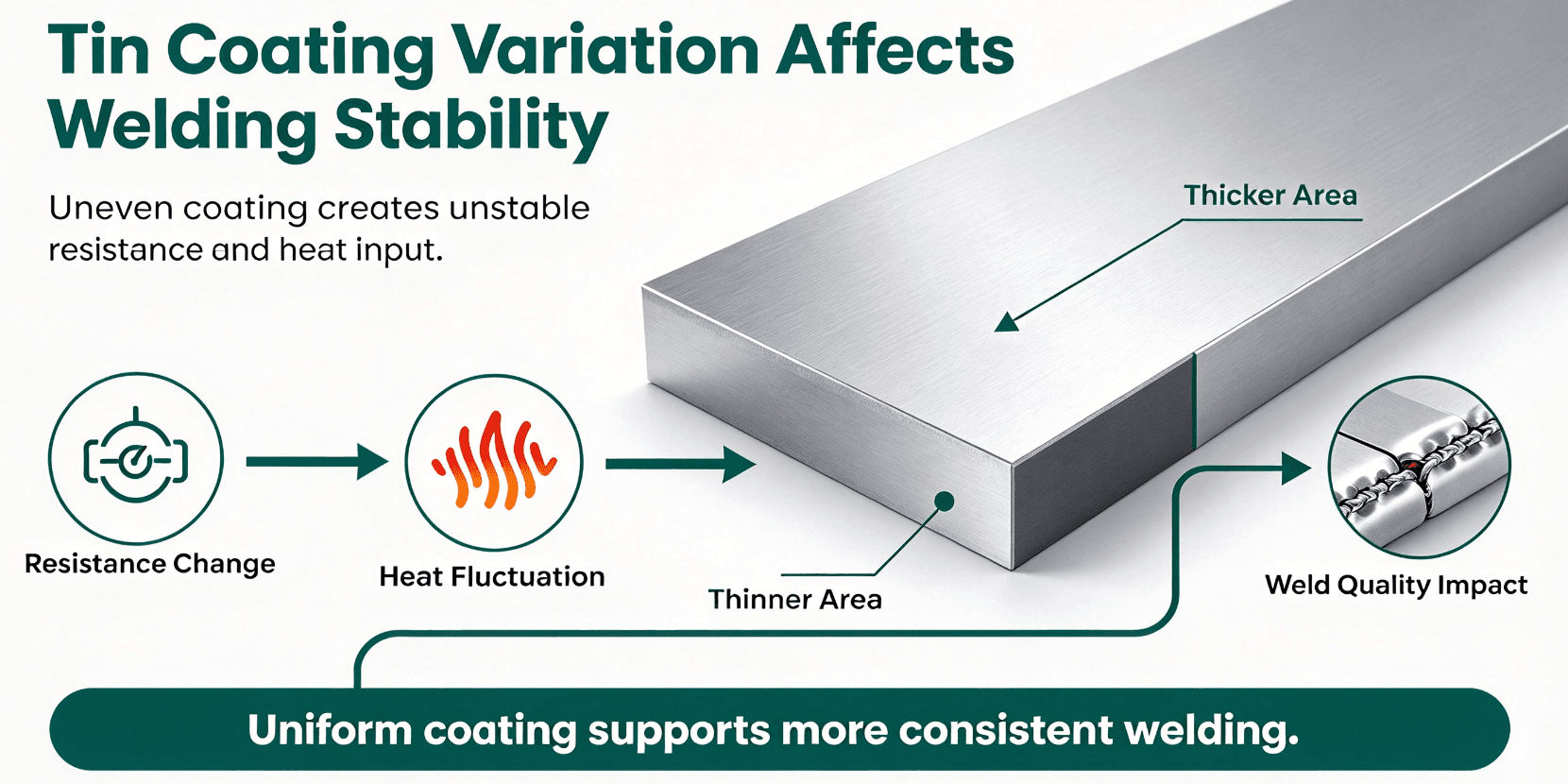
High-speed resistance seam welding is the core forming process for three-piece metal cans. In actual mass production, persistent weld spatter, granular slag residue and hidden seam micro-leakage severely compromise sealing consistency, sterilization resistance and finished product yield. Most manufacturers tend to attribute these defects to unstable current, improper pressure or worn welding wheels. However, industrial verification proves that uneven tin coating distribution on tinplate is the fundamental material-induced root cause of recurring welding spatter and leakage issues.
Low-Earing CA Annealed Tinplate: The Optimal Material for Stable Twist-Off Lid Deep Drawing & High Yield Rate
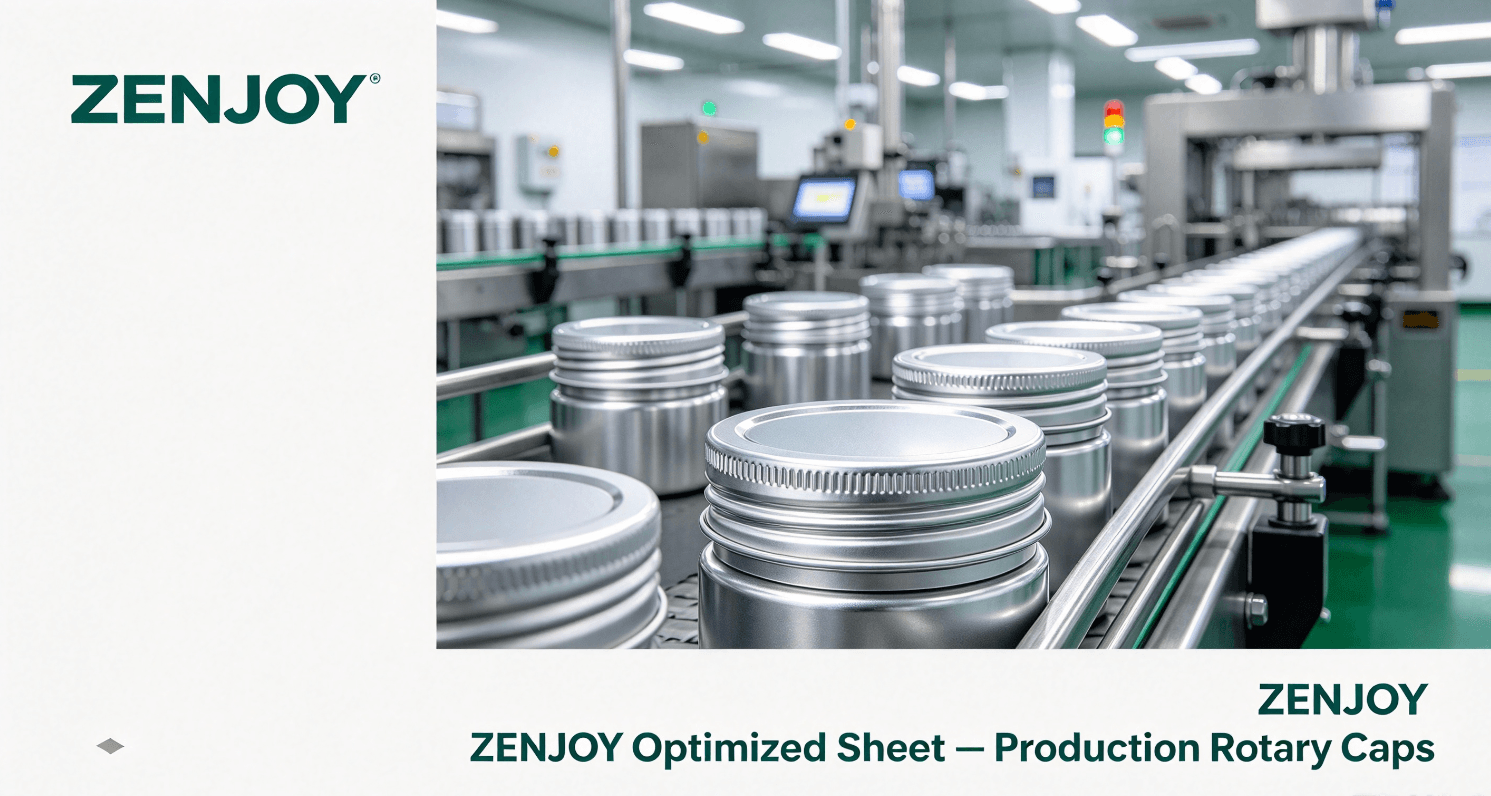
Twist-off lid manufacturing has extremely strict requirements on material anisotropy and ductility. Different from regular can bodies, twist-off lids undergo complex deep drawing, edge trimming and crimping processes, making them highly sensitive to uneven steel performance. According to actual mass production verification, no alternative tinplate grades can achieve stable forming results for twist-off lid production. Low-earning CA continuous annealed tinplate remains the most suitable and high-performance material dedicated for twist-off lid stamping.
Want to know more?
Get in touch with us for more information about our services and products.