
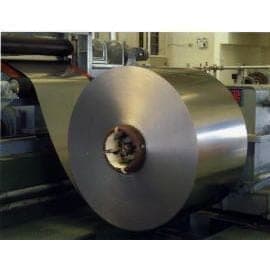
How to Evaluate Tinplate Supplier Capacity Before Placing a Bulk Order
Why Capacity Evaluation Matters Before a Bulk Order
A supplier may look strong during quotation, but bulk orders test a supplier very differently.
For industrial buyers, placing a large tinplate order is not only about price or specification. It is also about whether the supplier can actually support the order in a stable and organized way.
This matters especially for buyers in:
- food can packaging
- wet can production
- packaging component manufacturing
- steel distribution
- industrial metal processing
In these sectors, a supplier that cannot support scale may create:
- delivery delays
- fragmented shipments
- inconsistent quality across batches
- weaker communication under pressure
- reduced confidence in repeat procurement
That is why bulk-order buyers should evaluate supplier capacity before the PO is placed, not after a problem appears.
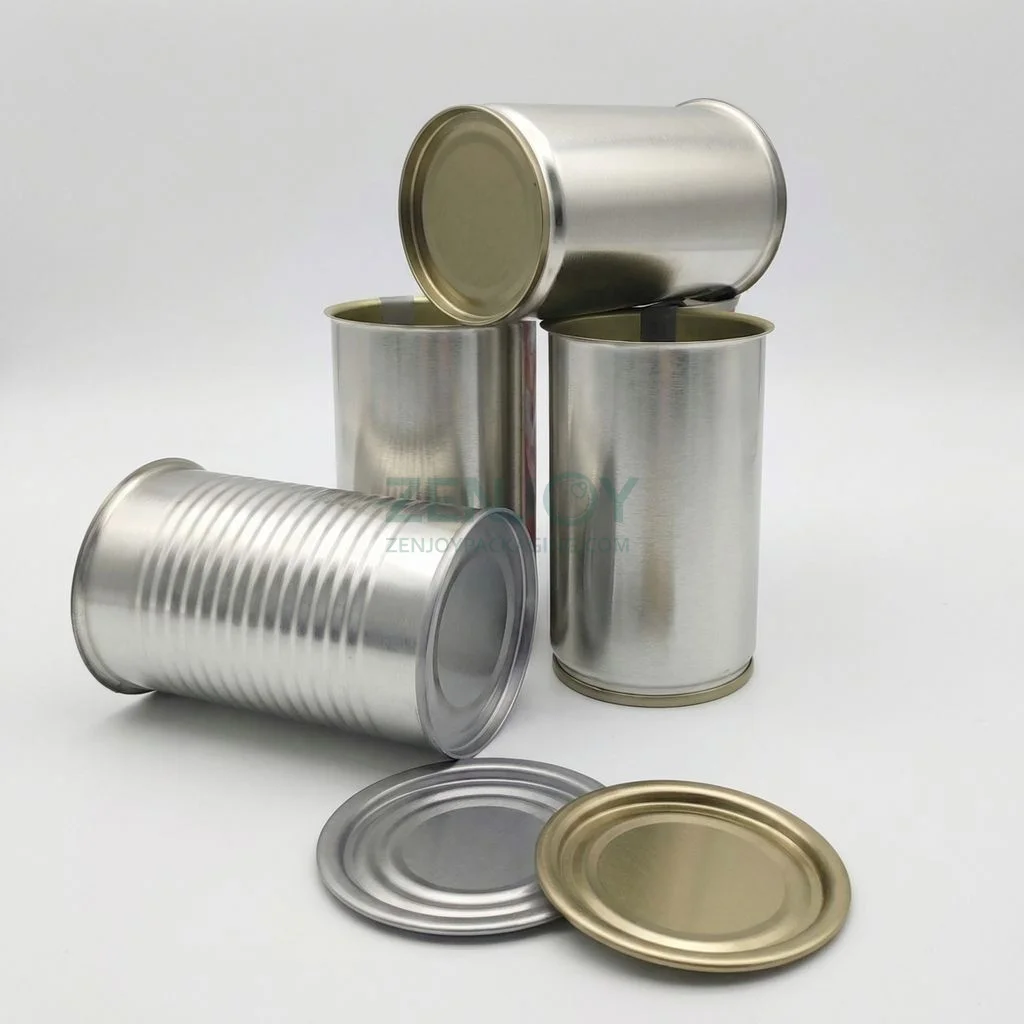
Three-piece can
Our customizable can containers provide fully customizable production services, covering dimensions and materials, to meet your unique packaging requirements comprehensively. Whether you need standard round cans or special irregular shapes, we can deliver precise solutions that fit your brand perfectly.
Capacity Is More Than Production Volume
Many buyers hear claims such as:
- large capacity
- stable output
- fast delivery
- strong factory support
But supplier capacity should not be understood as only a big production number.
For real procurement, capacity usually includes:
- ability to support the required specification
- stock or replenishment support
- processing capability
- ability to manage order timing
- packing and shipment organization
- stability across repeat orders
A supplier may be large in general but still not be the right fit for your particular program.
Capacity should always be evaluated against your actual order needs.
What Buyers Should Check Before Placing a Bulk Tinplate Order
1. Can the supplier support the required specification consistently?
The first question is not simply whether the supplier sells tinplate.
It is whether the supplier can support your required:
- thickness
- width
- temper
- coating weight
- supply form
- quantity structure
This is especially important when the order includes repeat sizes, multiple line items, or recurring replenishment.
A bulk order is risky when the supplier can support part of the requirement but not the full program.
2. Does the supplier have stock support or only order-based supply?
For some buyers, stock support can reduce timing pressure and increase flexibility.
The key question is not only whether the supplier says they have stock, but:
- what sizes are stocked
- how regularly stock is replenished
- whether the stock supports repeat bulk needs
- whether stock can help in urgent cases
- whether stock matches your real production specs
For seasonal industries, stock logic matters because timing pressure can increase very quickly.
3. Can the supplier handle the required supply form?
Bulk orders often depend on more than raw material availability.
Buyers may need:
- full coil
- standard sheet
- cut-to-length supply
- custom dimensions
- repeated size conversion
- organized packing by item
If the supplier can provide the material but not in the most useful format, internal cost and delay risk may increase.
Processing support is therefore part of capacity evaluation, not a separate detail.
4. Can the supplier manage repeat delivery, not just one shipment?
A single shipment may look successful, but large buyers usually need more than a one-time transaction.
Capacity should also be reviewed in terms of:
- repeat supply stability
- continuity across orders
- scheduling discipline
- communication under ongoing demand
- ability to support larger future volume
The stronger supplier is often the one that can manage the second, third, and fourth shipment reliably, not just the first sample order.
5. Is the supplier organized enough to handle pressure?
Real capacity becomes visible when the order is urgent, large, or time-sensitive.
Buyers should assess whether the supplier can handle:
- compressed timelines
- multiple SKUs
- shipment coordination
- order tracking
- document preparation
- communication when schedules shift
A supplier with weak internal organization may struggle even if the material is technically available.
6. Does the supplier communicate clearly about limitations?
A reliable supplier does not need to claim that everything is always available.
In many cases, a stronger sign is when the supplier can clearly explain:
- what is standard
- what needs extra time
- what sizes are easier to support
- what may be difficult during peak season
- what planning is recommended for bulk continuity
This kind of transparency often helps buyers make better decisions.
Warning Signs Buyers Should Notice
Before placing a large order, buyers should be cautious if the supplier:
- gives only general answers about capacity
- cannot explain stock structure clearly
- avoids discussing repeat-order support
- offers very aggressive timing without operational detail
- does not clarify processing limits
- reacts slowly when specification questions become more detailed
These warning signs do not always mean the supplier is unsuitable, but they do suggest that capacity claims should be reviewed more carefully.
What a Stronger Bulk-Order Supplier Usually Looks Like
A stronger supplier is usually able to discuss capacity in practical terms.
That means they can explain:
- what specification ranges they support well
- what stock or replenishment logic exists
- what supply forms are available
- what lead time applies under real conditions
- how repeat orders can be organized
- what documentation and shipment process supports large-volume execution
For industrial buyers, this is much more useful than a general promise of “high output.”
Why Capacity Evaluation Protects Procurement Performance
Bulk orders create a different level of exposure.
If capacity is weaker than expected, buyers may face:
- late production release
- broken shipment sequence
- pressure on internal inventory
- factory downtime risk
- more reactive emergency purchasing
- weaker long-term supply confidence
A better capacity review helps buyers reduce these risks before they become operational problems.
That is why capacity evaluation should be part of supplier qualification, not just a last-minute conversation before confirming price.
FAQ
What does supplier capacity really mean in tinplate procurement?
It includes not only volume, but also specification support, stock logic, processing capability, timing control, and repeat-order reliability.
Why is stock support important?
Because it may help reduce supply pressure, especially for recurring sizes or urgent bulk demand.
Is processing capability part of capacity evaluation?
Yes. Coil, sheet, cut-to-length, and custom size support all influence whether the supplier can serve the order effectively.
Should buyers check repeat-order capability?
Yes. Bulk procurement usually requires continuity, not only one successful shipment.
What is a warning sign when evaluating a supplier?
Vague answers, unclear stock details, and unrealistic lead-time promises should all be reviewed carefully.
---
Need a more reliable tinplate supply partner for your next bulk order?
Related News
Other news you might be interested in
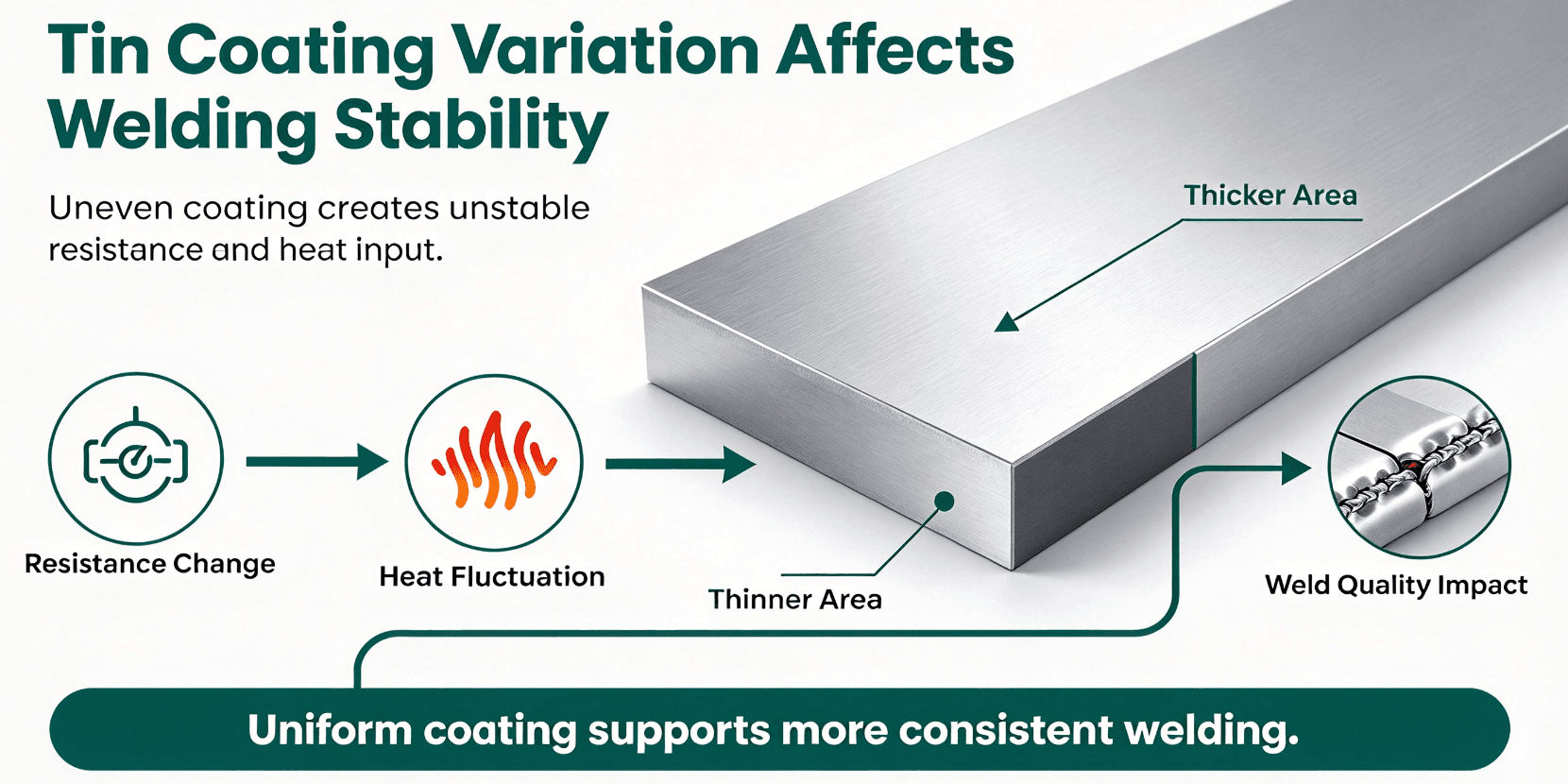
Weld Spatter & Leakage Defects: The Decisive Role of Tin Coating Uniformity in Can Welding Quality
High-speed resistance seam welding is the core forming process for three-piece metal cans. In actual mass production, persistent weld spatter, granular slag residue and hidden seam micro-leakage severely compromise sealing consistency, sterilization resistance and finished product yield. Most manufacturers tend to attribute these defects to unstable current, improper pressure or worn welding wheels. However, industrial verification proves that uneven tin coating distribution on tinplate is the fundamental material-induced root cause of recurring welding spatter and leakage issues.
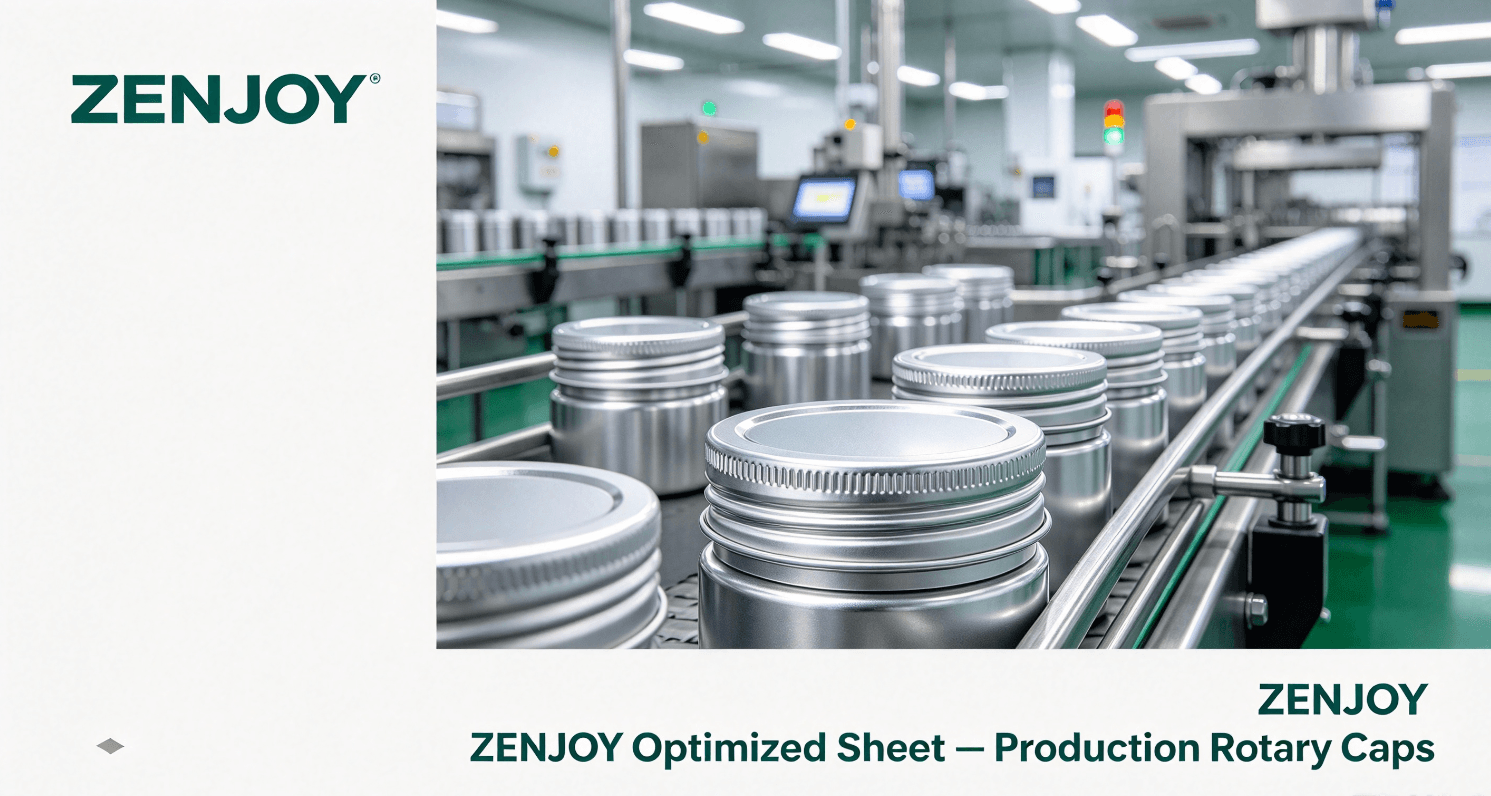
Low-Earing CA Annealed Tinplate: The Optimal Material for Stable Twist-Off Lid Deep Drawing & High Yield Rate
Twist-off lid manufacturing has extremely strict requirements on material anisotropy and ductility. Different from regular can bodies, twist-off lids undergo complex deep drawing, edge trimming and crimping processes, making them highly sensitive to uneven steel performance. According to actual mass production verification, no alternative tinplate grades can achieve stable forming results for twist-off lid production. Low-earning CA continuous annealed tinplate remains the most suitable and high-performance material dedicated for twist-off lid stamping.
Want to know more?
Get in touch with us for more information about our services and products.