
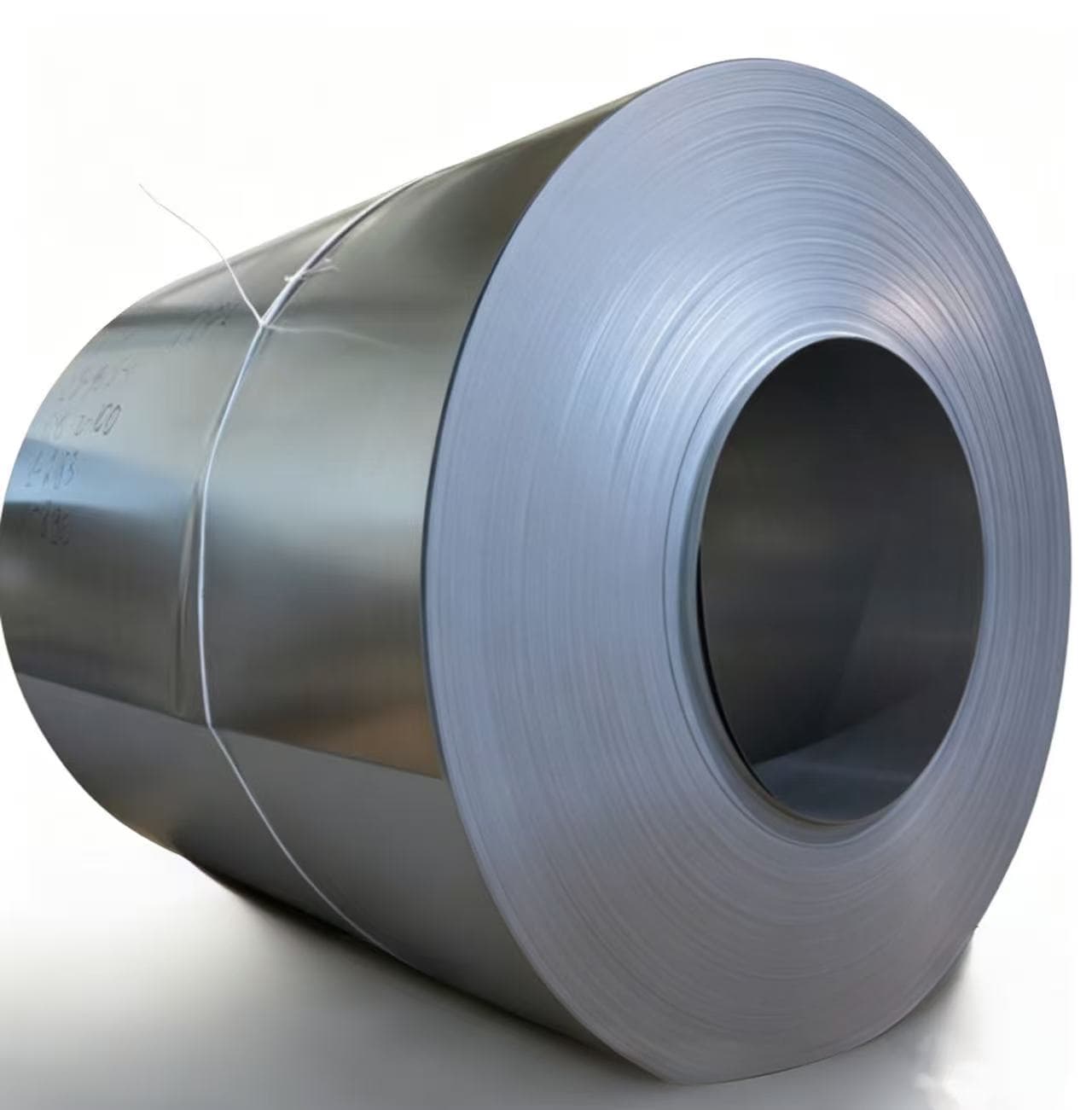
TFS for Lids and Easy Open Ends: Selection Guide
Why TFS Is Commonly Used for Lids and Easy Open Ends
Tin free steel, often called TFS or ECCS, is widely used in packaging applications such as lids, ends, and closures. For many industrial buyers, it is an important material choice where application fit, cost control, and production compatibility all matter.
In particular, TFS is commonly considered for:
- lids
- easy open ends
- closures
- can-end related components
- selected packaging parts that do not rely on the same joining requirements as standard can bodies
For buyers in these sectors, TFS is not selected simply as an alternative to tinplate. It is selected because it can be the more suitable material for specific end uses.
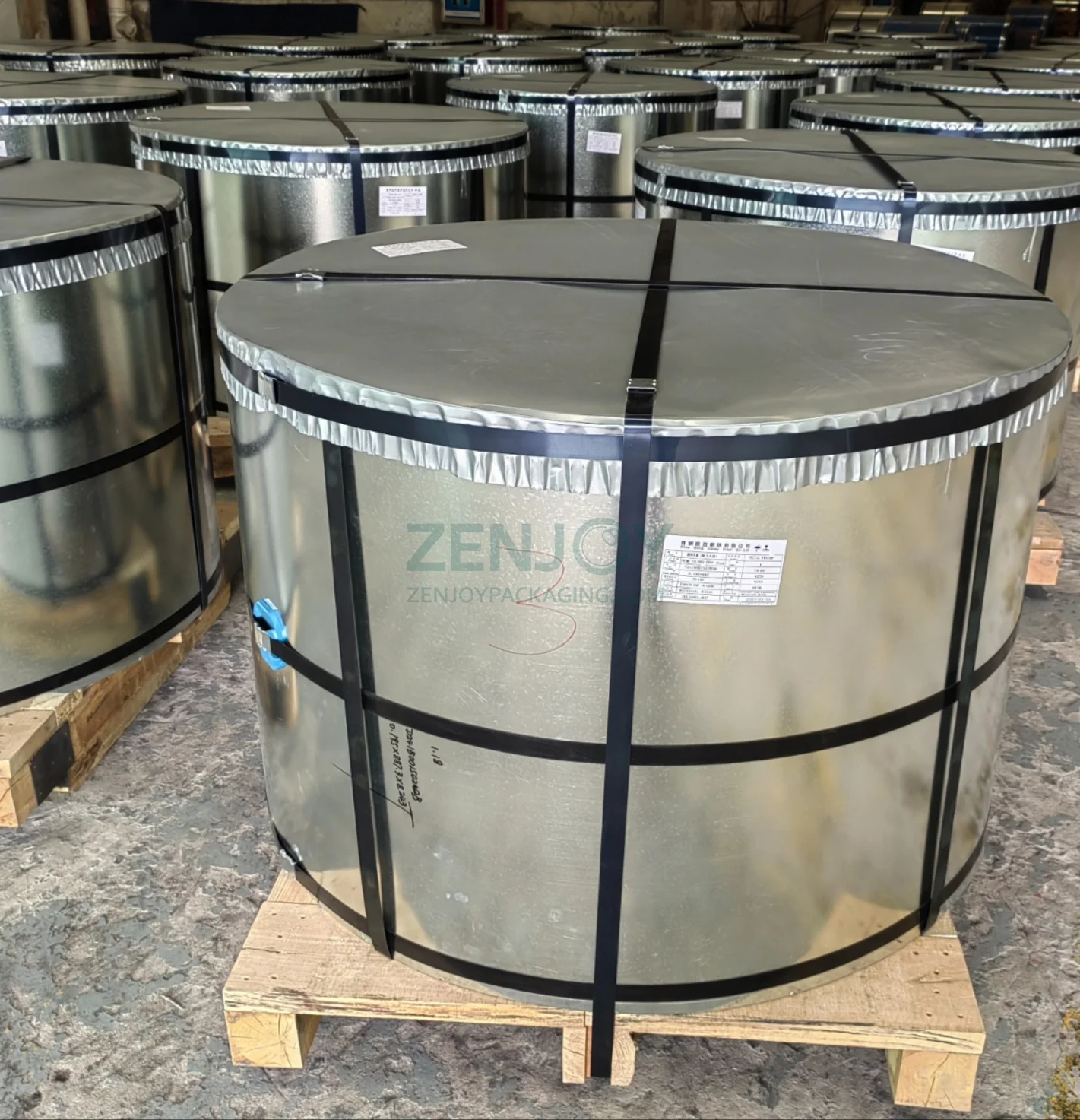
Tin-free Steel (TFS) Sheet in Coil
Chrome-plated Steel Coil (Tin-Free Steel, abbreviated as TFS) is a high-quality raw material supplied in coil form, belonging to the "un-cut coil" state, serving as the basic material for subsequent processing. As a key raw material in the metal packaging industry, chrome-plated steel coil undergoes precise surface treatment processes, possessing excellent corrosion resistance and processing performance, and requires further cutting and processing before being applied to end products. This product is widely used in the production of packaging containers for industries such as food, beverages, and chemicals, providing a reliable material foundation for various metal packaging products.
What Makes TFS Suitable for Lids and Ends
TFS uses a chromium-based surface treatment instead of tin coating. This gives the material a different performance profile from tinplate.
For lids and easy open ends, buyers often value TFS because it can support:
- good fit with certain downstream coating systems
- suitability for selected stamping and forming operations
- practical performance in end and closure applications
- a cost-performance balance in the right use case
- supply options aligned with large-volume packaging production
However, suitability should always be reviewed against the actual production process and final application.
Why Application Matching Is So Important
One of the most common sourcing mistakes is to treat TFS as a general replacement material without checking the exact use case.
In reality, TFS selection should be based on:
- the specific lid or end design
- production method
- forming requirement
- downstream coating or lacquer system
- product use environment
- buyer cost and supply priorities
A correct TFS specification should fit both the manufacturing process and the final packaging requirement.
For industrial buyers, application matching is more important than general material comparison.
What Buyers Should Review When Selecting TFS for Lids and Easy Open Ends
1. End-use application
The buyer should first define whether the material is intended for:
- lids
- ends
- easy open ends
- closures
- similar stamped or formed packaging components
Different components may have different process and performance priorities.
2. Forming and stamping requirements
Because lids and ends are produced through demanding shaping and stamping operations, buyers should confirm whether the selected TFS is suitable for their forming conditions.
Important questions include:
- What kind of stamping or conversion line is used?
- What consistency is needed in repeated production?
- Is the supplier familiar with this type of application?
A material that looks acceptable on paper still needs to fit the real line.
3. Coating and lacquer compatibility
For many lids and easy open ends, downstream coating compatibility is a key factor.
Buyers should evaluate the material in relation to:
- lacquer systems
- surface treatment needs
- final use environment
- internal packaging requirements
This should be reviewed early, especially when changing supplier or adjusting specification.
4. Consistency across repeat orders
High-volume end and lid production relies heavily on repeatability.
Buyers usually need:
- stable mechanical behavior
- reliable surface condition
- repeatable production performance
- fewer surprises from shipment to shipment
That is why consistency should be reviewed as seriously as price.
For long-running programs, repeat stability is often more valuable than a one-time lower offer.
5. Supply form and processing support
Depending on the factory setup, buyers may need TFS in:
- coil
- sheet
- cut-to-length format
- application-specific repeat sizing
The right supply format affects:
- line preparation
- material handling
- internal processing workload
- production flow
For high-volume component manufacturers, the wrong supply form may increase pressure even if the material specification itself is acceptable.
6. Lead time and production planning
As with tinplate, TFS procurement should also be planned around the buyer’s actual production schedule.
This matters even more when:
- the buyer runs repeat large-volume programs
- component production is linked to seasonal packaging demand
- multiple SKUs must be supplied under tight timing
- specification changes are difficult late in the cycle
A suitable supplier should support realistic planning, not only quotation.
Why Buyers Often Compare TFS and Tinplate Incorrectly
Many buyers begin with the question:
“Is TFS better than tinplate?”
In practice, this is not the most useful question.
A better question is:
“Is TFS more suitable for this specific lid or end application?”
Tinplate and TFS are not identical materials, and they are not always interchangeable. The right choice depends on:
- end use
- process conditions
- coating system
- supply logic
- cost-performance balance
For lids and easy open ends, TFS can be a very practical option, but only when it is selected with the real application in mind.
How Buyers Can Reduce TFS Procurement Risk
To reduce risk when sourcing TFS for lids and ends, buyers should:
- define the component type clearly
- confirm the required production process
- review coating system compatibility
- test supplier consistency where needed
- align supply form with production setup
- plan early for repeat or seasonal demand
These steps are especially important when switching suppliers, changing specifications, or increasing order volume.
TFS Selection Should Support Production, Not Just Purchasing
For industrial buyers, TFS procurement should not be reduced to a price comparison exercise.
The right TFS program should support:
- stable stamping and forming
- reliable repeat performance
- appropriate downstream coating compatibility
- smoother production planning
- practical large-volume supply
That is what makes the material truly valuable in lid and end manufacturing.
FAQ
What is TFS commonly used for in packaging?
TFS is commonly used for lids, ends, closures, and certain packaging components.
Why is TFS suitable for easy open ends?
Because in many cases it offers a suitable performance profile for end applications when matched correctly to the coating system and production process.
Can TFS replace tinplate in every application?
No. It should be selected based on the actual end use and process requirements.
What should buyers check first?
They should check the component type, forming requirements, coating compatibility, and repeat supply needs.
Is consistency important for TFS orders?
Yes. For large-volume production, stable repeat performance is very important.
---
Looking for a more suitable TFS supply option for lids, ends, or easy open end production?
Related News
Other news you might be interested in
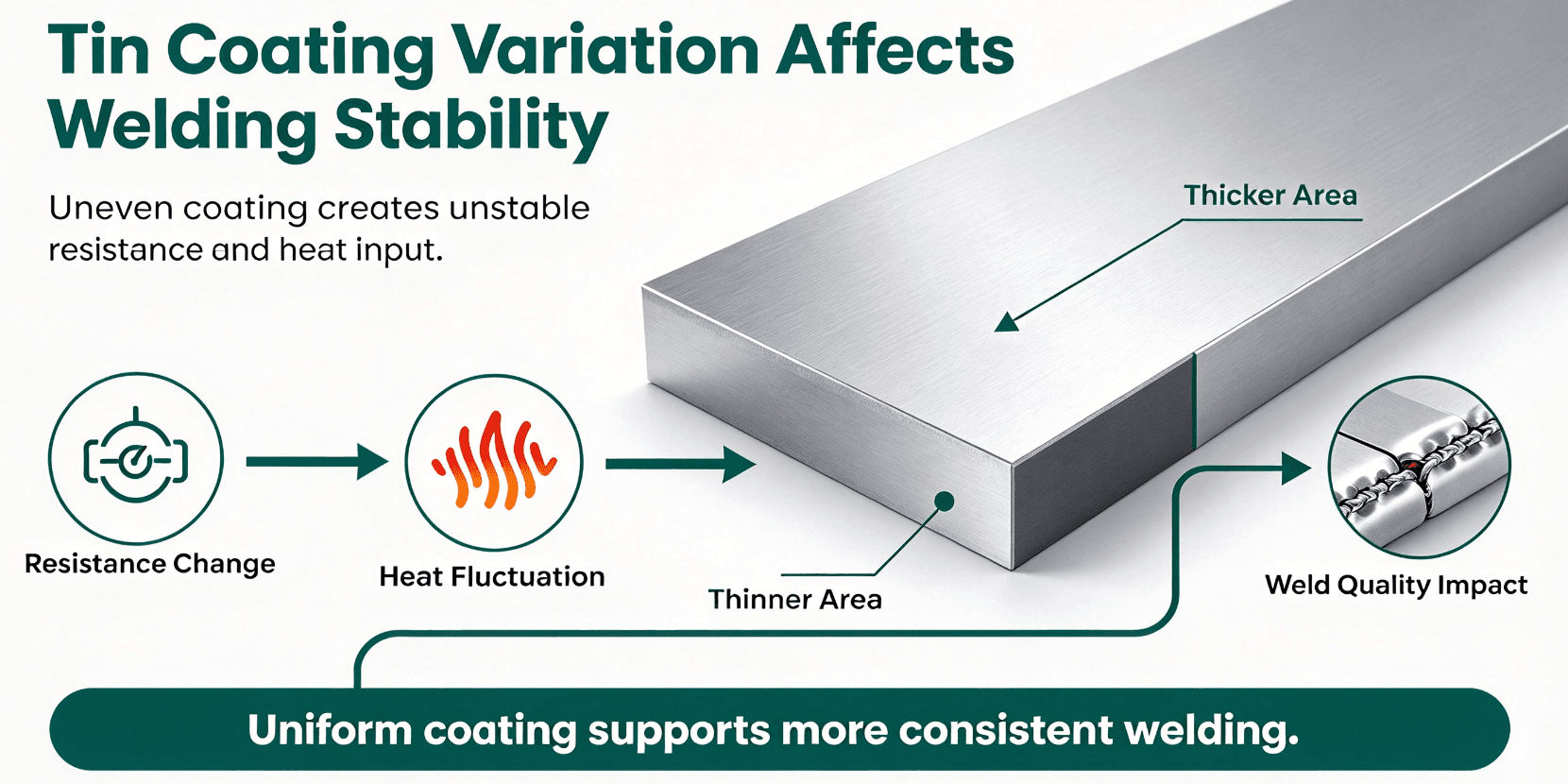
Weld Spatter & Leakage Defects: The Decisive Role of Tin Coating Uniformity in Can Welding Quality
High-speed resistance seam welding is the core forming process for three-piece metal cans. In actual mass production, persistent weld spatter, granular slag residue and hidden seam micro-leakage severely compromise sealing consistency, sterilization resistance and finished product yield. Most manufacturers tend to attribute these defects to unstable current, improper pressure or worn welding wheels. However, industrial verification proves that uneven tin coating distribution on tinplate is the fundamental material-induced root cause of recurring welding spatter and leakage issues.
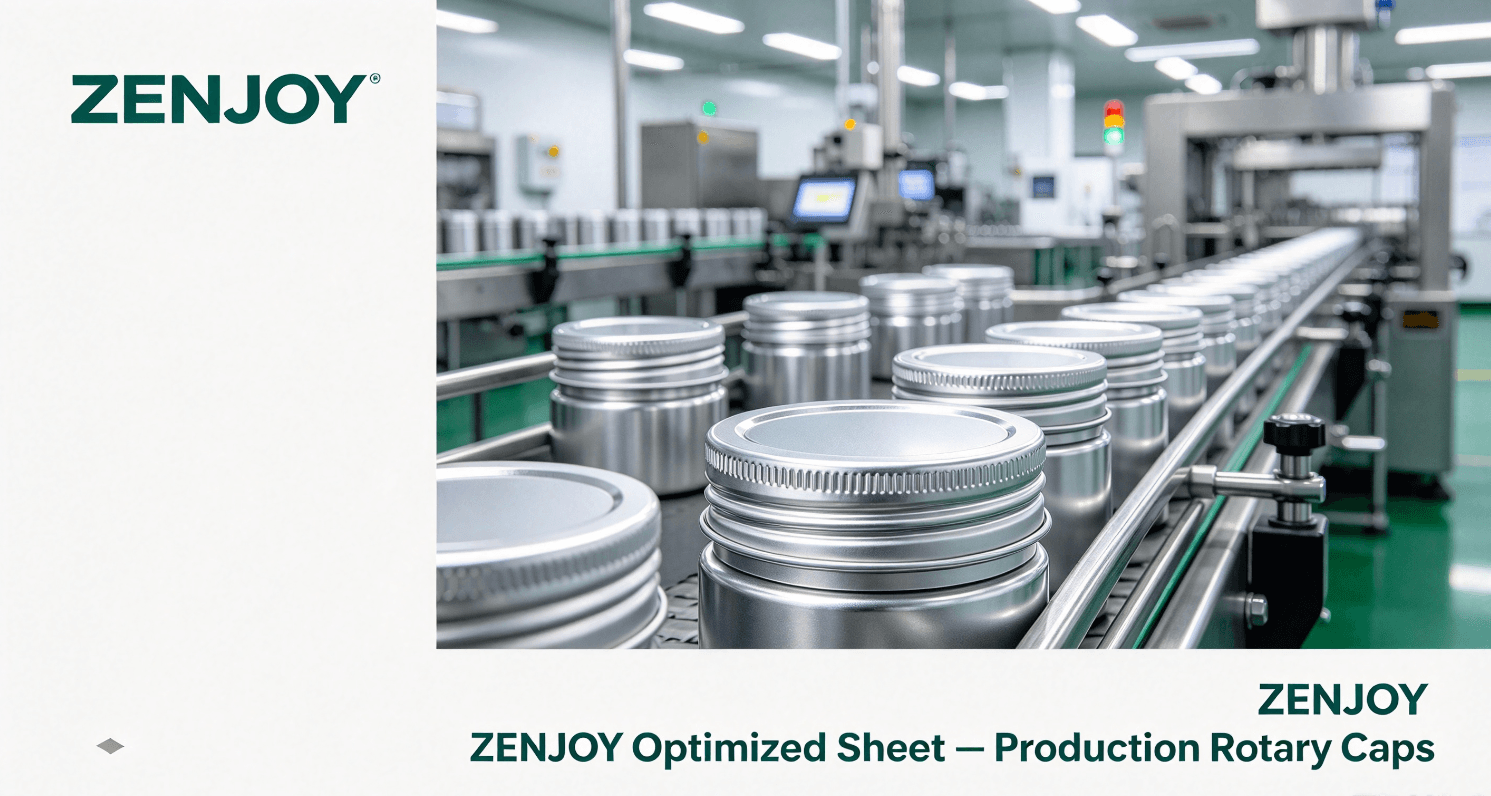
Low-Earing CA Annealed Tinplate: The Optimal Material for Stable Twist-Off Lid Deep Drawing & High Yield Rate
Twist-off lid manufacturing has extremely strict requirements on material anisotropy and ductility. Different from regular can bodies, twist-off lids undergo complex deep drawing, edge trimming and crimping processes, making them highly sensitive to uneven steel performance. According to actual mass production verification, no alternative tinplate grades can achieve stable forming results for twist-off lid production. Low-earning CA continuous annealed tinplate remains the most suitable and high-performance material dedicated for twist-off lid stamping.
Want to know more?
Get in touch with us for more information about our services and products.