
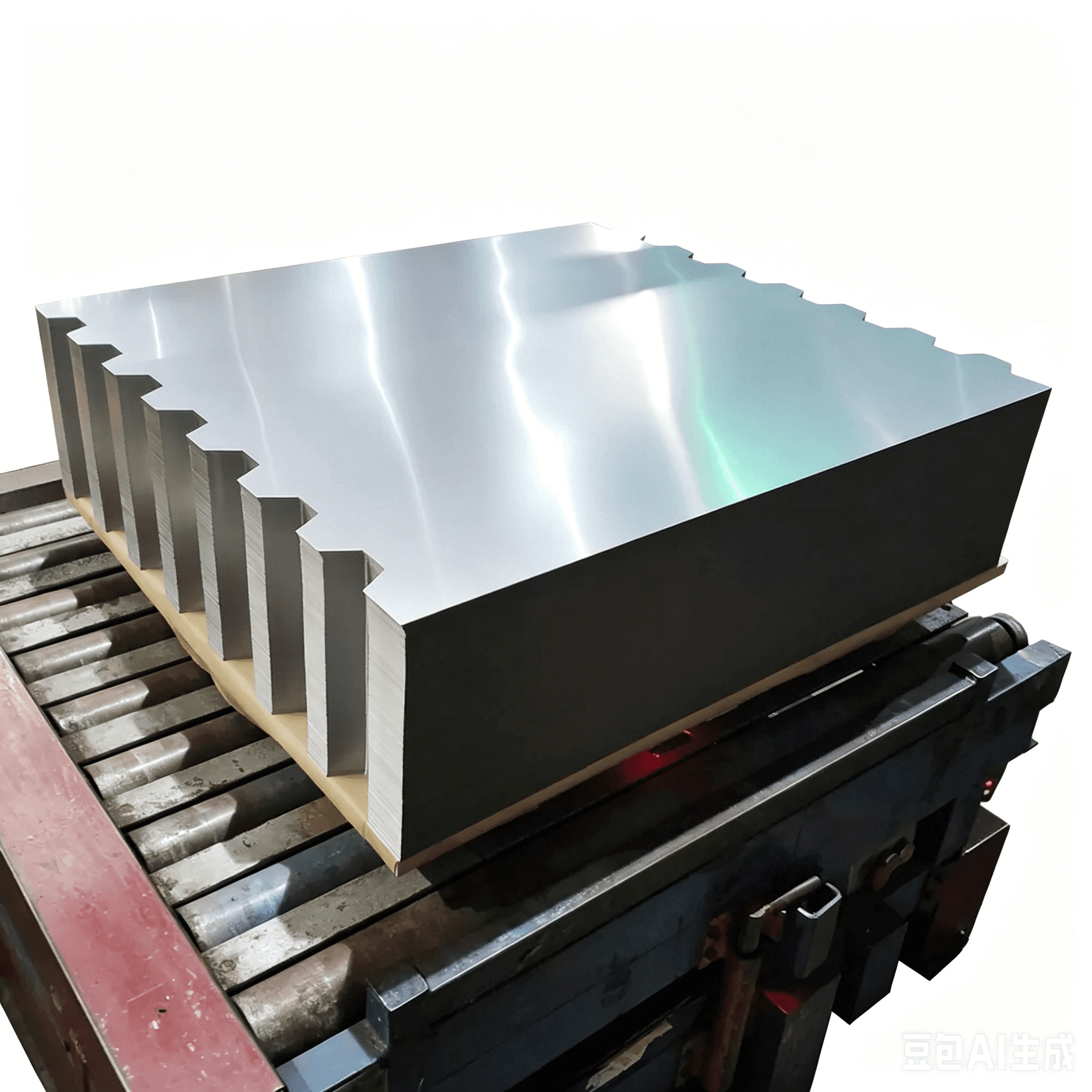
How Custom Cut-to-Length Supply Improves Production Efficiency
Why Supply Format Has a Bigger Impact Than Many Buyers Realize
When buyers evaluate packaging steel procurement, they usually focus first on:
- thickness
- width
- temper
- coating
- price
- delivery time
These factors matter, but another decision can have a major effect on factory efficiency:
Should the material be supplied in a custom cut-to-length format?
For many industrial buyers, the answer has a direct effect on:
- internal cutting workload
- warehouse handling
- repeated production setup
- material utilization
- procurement simplicity
- coordination between purchasing and production
That is why custom cut-to-length supply is not only a processing option.
In many cases, it is a production-efficiency tool.
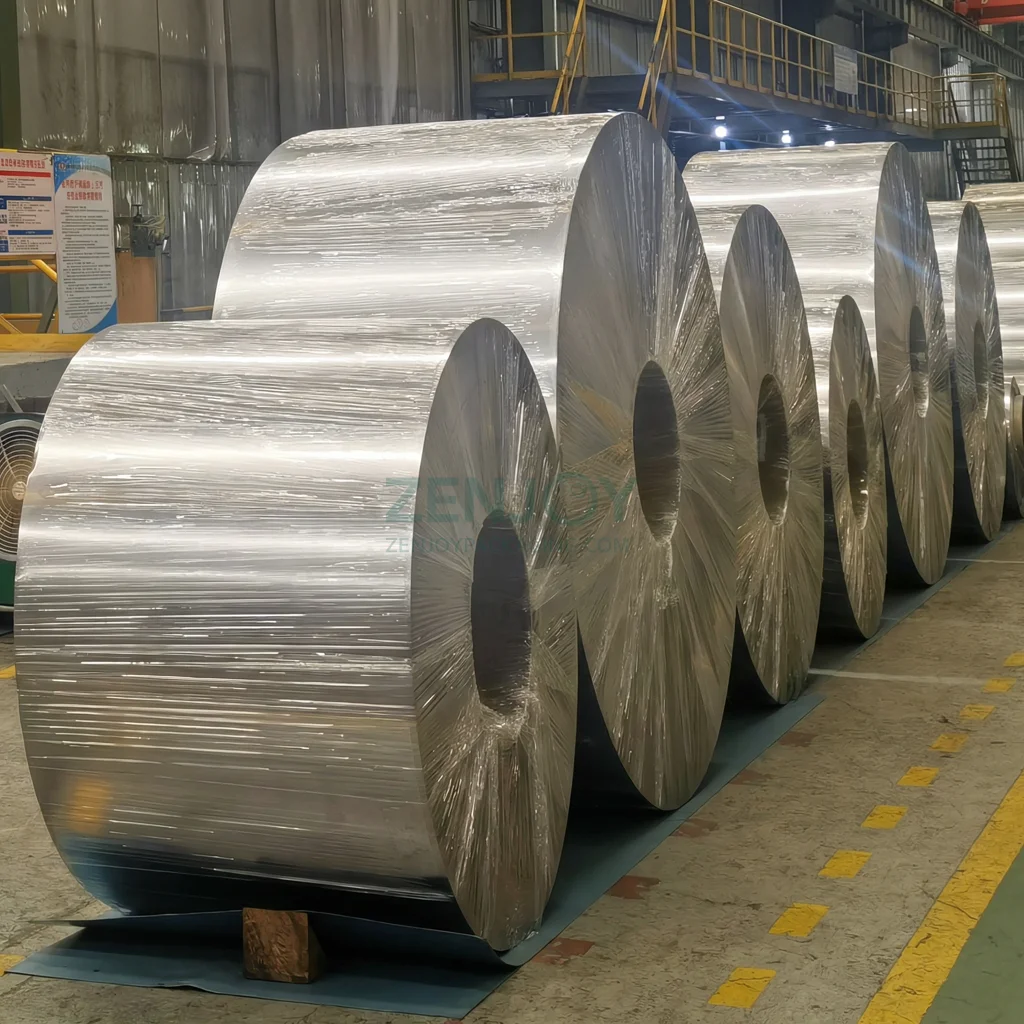
Tinplate Steel Sheet in Coil
Electrolytic Tinplate (ETP) is a low-carbon steel sheet that has been electrolytically coated with tin, widely used in packaging for food, beverages, chemical products, and other applications. With its excellent corrosion resistance, superior processability, and attractive appearance, tinplate has become an indispensable material in modern packaging industry. Our tinplate products strictly adhere to international standards and utilize advanced manufacturing processes to ensure exceptional quality in every coil.
What Custom Cut-to-Length Supply Actually Changes
Custom cut-to-length supply means the material arrives closer to the dimensions the buyer actually uses.
Instead of receiving a more general raw format and managing additional conversion internally, the buyer receives sheet material prepared to a more production-ready size.
For some factories, that creates immediate operational advantages:
- less internal cutting
- less extra handling
- faster movement from warehouse to production
- easier organization of repeated SKUs
- clearer material planning
- better fit for sheet-based production processes
The more repeated the buyer’s dimensions are, the more useful this may become.
That is why cut-to-length supply is especially valuable in operations that depend on recurring sizes and repeated production programs.
Production Efficiency Is Not Only About Machine Speed
Factories often think about efficiency in terms of output rate, machine uptime, or labor performance.
But material format also affects efficiency in less obvious ways.
If the incoming material creates:
- extra cutting steps
- extra movement
- extra sorting
- extra confusion around repeated sizes
- extra setup before production starts
then the factory is already losing efficiency before the actual line begins running.
Custom cut-to-length supply may help reduce those hidden losses by making the material easier to use from the start.
That is one reason why some buyers find that the right sheet format improves operations even when the base material itself does not change.
When Cut-to-Length Supply Is Especially Useful
Cut-to-length supply is often most useful in situations such as:
Repeated dimensions
If the factory keeps using the same sizes again and again, there is often clear value in receiving those sizes directly.
Sheet-fed production
Operations that depend on sheet-based input often benefit more from production-ready sizes than those that already process large raw formats internally.
Multi-SKU packaging programs
When several repeated sizes are used across different products, better pre-sized material can improve organization and reduce confusion.
Internal cutting pressure
If the factory is already spending time and labor on extra conversion steps, custom sizing may reduce that burden.
Waste-sensitive operations
When sheet size affects how much material becomes offcut or leftover, better dimension matching may improve utilization.
In these situations, custom cut-to-length supply often supports smoother production and lower internal friction.
Why Buyers Often Reconsider Standard Supply After Repeated Use
At the beginning of a project, some buyers accept standard-size or more general supply because it seems simple.
But after repeated use, they often start noticing hidden costs such as:
- repeated resizing work
- inefficient material movement
- unnecessary sheet preparation
- lower clarity in stock organization
- more time spent coordinating the same dimensions repeatedly
That is why buyers sometimes move toward cut-to-length supply not because the original supply format was impossible, but because a more exact format becomes more practical over time.
In other words, repeated production often makes the value of custom sizing more visible.
How Cut-to-Length Supply Helps Procurement, Not Just Production
The value of cut-to-length supply is not limited to the factory floor.
It can also make procurement more efficient.For example, it may help with:
- easier repeated ordering
- clearer SKU management
- simpler communication on dimensions
- more structured replenishment planning
- better alignment between purchasing and actual usage
- reduced need for internal reinterpretation of sheet requirements
This is especially important in operations where the same sizes are ordered again and again.
A better supply format can reduce not only factory workload, but also buyer workload.
That is why some of the strongest cut-to-length advantages appear in recurring industrial procurement, not only in one-time processing convenience.
Common Buyer Mistakes Around Cut-to-Length Decisions
Buyers sometimes miss the value of custom cut-to-length supply because they make a few common assumptions.
Focusing only on raw material price
If a more general format looks slightly cheaper, buyers may ignore the internal cost of extra handling and conversion.
Treating internal cutting as "normal"
Some factories accept repeated internal cutting work simply because it has always been done that way, not because it is the most efficient option.
Ignoring repeated-dimension logic
If the same sheet size keeps being used, that repeated pattern may be a strong reason to move toward custom sizing.
Separating procurement from production efficiency
A good purchasing decision should consider how the material behaves inside the factory, not only how it looks on the quotation.
Assuming custom supply always means more complexity
In some cases, custom cut-to-length supply actually makes the overall process simpler.
These mistakes often happen because buyers evaluate supply format too narrowly instead of viewing it as part of the wider production system.
What Buyers Should Review Before Choosing Cut-to-Length Supply
A better evaluation usually includes checking:
- Whether dimensions repeat regularly
- Whether internal cutting is creating cost or delay
- Whether warehouse handling could be simplified
- Whether repeated procurement would become easier
- Whether the total operating effect is better
The most useful question is not "Is custom sizing slightly different?" but "Does it help the full system run more efficiently?"
This broader review helps buyers judge supply format based on real operational value.
What a Strong Cut-to-Length Supplier Should Be Able to Support
A strong supplier for custom cut-to-length programs should usually be able to support:
- recurring dimensions
- repeated order discipline
- clearer communication on exact size requirements
- stable delivery timing
- practical packing for repeated sheet formats
- more organized support for ongoing industrial procurement
This matters because the value of custom supply depends not only on the cutting itself, but on whether the supplier can keep repeating the same result reliably.
A weak supplier may offer custom sizing once.
A strong supplier supports it as part of a repeatable long-term supply model.
FAQ
What is custom cut-to-length supply?
It means the material is supplied in sheet sizes prepared according to the buyer’s actual production requirements.
How does cut-to-length supply improve production efficiency?
It can reduce internal cutting work, improve handling convenience, simplify repeated size use, and better match purchased material to actual production.
Is cut-to-length supply useful only for production?
No. It can also improve procurement efficiency by making repeated ordering and SKU control easier.
When is custom cut-to-length supply most valuable?
It is often most valuable when dimensions repeat regularly, internal cutting creates workload, or the factory wants a more production-ready sheet format.
Should buyers compare only material price when deciding?
No. They should also compare internal handling cost, waste, setup convenience, and long-term procurement efficiency.
---
Related News
Other news you might be interested in
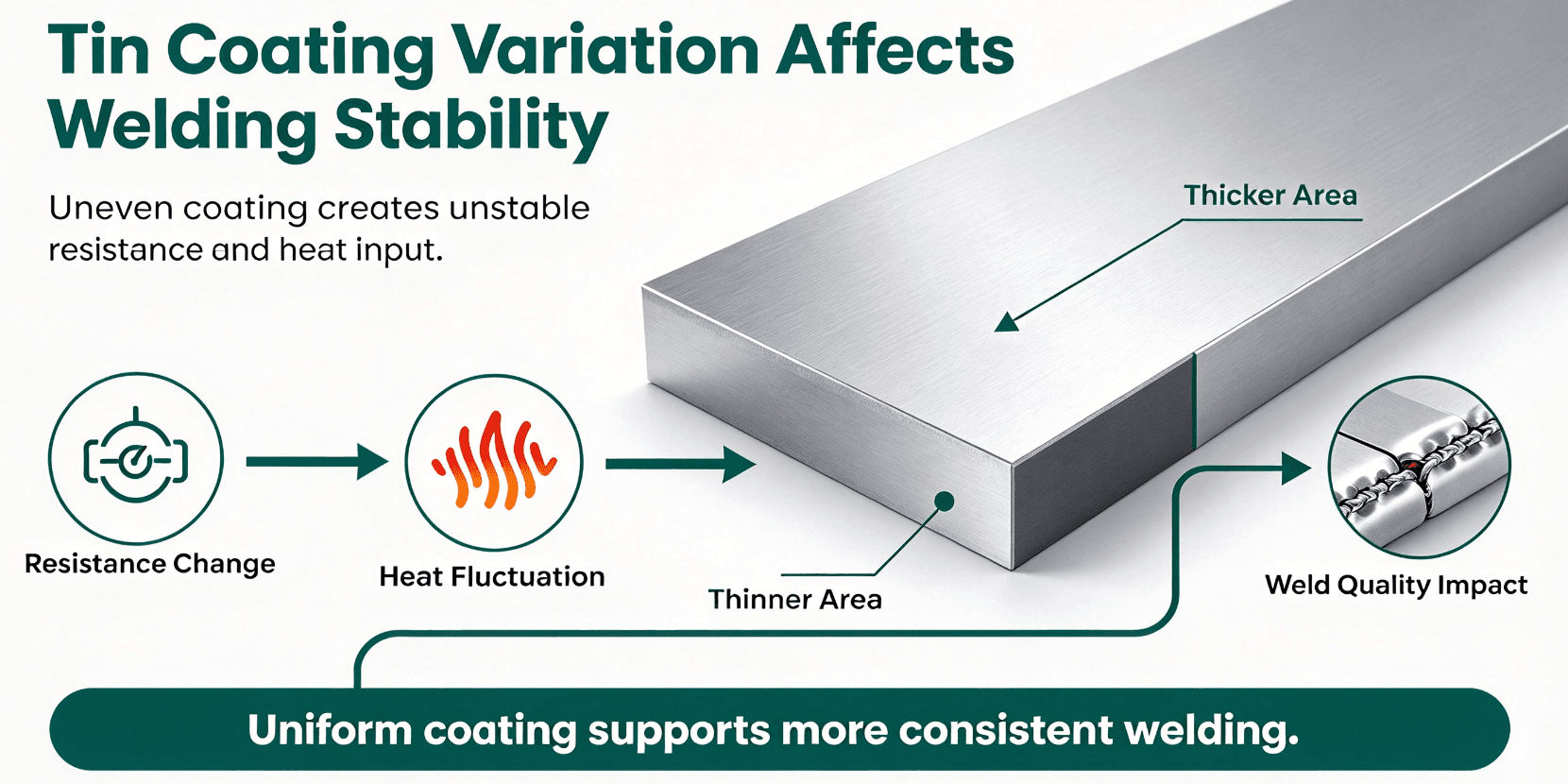
Weld Spatter & Leakage Defects: The Decisive Role of Tin Coating Uniformity in Can Welding Quality
High-speed resistance seam welding is the core forming process for three-piece metal cans. In actual mass production, persistent weld spatter, granular slag residue and hidden seam micro-leakage severely compromise sealing consistency, sterilization resistance and finished product yield. Most manufacturers tend to attribute these defects to unstable current, improper pressure or worn welding wheels. However, industrial verification proves that uneven tin coating distribution on tinplate is the fundamental material-induced root cause of recurring welding spatter and leakage issues.
Low-Earing CA Annealed Tinplate: The Optimal Material for Stable Twist-Off Lid Deep Drawing & High Yield Rate
Twist-off lid manufacturing has extremely strict requirements on material anisotropy and ductility. Different from regular can bodies, twist-off lids undergo complex deep drawing, edge trimming and crimping processes, making them highly sensitive to uneven steel performance. According to actual mass production verification, no alternative tinplate grades can achieve stable forming results for twist-off lid production. Low-earning CA continuous annealed tinplate remains the most suitable and high-performance material dedicated for twist-off lid stamping.
Want to know more?
Get in touch with us for more information about our services and products.