
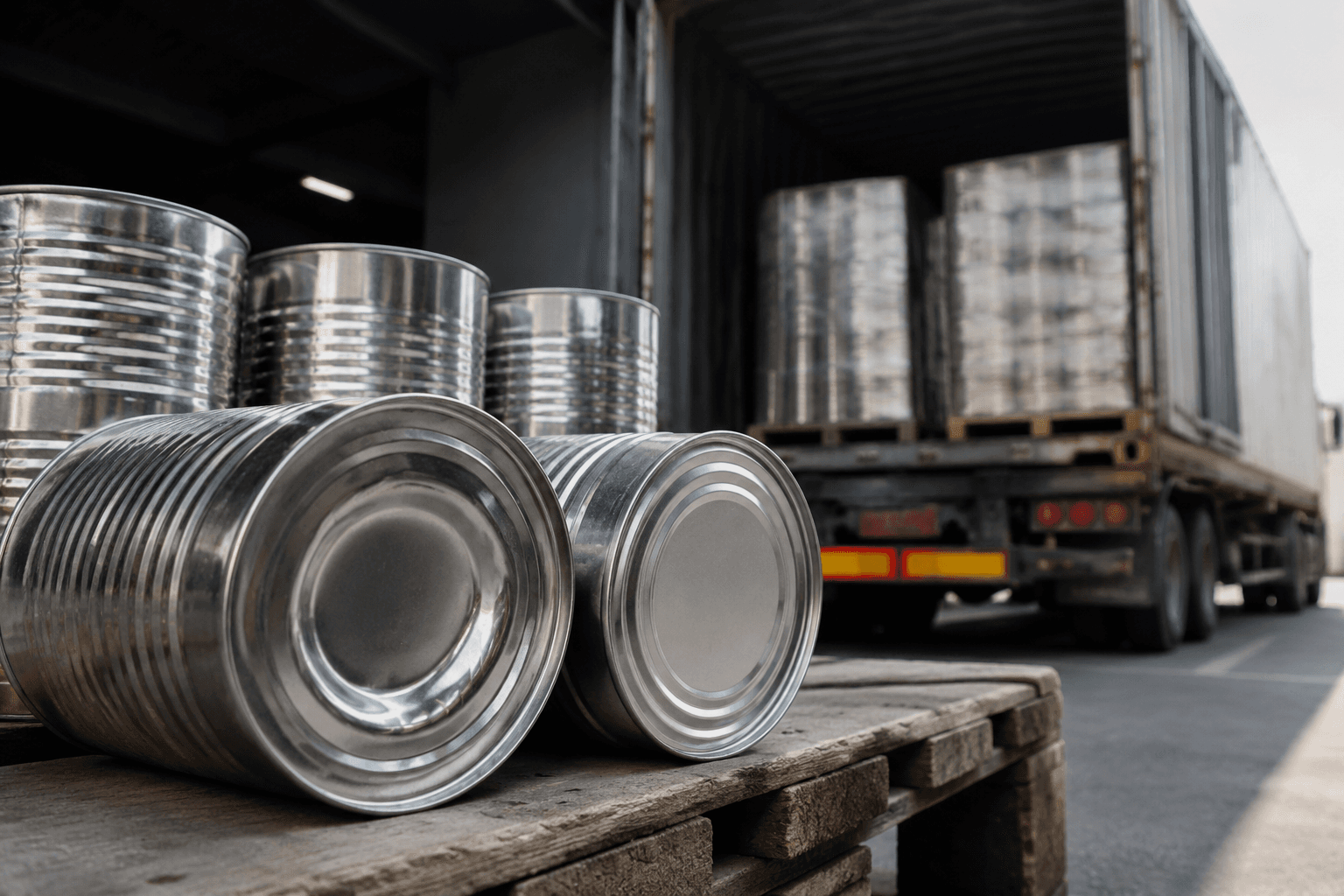
Panelización del fondo de latas de alimentos envasados en caliente después del transporte: causas y guía de inspección
Latas de Alimento Llenadas en Caliente con Abombamiento del Fondo tras el Transporte: Cómo Revisar Materiales, Estructura y Procesamiento
En las operaciones de enlatado de alimentos, una lata terminada puede verse normal cuando sale de la línea de producción, pero mostrar deformación en el fondo después del llenado en caliente, sellado, enfriamiento, empaque y transporte de larga distancia.
Las observaciones típicas incluyen un fondo cóncavo de la lata, deformación alrededor del panel del extremo, pérdida local de redondez o estabilidad de apilamiento reducida. Estas condiciones pueden volverse más visibles después del frenado del vehículo, superficies irregulares, vibración del contenedor o manipulación durante la carga y descarga.
Las condiciones de transporte son variables importantes. Sin embargo, en muchos casos, la vibración o el impacto repentino pueden actuar como un desencadenante más que como la única causa subyacente. Si una lata permanece estable durante el transporte también depende de su selección de material, estructura del extremo, calidad del doble cierre, proceso de enfriamiento, método de empaque y resistencia general a la deformación.
Por esta razón, el enfoque más efectivo es examinar la deformación desde varios ángulos en lugar de atribuir todo el problema únicamente a las condiciones de la carretera.
El Cuerpo de la Lata y los Extremos No Realizan la Misma Función
Una lata redonda típica de tres piezas consiste en un cuerpo y dos extremos. El cuerpo proporciona principalmente la pared cilíndrica, soporta las operaciones de soldadura y conformado, y contribuye a la resistencia al apilamiento. Los extremos proporcionan cierre y sellado, al mismo tiempo que resisten los cambios de presión y las cargas externas durante la manipulación y el transporte.
Para muchos diseños de latas de alimentos, el cuerpo y los extremos no se seleccionan usando exactamente la misma lógica de material. Las especificaciones de los extremos pueden variar según:
- Diámetro y altura de la lata;
- Tipo de producto y temperatura de llenado;
- Condiciones de enfriamiento y esterilización;
- Vacío o presión interna después del enfriamiento;
- Diámetro del extremo, profundidad del avellanado y diseño del panel;
- Espesor del material y propiedades mecánicas;
- Diseño del doble cierre y requisitos de sellado;
- Condiciones de apilamiento, manipulación y transporte.
En algunas aplicaciones, los extremos pueden requerir una mayor resistencia a la deformación que el cuerpo. Sin embargo, esto no debe reducirse a una regla absoluta de que el extremo siempre debe ser más grueso que el cuerpo. La especificación correcta depende del formato de la lata, el proceso de llenado, las características del producto y las condiciones de servicio esperadas.
La pregunta clave es si el cuerpo, el extremo superior y el extremo inferior se han adaptado a las diferentes cargas que experimentarán a lo largo de todo el proceso de envasado.
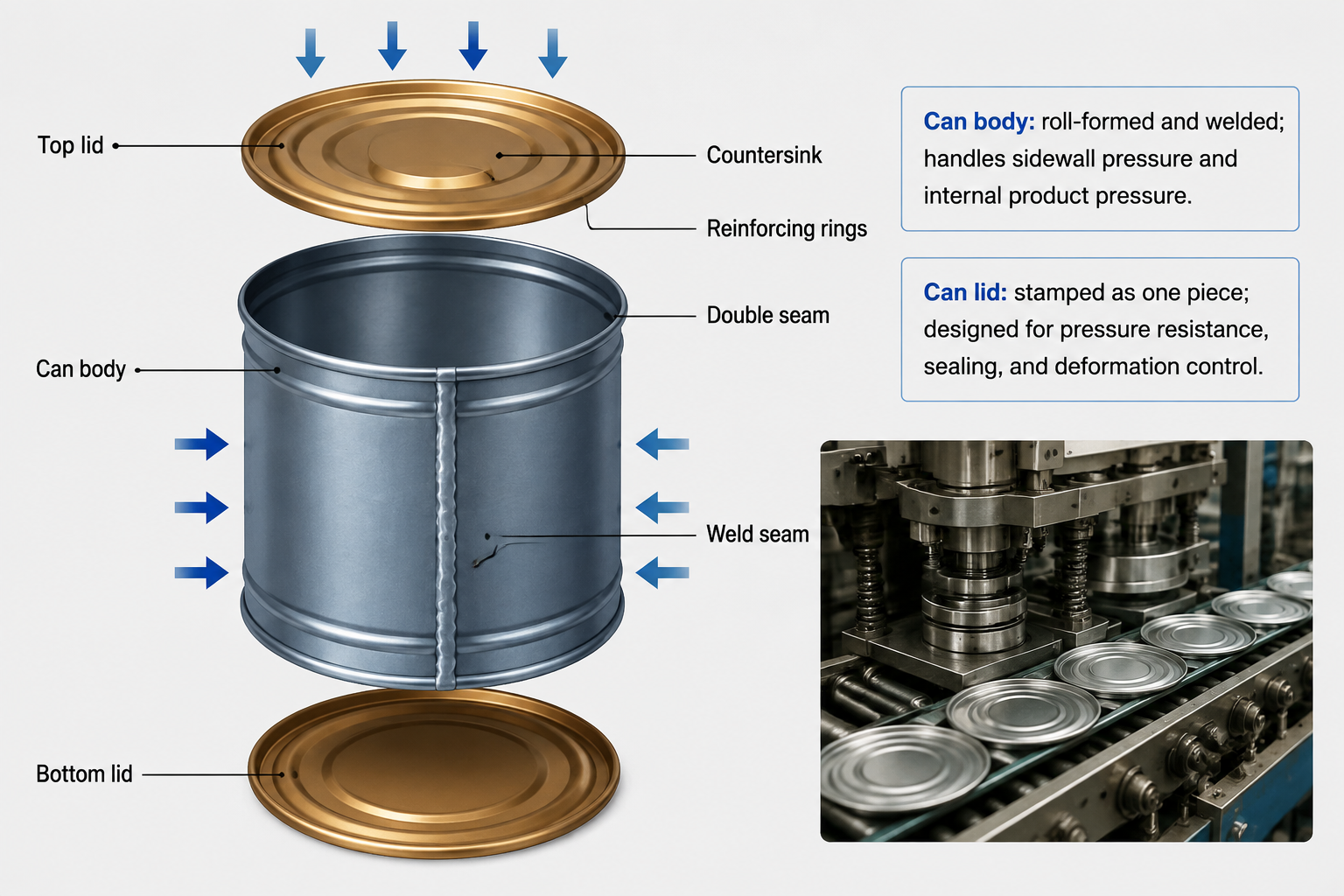
Por Qué las Latas Llenadas en Caliente Pueden Desarrollar una Deformación del Fondo Hacia Adentro
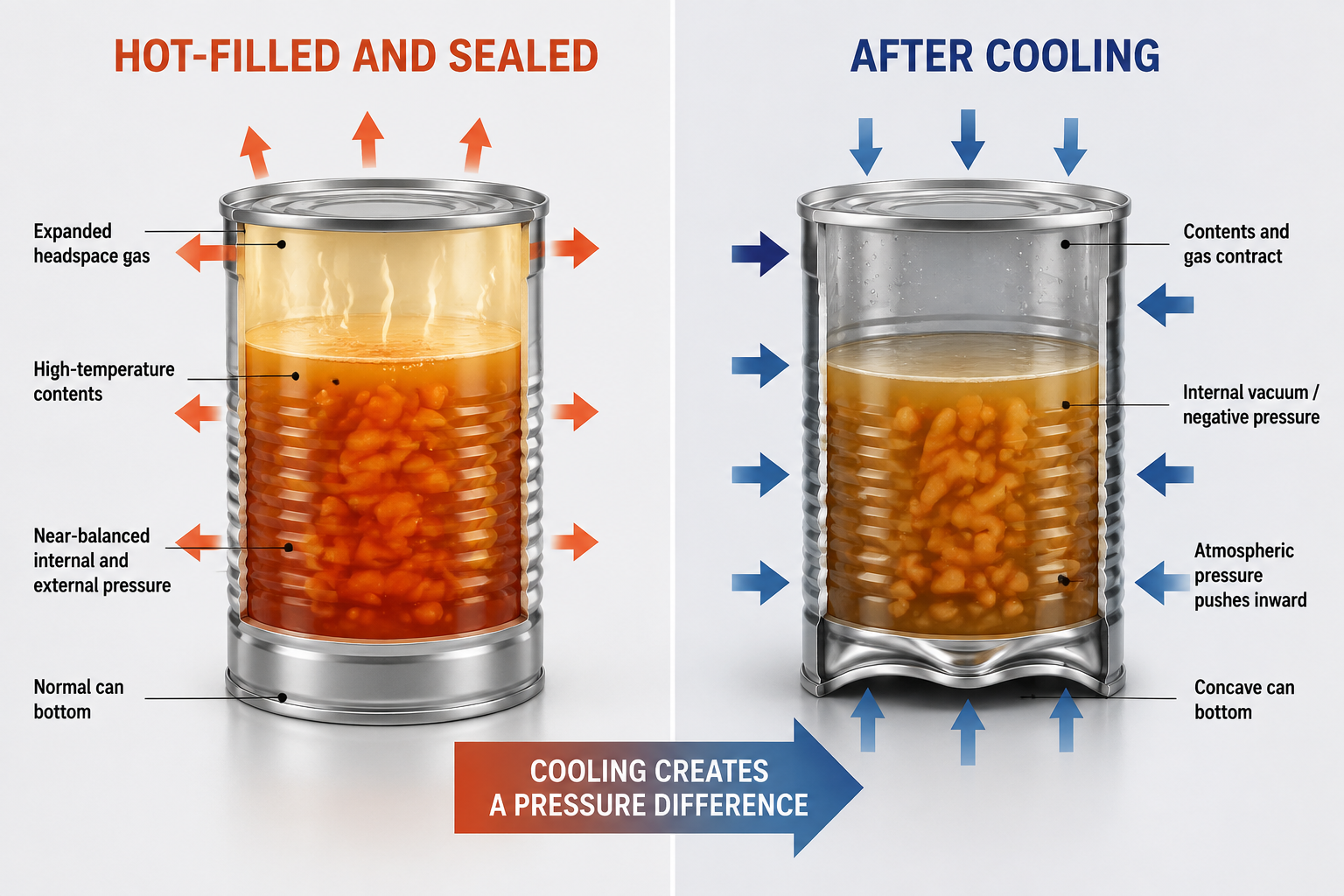
Durante el llenado en caliente, el producto y el espacio de cabeza dentro de la lata normalmente están a una temperatura elevada. Después del sellado, el producto y el aire en el espacio de cabeza se enfrían. A medida que el contenido y el gas interno se contraen, la presión dentro de la lata disminuye.
Esto crea una diferencia de presión entre el interior y el exterior de la lata. La presión atmosférica actúa entonces sobre los extremos de la lata. Si el material y la estructura del extremo tienen suficiente resistencia, la lata permanece estable. Si el extremo está cerca de su límite de deformación, puede moverse gradualmente hacia adentro.
Este tipo de deformación puede mostrar varias características:
- Un área relativamente grande del panel del extremo se mueve hacia adentro;
- Los anillos de refuerzo o las nervaduras se distorsionan;
- La deformación es más amplia que una sola marca de impacto agudo;
- El problema aparece después del enfriamiento o se vuelve más visible durante el transporte;
- Es posible que solo una proporción de las latas del mismo lote de producción se vea afectada;
- La deformación puede ser más evidente en el extremo inferior que en el superior.
En comparación, un impacto externo directo a menudo crea una abolladura más localizada, un pliegue visible o una marca de contacto irregular.
Esta distinción es útil porque ayuda a separar una deformación estructural o relacionada con la presión de un simple impacto de manipulación. En la práctica, ambos factores pueden existir al mismo tiempo: una lata con un margen estructural limitado puede permanecer estable en condiciones normales pero deformarse después de la vibración o el movimiento repentino durante el transporte.
Revisando la Lata Terminada a Partir del Patrón de Deformación
Cuando el fondo de una lata se vuelve cóncavo, el primer paso es identificar el tipo y el momento de la deformación.
| Observación de la lata terminada | Área posible para revisión | Verificación recomendada |
|---|---|---|
| La deformación hacia adentro aparece poco después del enfriamiento | Presión interna, resistencia del extremo y conformado del extremo | Verificar el vacío de la lata terminada, el espesor del extremo, la profundidad del avellanado y la forma del panel |
| La deformación empeora después de la vibración o el frenado | Margen estructural y carga de transporte | Comparar muestras antes y después del transporte o las pruebas de vibración |
| Solo una parte de un lote se ve afectada | Consistencia del material o del conformado | Comparar muestras por lote de material, turno de producción y máquina |
| La deformación se concentra alrededor del centro o los anillos de refuerzo | Conformado del panel del extremo y herramientas | Revisar el estado de las herramientas, la profundidad de conformado, la geometría de las nervaduras y el rebote elástico |
| Los extremos superior e inferior se comportan de manera diferente | Diferentes especificaciones de extremos o condiciones de conformado | Revisar las dos especificaciones de los extremos por separado |
| La deformación del fondo se acompaña de ovalidad del cuerpo | Resistencia del cuerpo, área de soldadura o carga de apilamiento | Verificar la redondez del cuerpo, la calidad de la soldadura, el soporte del palé y la presión de apilamiento |
| La deformación se acompaña de fugas o defectos en el cierre | Consistencia del doble cierre | Verificar las dimensiones del cierre, la superposición, la estanqueidad, las arrugas y el compuesto sellante |
| El problema aparece principalmente en productos llenados en caliente | Condiciones de llenado, sellado y enfriamiento | Registrar la temperatura de llenado, el tiempo de sellado, la curva de enfriamiento y el vacío final |
Una investigación útil debe incluir muestras de varias etapas de producción:
- La lata vacía antes del llenado;
- La lata inmediatamente después del sellado;
- La lata después del enfriamiento;
- La lata antes de la carga;
- La lata después del transporte;
- Una lata deformada del lote afectado.
Comparar estas muestras puede ayudar a identificar si la condición ya se estaba desarrollando después del sellado, apareció durante el enfriamiento o se hizo visible solo después de la carga y el transporte.
El Espesor del Material Es Importante, Pero No Es el Único Factor
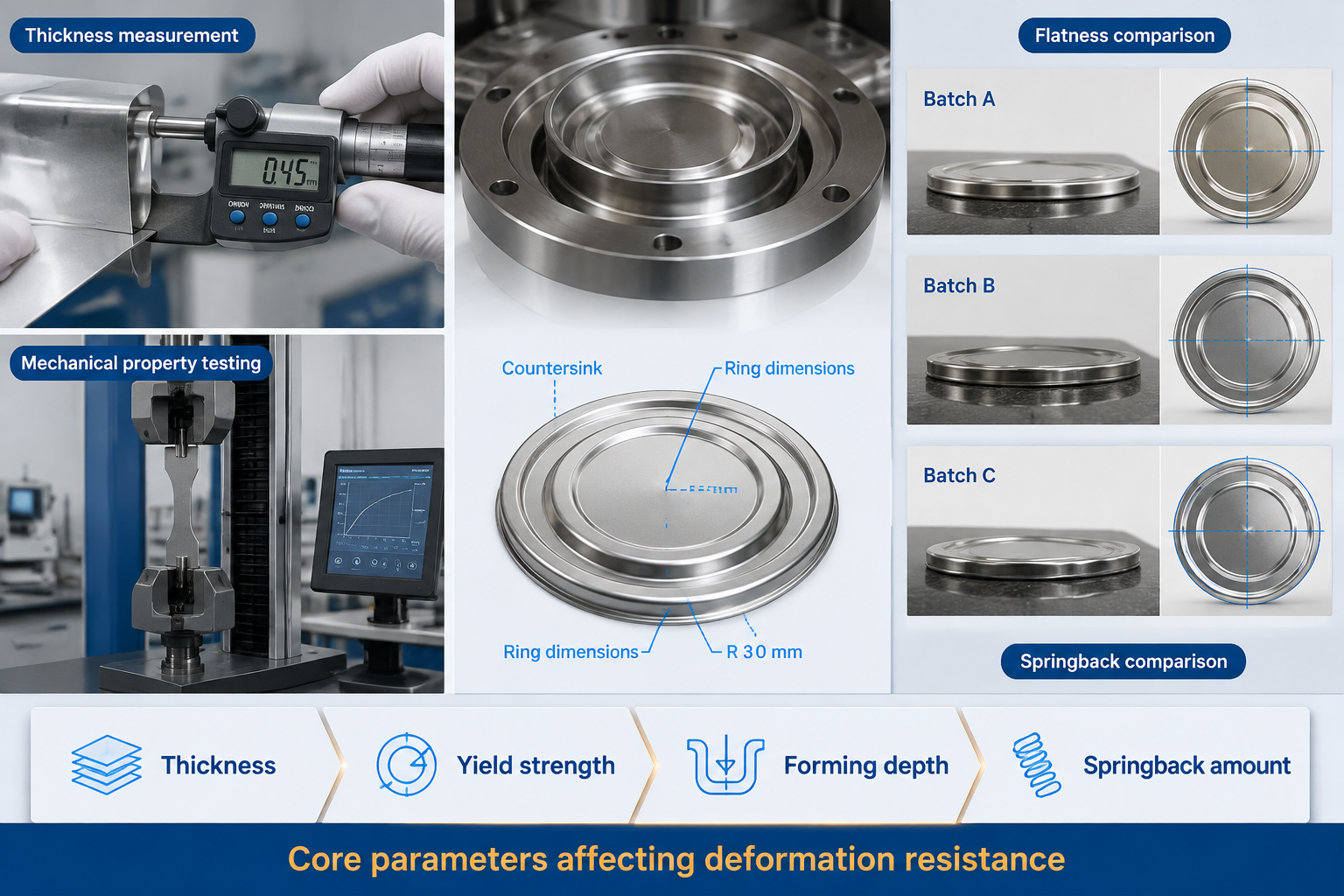
El espesor del extremo es una especificación importante, pero el espesor por sí solo no determina la resistencia final a la deformación de un extremo de lata. El grado del acero, el límite elástico, la resistencia a la tracción, el alargamiento, la dureza, el temple y el rendimiento de conformado pueden influir en el resultado.
Al revisar los materiales para los extremos de las latas, es útil confirmar:
- Espesor real y tolerancia de espesor;
- Grado del acero y propiedades mecánicas;
- Condición de dureza o temple;
- Profundidad de conformado después del estampado;
- Condición de los anillos de refuerzo o nervaduras;
- Planeidad del extremo y rebote elástico;
- Efecto del recubrimiento, barniz o compuesto sellante;
- Consistencia entre lotes de material;
- Compatibilidad entre el material y las herramientas seleccionadas.
Una especificación de material que está cerca del límite inferior de diseño puede parecer aceptable en condiciones de lata vacía o temperatura ambiente. Sin embargo, después del llenado en caliente y el enfriamiento, el extremo está expuesto a una presión externa continua. Si se agregan la vibración del transporte y la carga del palé, una pequeña diferencia en el material o la consistencia del conformado puede volverse visible como abombamiento del fondo.
Al mismo tiempo, usar un material más grueso o más duro no es automáticamente la mejor solución. Una dureza excesiva o una condición de material inadecuada puede aumentar el riesgo de grietas de conformado, formación insuficiente de nervaduras, rebote elástico o problemas de adaptación del doble cierre.
El enfoque más fiable es adaptar el material y la estructura al diámetro de la lata, producto, temperatura de llenado, proceso de enfriamiento, condición de sellado y entorno de transporte.
La Calidad del Doble Cierre También Puede Afectar la Condición de Carga de la Lata
Aunque el problema visible puede estar ubicado en el fondo, el doble cierre también debe revisarse. El cuerpo de la lata, el extremo, el compuesto sellante y el doble cierre trabajan juntos como un sistema de envasado cerrado.
Si las dimensiones del cierre o la condición de sellado son inconsistentes, la presión interna y el rendimiento de sellado de la lata pueden variar. Esto puede cambiar la forma en que los extremos y el cuerpo responden durante el enfriamiento y el transporte.
Las verificaciones importantes del cierre pueden incluir:
- Dimensiones del cierre de primera operación y de operación final;
- Ancho, espesor y avellanado del cierre;
- Superposición del gancho del cuerpo y del gancho de la tapa;
- Estanqueidad del cierre y condición de las arrugas;
- Distribución y curado del compuesto sellante;
- Ajustes del mandril de cerrado y de los rulos;
- Velocidad y presión de cerrado;
- Diferencias entre máquinas, turnos y líneas de producción.
Una inspección visual por sí sola puede no ser suficiente. Para las latas afectadas, el análisis de desmontaje del cierre puede proporcionar información más útil sobre la condición real del sistema de cierre.
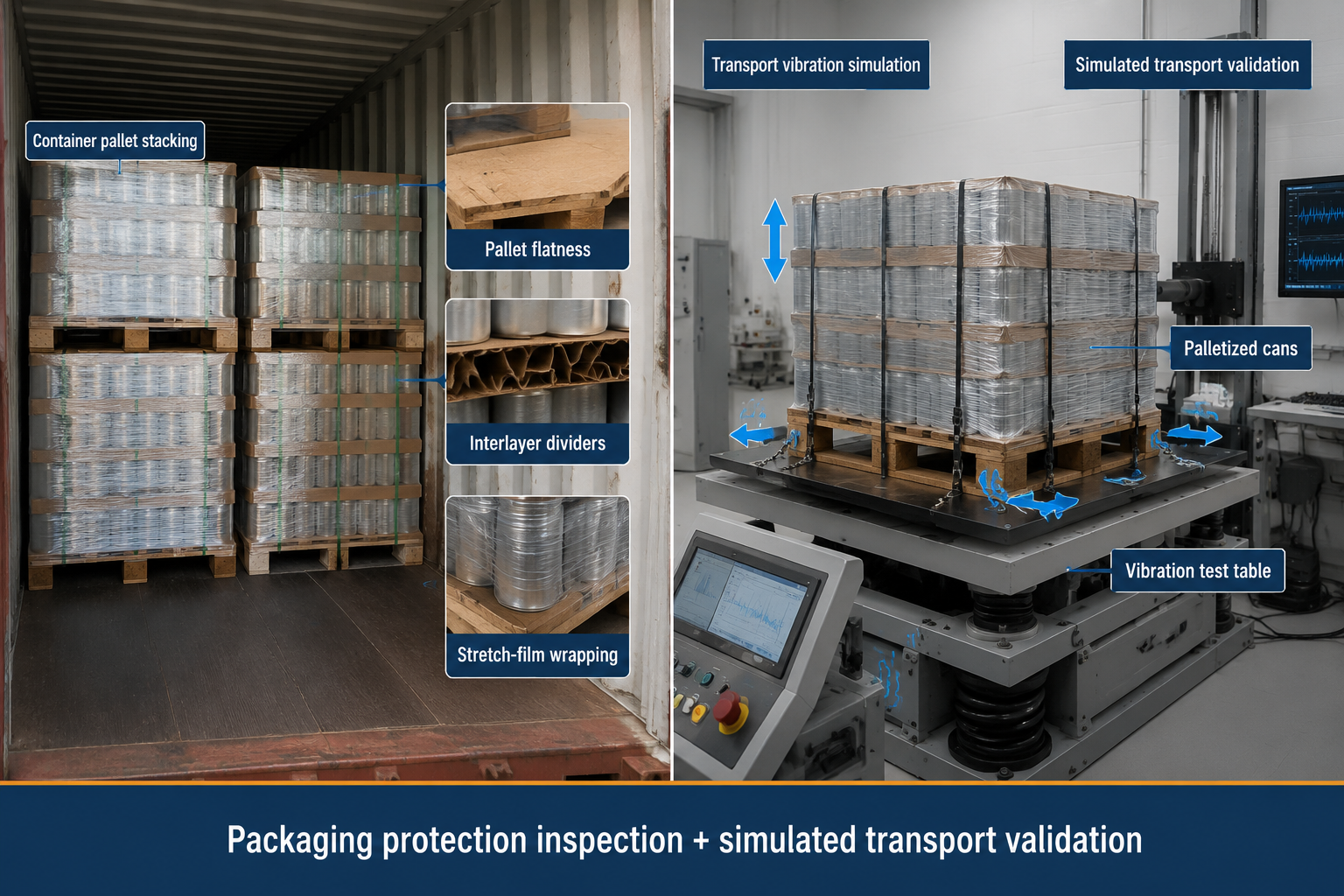
Las Condiciones de Transporte Deben Revisarse Como Parte de Todo el Sistema
El transporte de larga distancia puede exponer las latas a varios tipos de carga externa:
- Frenado y aceleración repentinos;
- Superficies de carretera irregulares;
- Vibración continua del vehículo;
- Movimiento del contenedor en el mar;
- Impacto de carga y descarga;
- Presión de apilamiento del palé;
- Cambios de temperatura;
- Presión localizada por empaque inestable.
Las siguientes condiciones de empaque también deben verificarse:
- Si la base del palé es plana y está adecuadamente soportada;
- Si las latas están dispuestas uniformemente;
- Si los separadores y las hojas intermedias proporcionan suficiente soporte;
- Si la película estirable se aplica de manera consistente;
- Si la altura de apilamiento es adecuada;
- Si hay espacios grandes dentro del contenedor;
- Si las latas se enfriaron suficientemente antes del empaque;
- Si la carga estaba asegurada contra el movimiento.
Sin embargo, mejorar las condiciones de transporte no debe reemplazar una revisión del rendimiento estructural de la propia lata. Si el mismo tipo de deformación aparece bajo diferentes vehículos, rutas o condiciones de envío, puede ser útil revisar juntos el material, el diseño del extremo, el proceso de conformado y las condiciones de presión interna.
Un Método Práctico de Verificación en Tres Etapas
Para las latas de alimentos llenadas en caliente que muestran deformación en el fondo, una comparación en tres etapas puede ayudar a que la investigación sea más objetiva.
Etapa Uno: Inspección después de la producción Verifique la apariencia del extremo, la redondez del cuerpo de la lata, las dimensiones del doble cierre y la condición general del cierre inmediatamente después de la producción.
Etapa Dos: Inspección después del enfriamiento Registre la temperatura del producto, el vacío interno, la forma del panel del extremo y cualquier signo temprano de movimiento hacia adentro o distorsión de las nervaduras.
Etapa Tres: Inspección antes y después del transporte Compare las muestras antes de la carga con las muestras después del transporte real o el apilamiento y la vibración simulados. La comparación debe incluir tanto latas normales como latas afectadas del mismo período de producción.
Este enfoque ayuda a separar las condiciones que se originan durante la producción de aquellas que se vuelven visibles durante el enfriamiento, el empaque o el transporte.
Mejorando la Comunicación Entre los Equipos de Material y Fabricación de Latas
Muchos problemas de deformación de latas son más fáciles de prevenir cuando el proveedor de material, el fabricante de latas y el productor de alimentos confirman las principales condiciones de operación en una etapa temprana.
La siguiente información es particularmente útil:
- Diámetro y altura de la lata;
- Especificaciones del material del cuerpo y del extremo;
- Tipo de producto y temperatura de llenado;
- Espacio de cabeza y vacío esperado;
- Condiciones de sellado y enfriamiento;
- Requisitos del doble cierre;
- Patrón del palé y altura de apilamiento;
- Distancia y ruta de transporte;
- Método de carga del contenedor;
- Cualquier observación previa de deformación o fuga.
Esta información no requiere necesariamente un cambio importante en el proceso de producción. En muchos casos, simplemente permite que cada especificación sea revisada en el contexto correcto y ayuda a evitar el uso de una disposición de material general en diferentes formatos de latas o condiciones de llenado.
Conclusión
El abombamiento del fondo después del transporte de latas de alimentos llenadas en caliente puede estar relacionado con el frenado, la vibración de la carretera, el apilamiento o la manipulación. Sin embargo, la probabilidad de deformación también está influenciada por el margen estructural de la lata, la presión interna después del enfriamiento, el material del extremo, la condición de conformado, la calidad del doble cierre y el método de empaque.
El cuerpo, el extremo superior y el extremo inferior de una lata de tres piezas no necesariamente experimentan las mismas cargas. Por lo tanto, su espesor de material, grado de acero, dureza, estructura de conformado y condiciones de sellado deben evaluarse de acuerdo con el formato real de la lata y el proceso de llenado.
Una lata que se ve normal antes del llenado o inmediatamente después de la producción puede aún experimentar deformación más tarde cuando se expone a cambios de presión relacionados con el enfriamiento, cargas del palé, vibración y transporte de larga distancia.
Por esta razón, revisar el patrón de deformación y el momento en que aparece por primera vez a menudo puede proporcionar información más útil que centrarse en un solo evento de transporte. Una evaluación completa de los materiales, la estructura de la lata, las condiciones de procesamiento, la calidad del sellado, el enfriamiento y la logística puede ayudar a identificar los factores contribuyentes reales y mejorar la estabilidad de la producción futura.
Para latas de alimentos, latas de bebidas y otras aplicaciones de empaque metálico, la comunicación temprana entre el proveedor de material, el fabricante de latas y el fabricante del producto final puede ayudar a confirmar el material y la estructura más adecuados antes de la producción en masa. Esto respalda un rendimiento más consistente desde el llenado hasta la entrega final.
Related News
Other news you might be interested in
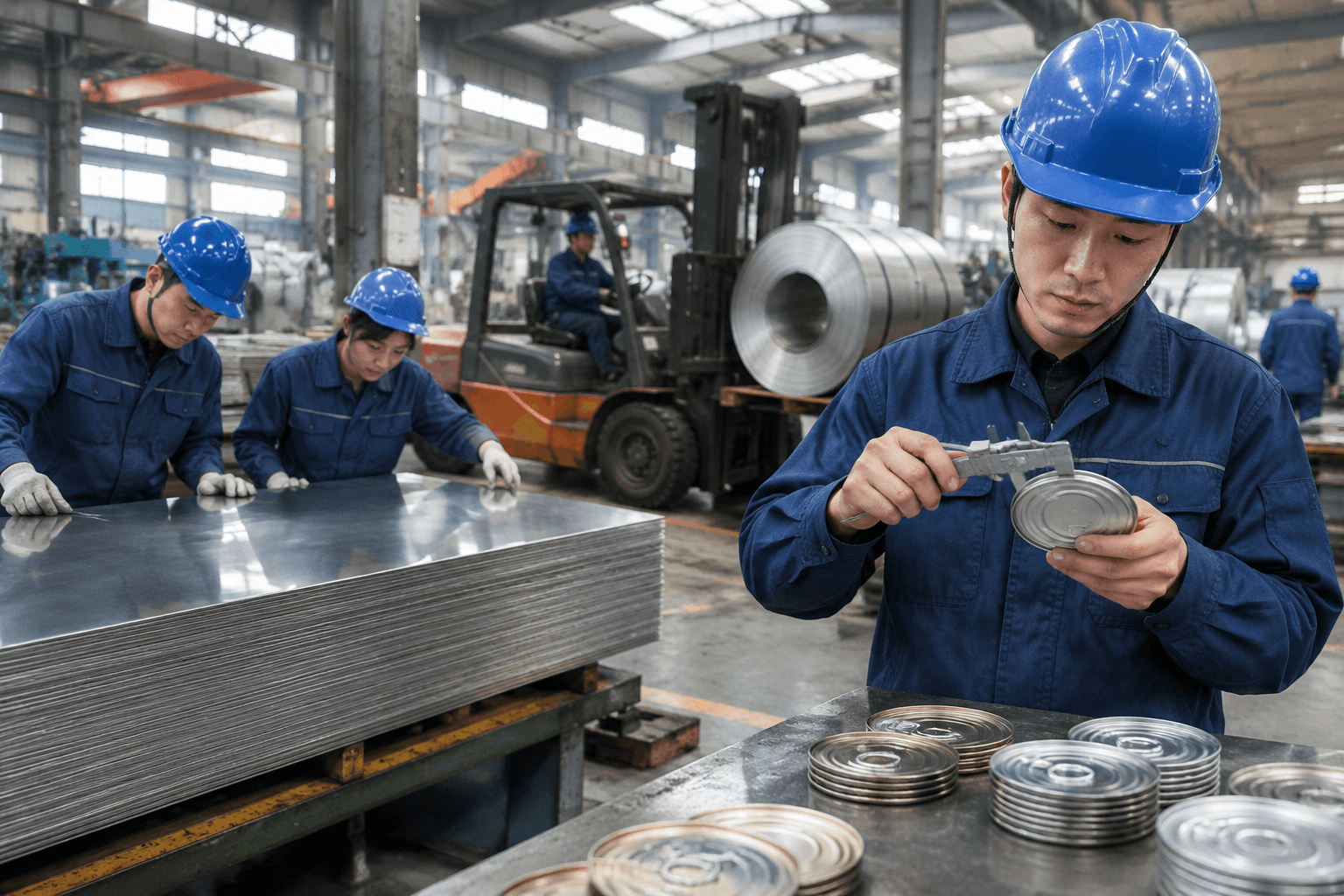
Simplificación del abastecimiento de envases metálicos: cómo elegir hojalata, TFS y tapas de fácil apertura para su línea de productos
Descubra cómo el abastecimiento estratégico de hojalata, TFS y tapas de fácil apertura reduce el riesgo, estabiliza los plazos de entrega y respalda la producción flexible de latas para compradores de envases alimentarios e industriales.
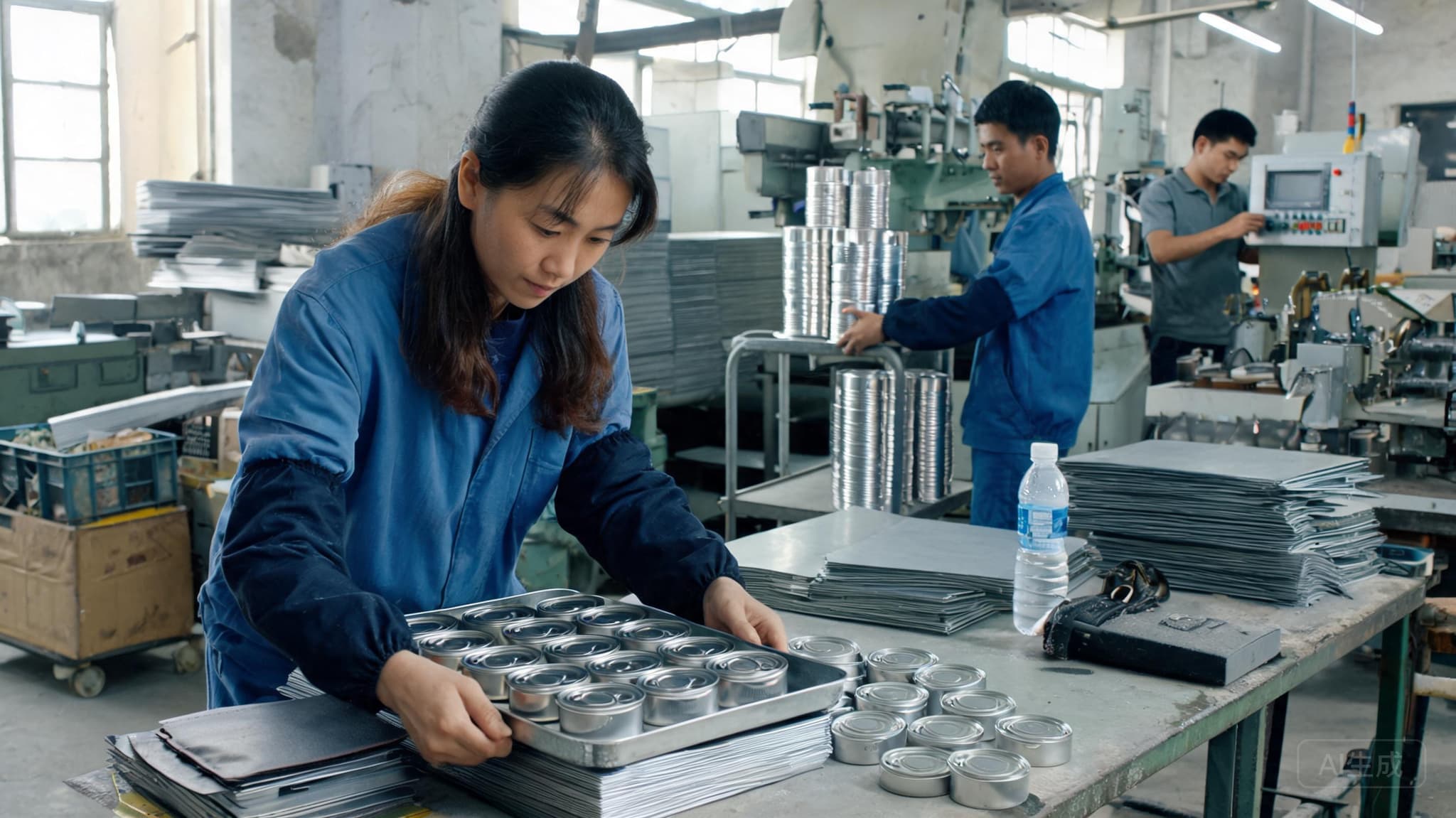
Asegure su suministro de envases metálicos con hojalata premium, acero libre de estaño (TFS) y tapas de fácil apertura
Asegure su suministro de envases metálicos con hojalata premium y acero libre de estaño (TFS). Descubra cómo el abastecimiento integrado reduce el tiempo de inactividad, reduce los costos y garantiza una entrega confiable para latas de dos y tres piezas.
Want to know more?
Get in touch with us for more information about our services and products.