
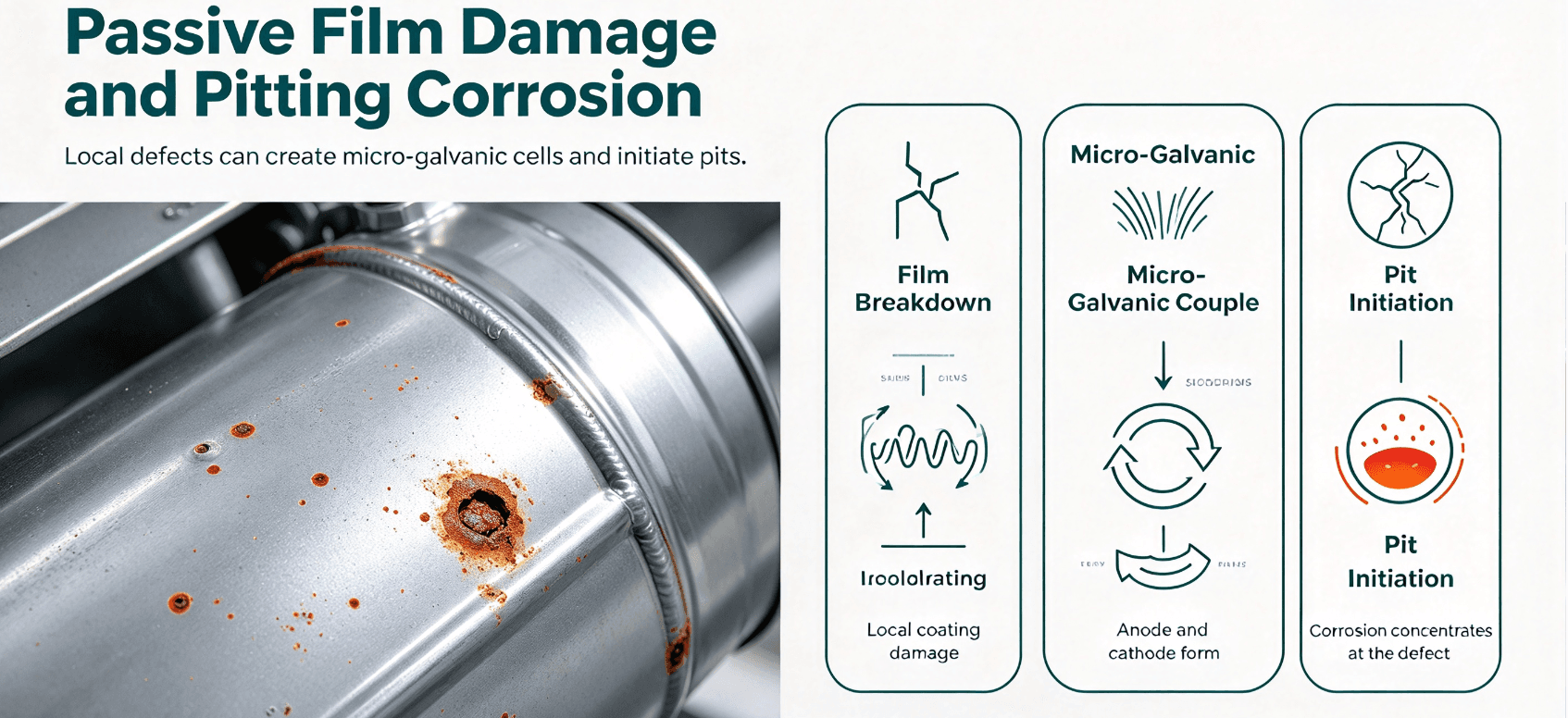
Tinplate Passivation Film Failure: Pre-Existing Material Hazards for Metal Can Rusting During Storage
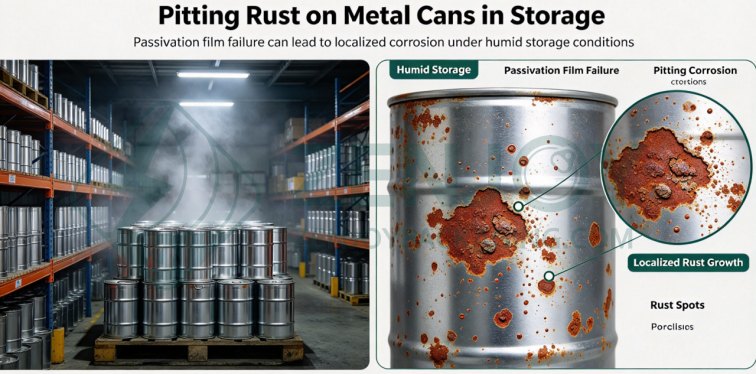
Rust spotting on finished cans during storage is a recurring complaint in metal packaging industry. When facing scattered surface rust after weeks or months of warehousing, many can producers first adjust environmental humidity, reinforce protective varnish or optimize packaging. However, these remedial measures cannot fully eliminate the problem if the root cause lies in defective passivation film on the incoming tinplate.
The Role of Passivation Film and Its Defect Forms
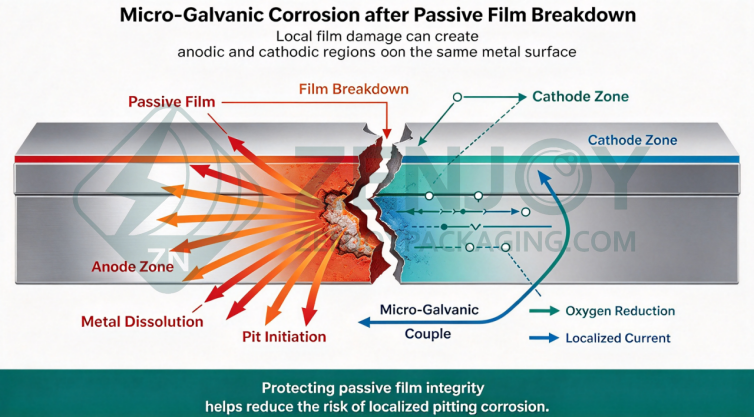
The passivation film is a thin protective layer formed through chemical treatment on tinplate surface. It stabilizes the tin layer, blocks galvanic corrosion and improves adhesion for subsequent lacquer or printing coating. Two mainstream types are widely adopted: traditional chromate passivation and modern chromium-free passivation. Key quality metrics include passivation film weight, film continuity, surface charge and batch uniformity.
Film defects often manifest in several forms. Insufficient or uneven film weight creates local weak zones. Tiny cracks on the passivation layer generated during rolling or slitting break the continuous protective barrier. Strip edges frequently suffer from under-passivation, because edge exposure during production leads to thinner film. Once the protective film loses integrity, water vapor and trace chloride in the air can reach the tin-steel interface, forming micro galvanic cells and gradually producing visible rust pits.
Latent Risk: Why Storage Rust Is Difficult to Detect Upfront
This type of defect is latent. Standard incoming visual inspection cannot detect incomplete passivation. The defect only develops slowly under storage environments, which means manufacturers invest heavily in fabrication, printing and packaging before discovering rust issues. The consequence includes rejected finished goods, customer claims and brand loss. Therefore, inspection of passivation performance at the raw material stage is essential for long-term storage stability.
ZENJOY Passivation Quality Screening
ZENJOY is deeply engaged in the field of can-making material supply. Backed by stable upstream steel mill resources, we develop custom material matching solutions tailored to the working conditions of diverse can types, sterilization regimes and storage environments, helping customers sustain high finished-product yield rates and mitigate quality claim risks.
We test the passivation film weight, film continuity and steel strip edge quality. Grades of chromate passivation and chromium-free passivation are differentiated according to customers’ end applications and storage conditions. Batches with unstable passivation performance are screened out, and suitable passivation types are recommended for respective application scenarios. This pre-selection protocol for raw materials enables can manufacturers to reduce the risk of delayed rusting failure of finished cans during storage, cut customer complaints, and secure the long-term shelf stability of metal cans.
Related News
Other news you might be interested in

How Do Different Contents Affect Lacquer Requirements for Tinplate?
From acidic foods and sulfur-bearing seafood to oils and dry goods: understanding how internal coatings influence protection, processing and storage performance.

How to Build a More Reliable Metal Packaging Supply Chain
Align materials, can formats, ends, and delivery requirements before ordering to reduce production risk, improve supply visibility, and keep packaging programs on schedule.
Want to know more?
Get in touch with us for more information about our services and products.