
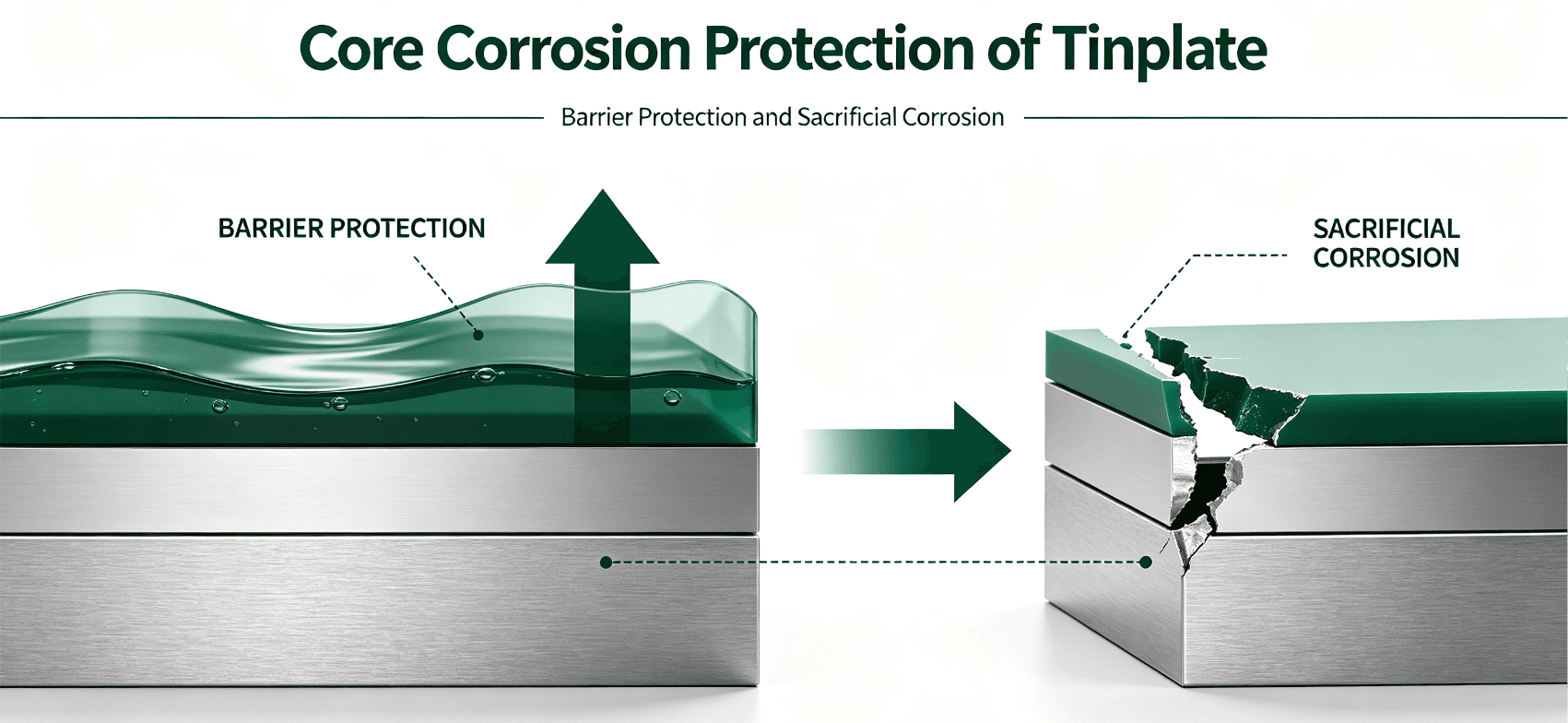
Sacrificial Corrosion & Barrier Protection: Core Anti-Corrosion Principle of Tinplate
Barrier Protection: Physical Isolation Against Corrosive Media
Barrier protection is the most fundamental and direct anti-corrosion method for tinplate. The surface of low-carbon steel substrate is uniformly covered with a dense electrolytic tin layer, which completely isolates the steel base from external air, moisture, organic acid, salt and other corrosive substances.
When the tin coating is intact and free of pinholes, scratches and peeling, corrosive media cannot contact the steel substrate. This physical barrier effectively prevents oxidation and electrochemical corrosion, ensuring long-term surface stability of the metal can.
It is important to note that barrier protection is completely dependent on coating integrity. Once the surface coating is damaged during stamping, curling or transportation, the single barrier protection will fail immediately.
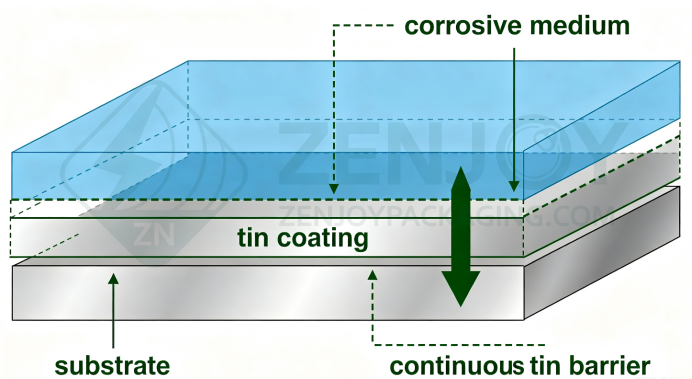
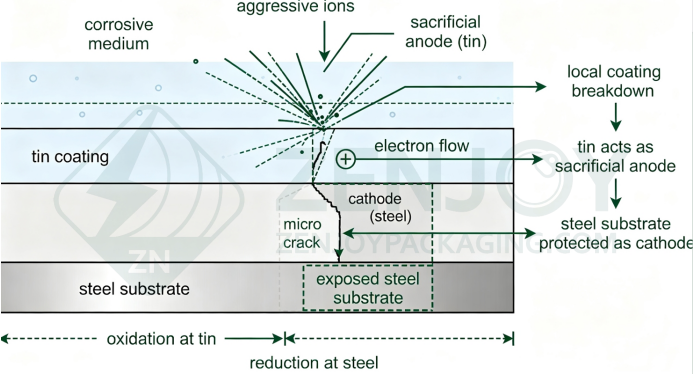
Sacrificial Anode Protection: Unique Anti-Corrosion Advantage of ETP Tinplate
Different from TFS tin-free steel, ETP tinplate has outstanding sacrificial corrosion protection. When the tin coating is partially damaged and the steel substrate is exposed, tin and steel form a galvanic cell reaction in humid or acidic environments.
Compared with steel, tin has lower electrochemical activity. It acts as the sacrificial anode and is preferentially oxidized and consumed. The steel substrate serves as the cathode and is effectively protected from rusting.
This unique mechanism allows ETP tinplate to tolerate minor coating damages during can production. Even with tiny scratches and micro-defects, the tin layer can continuously sacrifice itself to protect the can body, greatly reducing the risk of internal corrosion and leakage.
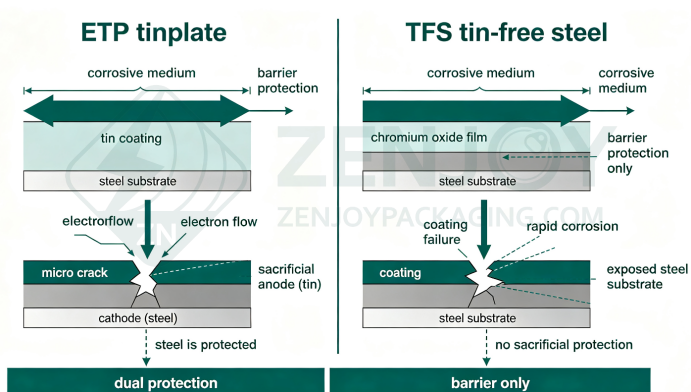
Essential Difference Between ETP and TFS in Anti-Corrosion Mechanism
Many can manufacturers confuse the application boundaries between ETP and TFS steel. The core difference lies in sacrificial protection performance.
ETP tinplate has dual protection: complete coating provides barrier isolation, and damaged coating activates sacrificial anti-corrosion.
TFS chromium-coated steel only relies on barrier protection from chromium oxide film. Once the coating breaks, no sacrificial protection is available, and the bare steel will corrode rapidly. Therefore, TFS materials require higher coating and printing process standards and stricter surface protection.
Practical Material Selection Guidance for Can Makers
For acidic food cans, fruit cans and long-shelf-life canned products, ETP tinplate is more reliable due to its dual anti-corrosion system. Proper tin coating weight can further improve barrier density and sacrificial protection reserve.
For dry packaging, chemical cans and sulfur-rich food cans, TFS steel with excellent coating adhesion and chemical stability is more suitable, provided that the inner lacquer remains intact during production.
As a professional supplier dedicated to high-quality metal packaging materials, Zenjoy provides precisely matched ETP tinplate and TFS tin-free steel for different can-making scenarios. Zenjoy’s tinplate series features uniform coating thickness, stable passivation performance and excellent ductility, perfectly adapting to high-speed stamping, deep drawing and high-temperature retort processes. Whether for acidic fruit cans, protein seafood cans or industrial chemical containers, Zenjoy can offer targeted material grading, customized coating weight solutions and professional technical guidance to help can factories maximize anti-corrosion performance while controlling production costs.
Conclusion
Barrier protection and sacrificial corrosion protection constitute the core competitiveness of ETP tinplate in the metal packaging industry. Understanding these two professional mechanisms helps can factories select accurate materials, reduce defective rates, and avoid hidden corrosion risks during long-term storage.
We supply full-grade ETP tinplate and TFS tin-free steel with stable surface quality and consistent coating performance. Customized coating weight, temper grade and surface treatment are available to match different can-making processes and food contents.
Related News
Other news you might be interested in

Sulfuration Black Spot Analysis: Material Causes and Solutions for Food Cans
Sulfuration black spots inside food cans are one of the most common quality puzzles for can manufacturers. Many factories mistakenly attribute the problem to coating or sterilization process issues. In fact, most recurring sulfuration discoloration stems from **incorrect metal substrate selection and surface passivation defects. This article professionally analyzes the essential material causes of can sulfuration black spots, clarifies the performance differences between ETP tinplate and TFS tin-free steel in anti-sulfur scenarios, and provides targeted, actionable solutions for mass can production.

تبسيط مصادر تغليف المعادن: اختيار الصفيح، TFS، والأغطية سهلة الفتح لخط إنتاجك
اكتشف كيف يؤدي التزويد الاستراتيجي للصفيح، TFS، والأغطية سهلة الفتح إلى تقليل المخاطر، واستقرار أوقات التسليم، ودعم إنتاج العلب المرن لمشتري تغليف الأغذية والصناعات.
Want to know more?
Get in touch with us for more information about our services and products.